spanakopita frittata spinach feta
Introduction
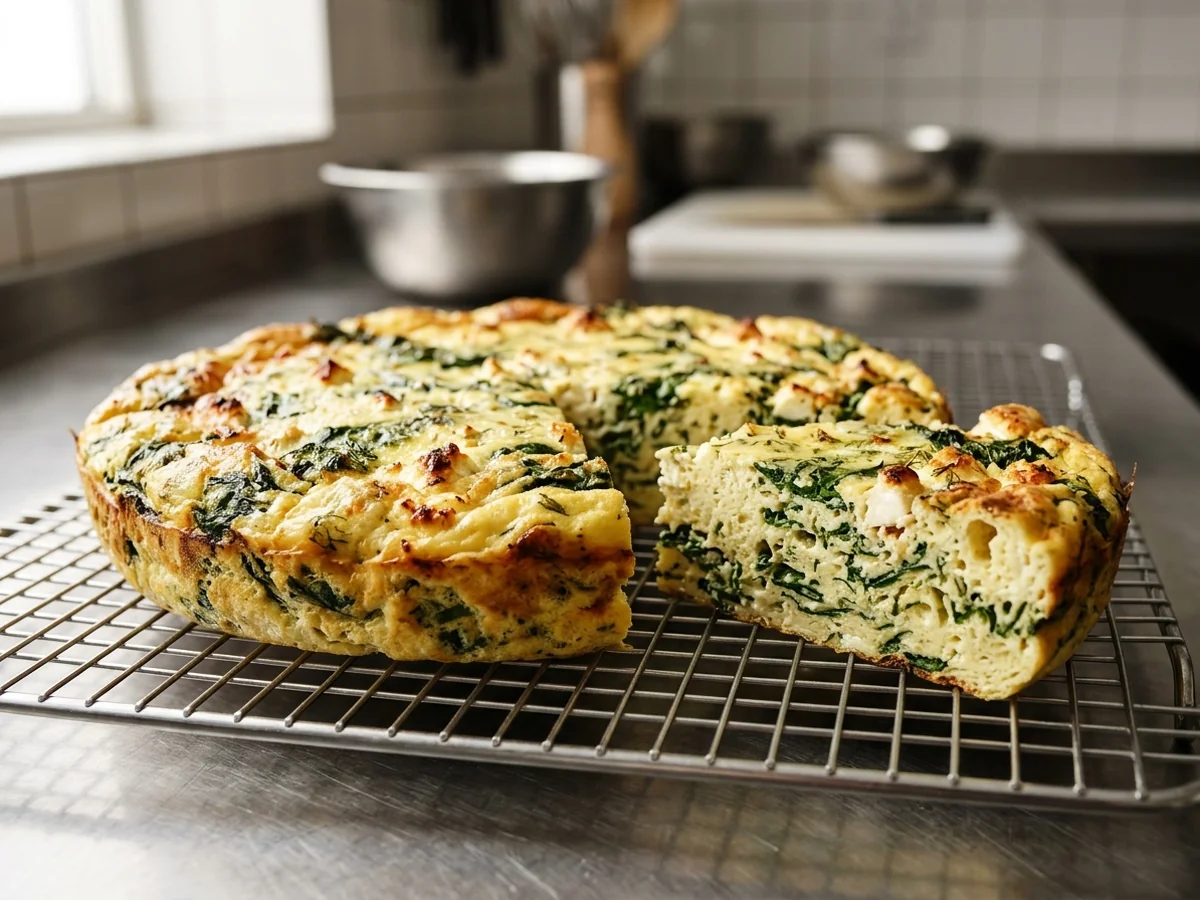
A spanakopita frittata combines the classic Mediterranean flavors of spinach and feta with the high-protein structure of a traditional egg dish. Making a successful spanakopita frittata requires specific techniques to manage moisture content and ensure proper protein coagulation for a light, set texture.
This article covers the essential steps for preparing your greens to prevent excess liquid from ruining your meal. You will learn how to select the right feta cheese, adjust your seasoning to account for its natural salinity, and master the stovetop-to-oven cooking method. We also provide technical guidance on reaching the safe internal temperature of 160 degrees Fahrenheit to ensure your eggs are fully cooked while remaining tender. Whether you are prepping for a high-protein breakfast or a nutritious dinner, these culinary tips will help you achieve a perfectly golden, professional result every time you cook this dish at home.
What is Spanakopita Frittata
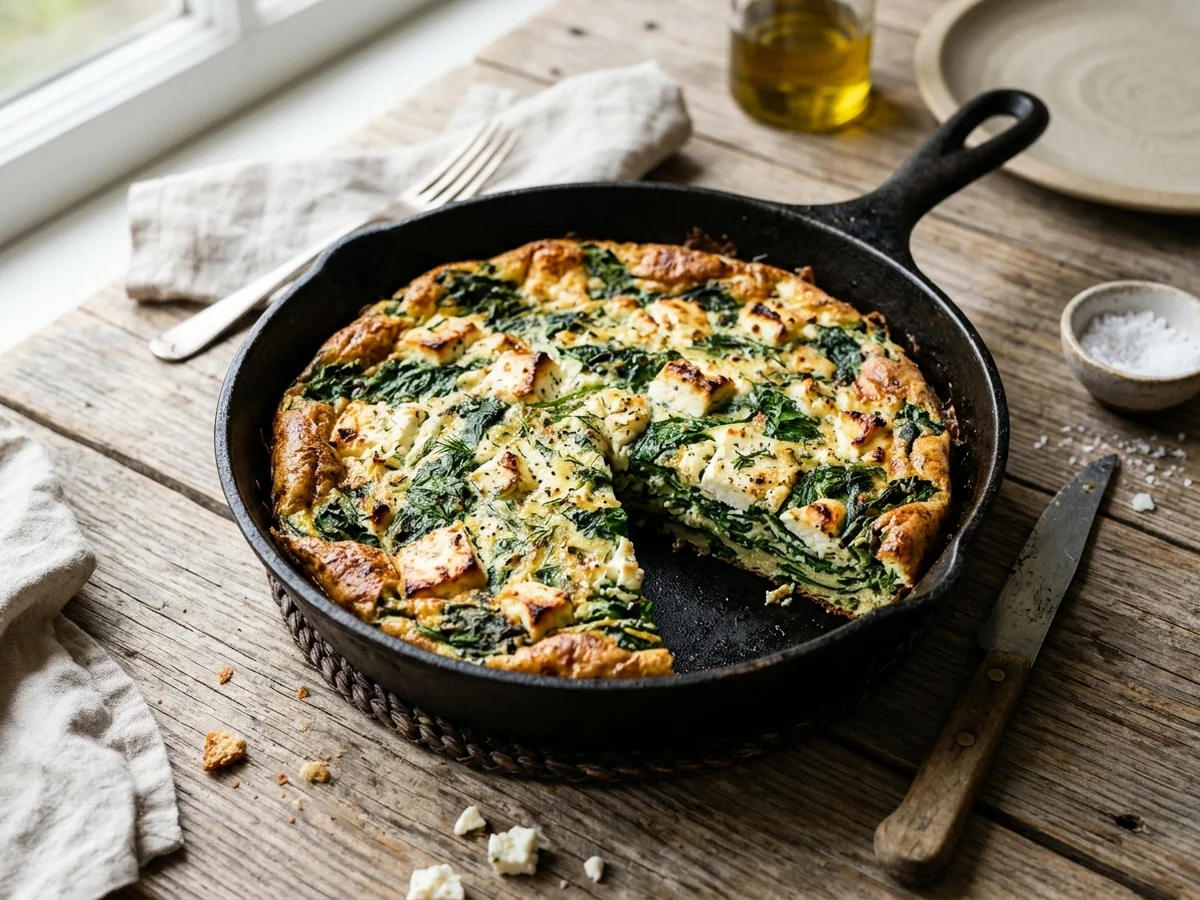
A spanakopita frittata is a protein-rich dish that translates the classic Greek flavor profile of spinach and salty feta cheese into a firm, egg-based format. By utilizing eggs as a high-quality protein source containing all nine essential amino acids, this dish offers a nutrient-dense meal suitable for any time of day.
The culinary challenge in preparing these stovetop to oven egg dishes lies in managing moisture. Spinach is composed of approximately 90 percent water by weight, and cooking it reduces its volume significantly as that liquid is released. If this excess moisture is not removed before the eggs are added, it interferes with proper coagulation of proteins. This results in a watery, unstable texture rather than the desired set, sliceable consistency.
Feta cheese provides the signature sharp, briny finish, though it is worth noting that it typically contains higher sodium levels compared to fresh cheeses like ricotta. Because feta is often made from sheep milk or a blend of sheep and goat milk, its moisture and salt content can vary. Balancing these ingredients requires careful preparation to ensure the final dish maintains its structural integrity.
Achieving the right balance involves several key technical considerations:
- Thoroughly wringing out cooked or thawed spinach to prevent excess liquid from ruining the egg structure.
- Sautéing vegetables in a cast iron skillet to evaporate surface moisture before whisking in the egg base.
- Monitoring the internal temperature to ensure the dish reaches 160 degrees Fahrenheit for safety.
- Using the stovetop to begin the cook, followed by the oven to ensure the center firms up without burning the bottom.
Once cooked, proper handling is essential for food safety. The FDA advises that eggs must be kept refrigerated at or below 40 degrees Fahrenheit. Furthermore, rapid cooling of any leftovers to below 40 degrees Fahrenheit is necessary to prevent bacterial growth, ensuring the dish remains safe for future meals.
Mastering Spinach Moisture Control
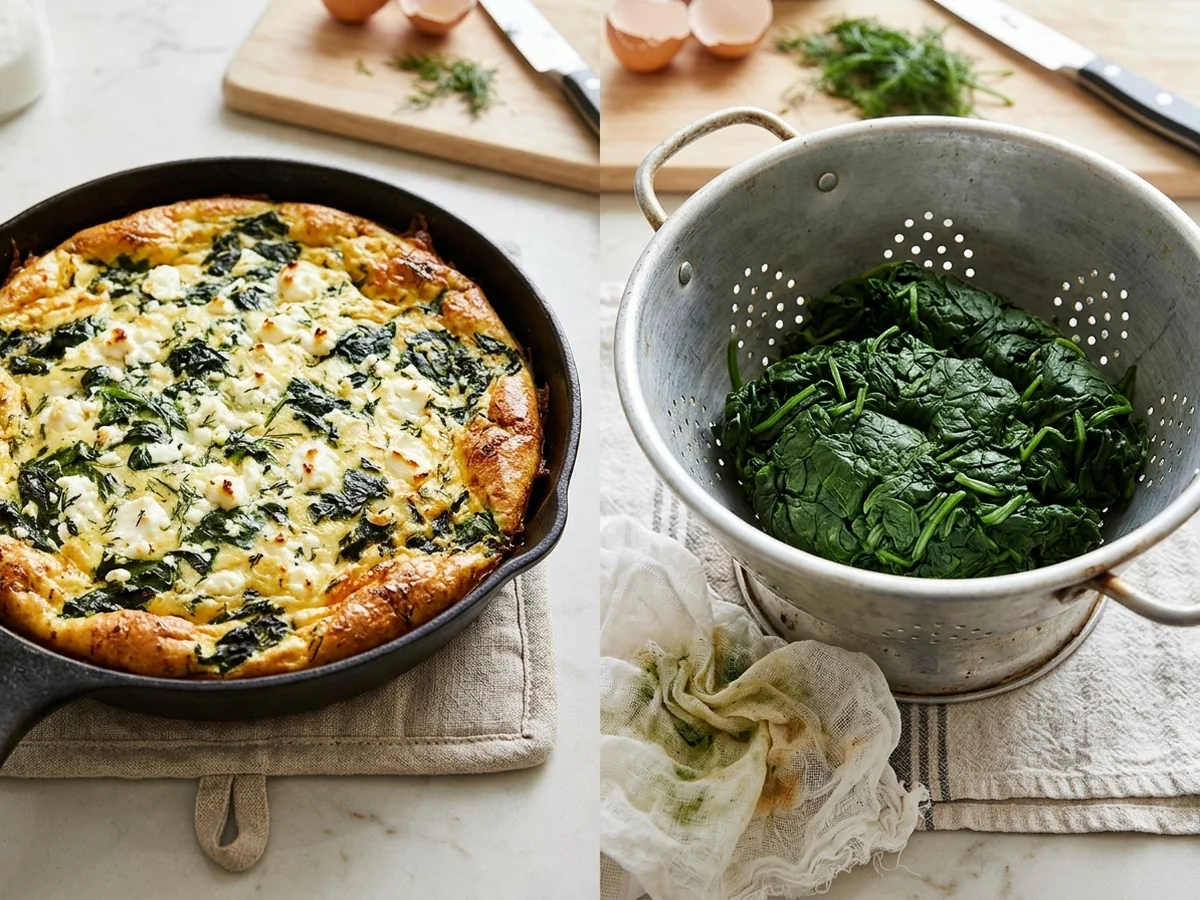
You must remove excess liquid from spinach before incorporating it into your dish to ensure the eggs set properly. Since spinach contains approximately 90 percent water by weight, failing to drain it leaves behind moisture that inhibits protein coagulation. This chemical process is essential for achieving a firm, structured texture in your spanakopita frittata.
Cooking the greens before adding them to your egg base is the most effective way to manage this volume. As the leaves wilt, they lose significant water, which allows you to concentrate the flavor and prevent a watery, unstable result. Always allow the cooked greens to cool slightly before handling them for the final preparation step.
Squeezing the moisture out is a critical technique that requires patience. Use a clean kitchen towel or a fine-mesh sieve to press out every drop of liquid possible. If you skip this, the trapped water will release during the baking process, turning your meal into a soggy, unappealing mixture rather than a cohesive, high-protein breakfast.
When selecting your base ingredient, you have two primary options:
- Fresh spinach: This variety requires wilting in a pan first. It offers a slightly fresher taste but demands more active labor during the initial cooking phase.
- Frozen spinach: This is a convenient alternative that is often already chopped. Ensure it is completely thawed and thoroughly wrung out, as it typically retains more water than its fresh counterpart.
Regardless of which type you choose, the goal is to reach a dry, concentrated state before whisking it into your eggs. Properly prepared spinach will distribute evenly throughout the pan without compromising the structural integrity of your meal. This attention to detail is what separates a standard egg dish from a professional, well-structured result.
Selecting Quality Feta Cheese
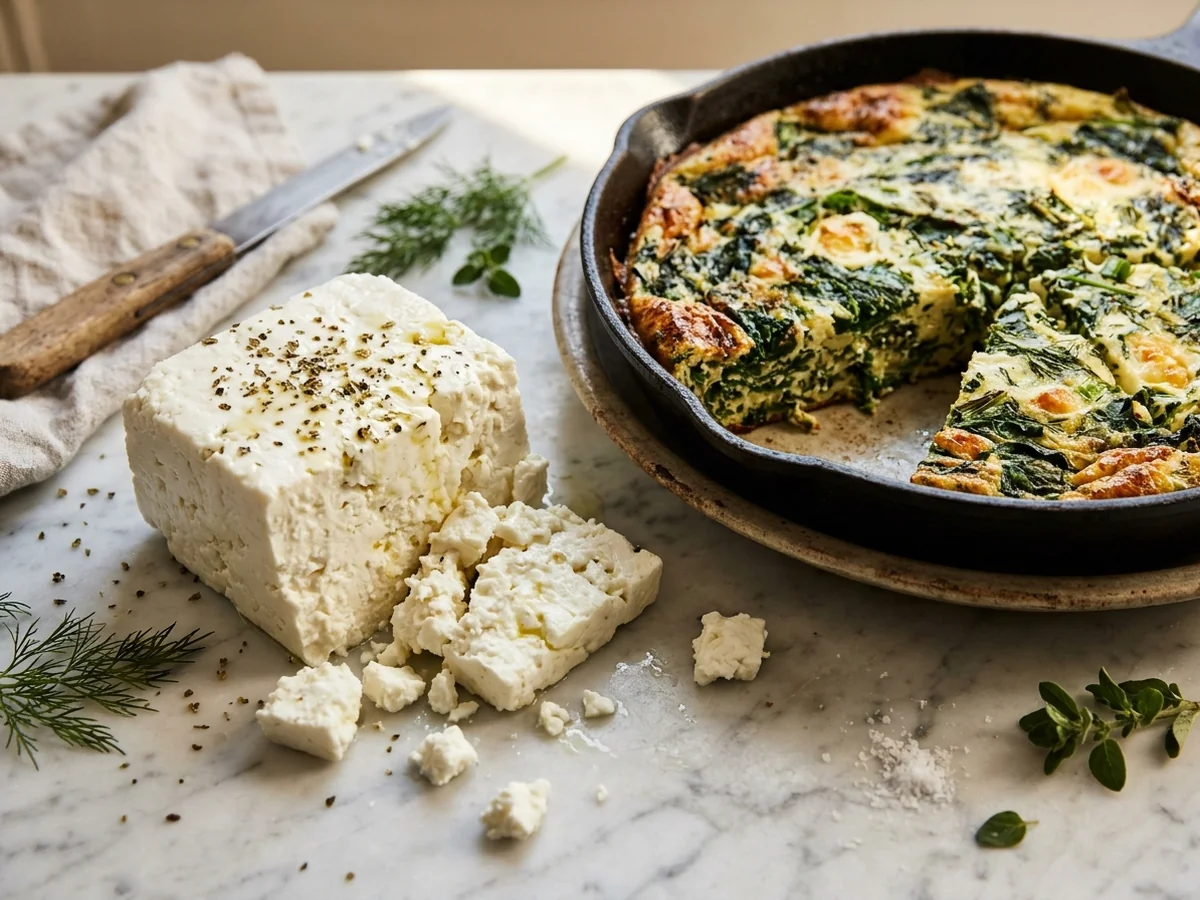
Feta cheese is traditionally made from sheep milk or a blend of sheep and goat milk, providing the signature tangy, sharp profile required for a balanced spanakopita frittata. Because the quality of your dairy directly impacts the final flavor of your oven baked spinach frittata, understanding how to select and handle this ingredient is essential. Unlike milder cheeses, feta cheese contains higher sodium levels compared to fresh cheeses like ricotta due to the traditional brining process used for preservation.
This sodium density requires a strategic approach to your egg mixture. If you add standard amounts of salt to your eggs before incorporating the feta, the dish may become unpalatably salty. A practical step is to omit any additional salt in your egg base initially. Once the feta is folded in, taste the mixture. This allows you to adjust the seasoning based on the specific salt intensity of the batch you purchased. Managing this balance ensures the sharp, salty notes of the cheese complement the earthiness of the spinach rather than overwhelming the entire dish.
Follow these guidelines to ensure you select the best product for your meal:
- Prioritize block feta: Always choose feta sold as a block submerged in brine. Pre-crumbled varieties often contain anti-caking agents that can affect the texture and may lack the moisture retention and clean flavor found in fresh, brined blocks.
- Check the milk source: Review the ingredient list to confirm the cheese is made from sheep milk or a mix of sheep and goat milk. Authentic, high-quality feta avoids unnecessary fillers or additives that dilute the flavor profile.
- Verify origin: When available, look for products that specify the country of origin. Traditional production methods in specific regions are often better at maintaining the consistency and authentic character expected in Mediterranean-inspired dishes.
- Perform a taste test: Before combining the cheese with your eggs, sample a small piece. This is the most reliable way to gauge the salt level of your specific feta, allowing you to calibrate your recipe salt with precision.
- Prioritize freshness: Treat your feta as a perishable ingredient. Keep it fully submerged in its brine in an airtight container in the refrigerator to maintain its moisture and flavor until you are ready to use it in your stovetop to oven egg dishes.
Perfecting Egg Texture
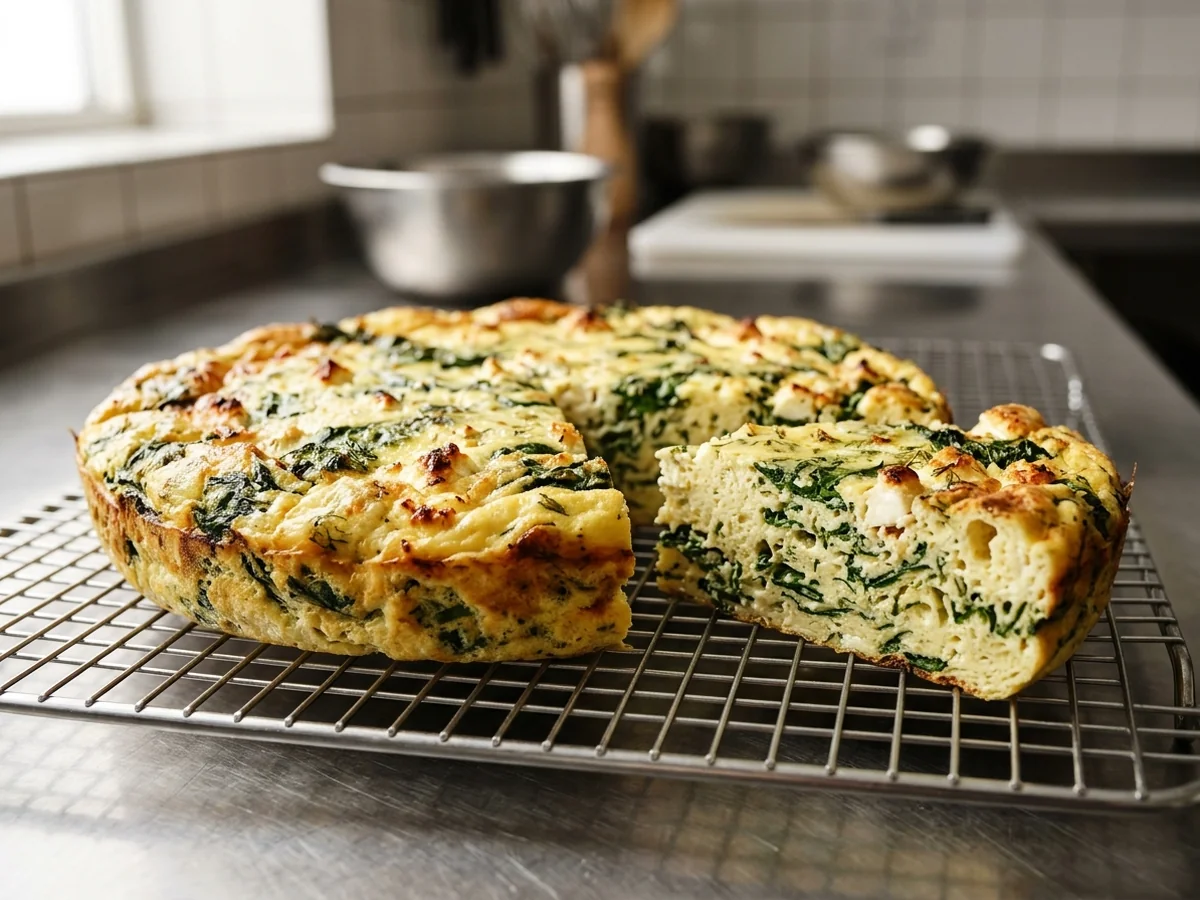
Achieving the right consistency in an oven baked spinach frittata depends on both ingredient quality and precise temperature management. Eggs serve as a high-quality protein source, providing all nine essential amino acids necessary for your body. When these proteins undergo heat, they coagulate to create a firm yet delicate structure that holds your vegetables and cheese together.
Food safety standards dictate that you must cook egg dishes to an internal temperature of 160 degrees Fahrenheit. This benchmark is essential to ensure any potential pathogens are eliminated, providing a safe meal. Using a food thermometer to verify this temperature helps you avoid guessing while also preventing the overcooking that leads to a rubbery or tough final dish.
Improper temperature control significantly impacts the texture of your egg-based meal. When the heat is too low or inconsistent, the proteins fail to set properly, often leaving the center watery or loose. Conversely, exceeding the target temperature for too long causes the proteins to tighten excessively, squeezing out moisture and resulting in a dry, spongy bite.
Moisture management is a critical factor alongside temperature when preparing this dish. It is common guidance that spinach contains approximately 90 percent water by weight, and this liquid must be addressed to protect the integrity of the eggs. If you do not remove excess moisture from your vegetables before adding them to the eggs, it inhibits proper protein coagulation. Follow these steps to ensure a superior texture:
- Sauté or steam your spinach first to reduce its volume and release trapped water.
- Squeeze the cooked greens thoroughly to remove as much liquid as possible.
- Allow the vegetable mixture to cool slightly before whisking it into your eggs.
- Monitor the internal temperature closely as the dish bakes to reach the safe 160 degree mark without overheating.
By balancing the high-quality protein of the eggs with effective moisture removal and strict adherence to safe internal temperatures, you create a cohesive and satisfying meal. Proper execution ensures that the final result is tender, flavorful, and structurally sound every time you use your skillet.
Stovetop to Oven Techniques
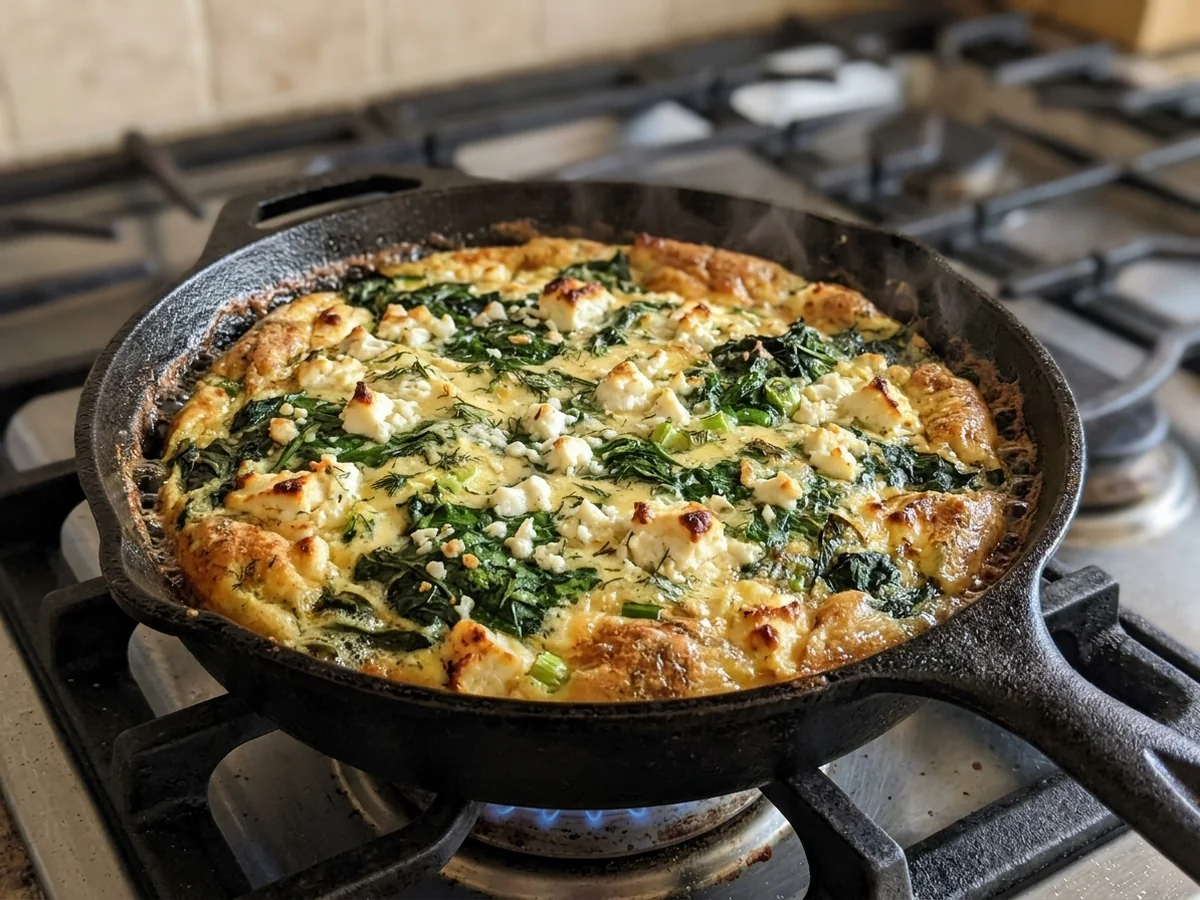
Cooking a spanakopita frittata in a cast iron skillet allows for consistent heat distribution, which is essential for uniform protein coagulation. Because cast iron retains heat exceptionally well, it provides a steady, even temperature that helps the eggs set without developing hot spots.
The process begins on the stovetop to establish a firm base. You pour your egg and spinach mixture into a preheated, greased skillet over medium heat. Let the edges sit undisturbed for a few minutes until they appear opaque and set, while the center remains slightly liquid. This step creates a structural foundation that holds the ingredients together before the final transition.
Once the edges are firm, transfer the skillet directly to a preheated oven to finish the cooking process. This method ensures the top sets evenly through ambient heat, preventing the bottom from burning before the middle is cooked through. According to FoodSafety.gov, the standard safe internal temperature for egg dishes is 160 degrees Fahrenheit, which you can verify using an instant-read thermometer.
To avoid overcooked, rubbery edges, follow these helpful cast iron frittata tips. Lower the oven temperature slightly if you notice the sides browning too quickly, or tent the edges of the pan with foil to slow their cooking. Monitoring the center is vital, as excess liquid in egg-based casseroles inhibits proper coagulation of proteins. If your spinach is not properly drained, the water content can pool in the center, leading to a soggy texture even after the eggs reach a safe internal temperature.
- Ensure the skillet is well-seasoned to prevent sticking.
- Sauté your spinach thoroughly first, as cooking reduces its volume significantly due to water loss.
- Use a spatula to gently lift the edges during the stovetop phase to let raw egg flow underneath.
- Avoid overcrowding the pan to maintain consistent heat flow across the surface.
Common Frittata Cooking Mistakes
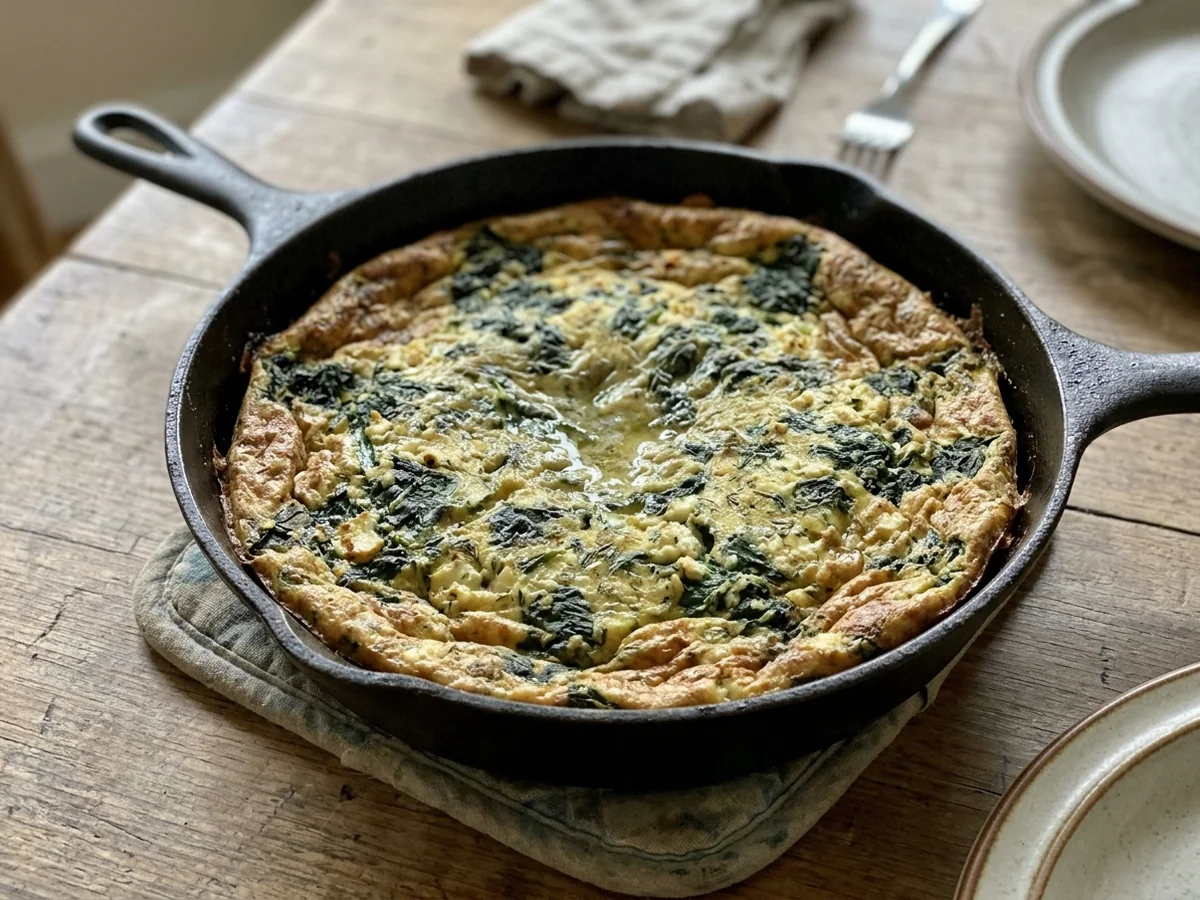
Achieving a high-quality spanakopita frittata requires mastering the balance between protein structure and moisture management. Eggs are a high-quality protein source containing all nine essential amino acids, but this delicate structure is easily compromised by improper preparation. Common errors often result in a dish that is either watery, rubbery, or inconsistently cooked.
| Issue | Result | Common Cause | Practical Correction |
|---|---|---|---|
| Soggy, weeping eggs | Watery base | Excess moisture | Sauté and thoroughly squeeze spinach |
| Uneven setting | Sticking and curdled | Cold pan usage | Preheat skillet before adding eggs |
| Bland flavoring | Unbalanced profile | Ignoring feta salt | Adjust salt levels based on feta variety |
| Overcooked center | Rubbery texture | Extended heat exposure | Use the stovetop-to-oven method |
The most significant technical hurdle is the spinach. Common guidance indicates that spinach contains approximately 90 percent water by weight, and cooking it reduces its volume significantly. If you add raw or inadequately drained spinach to your mixture, that internal water will release during the baking process. Because excess liquid inhibits the proper coagulation of proteins, your eggs will fail to set into a firm, cohesive structure, leaving you with a weeping, unappetizing result. Always sauté your greens separately until the moisture has evaporated, then press them firmly between paper towels or a clean cloth before incorporating them into the eggs.
Another common mistake involves neglecting the temperature of your cooking vessel. When using a cast iron skillet, ensure it is properly preheated. Adding egg mixtures to a cold pan encourages sticking and prevents the edges from forming the necessary structure to support the rest of the frittata. Furthermore, while feta cheese is traditionally made from sheep milk or a blend of sheep and goat milk, it contains higher sodium levels compared to fresh cheeses like ricotta. Failing to account for this can lead to an overly salty final product; adjust your added salt accordingly.
For consistent results, move away from purely stovetop cooking. Start your spanakopita inspired frittata on the burner to set the base, then transfer the pan to a preheated oven to finish the top. This ensures the dish reaches the safe internal temperature of 160 degrees Fahrenheit, as required by the Food Safety and Inspection Service, without burning the bottom. Once finished, remember that rapid cooling of cooked egg dishes to below 40 degrees Fahrenheit is essential to prevent bacterial growth if you are saving leftovers for later.
Storage and Safety Guidelines
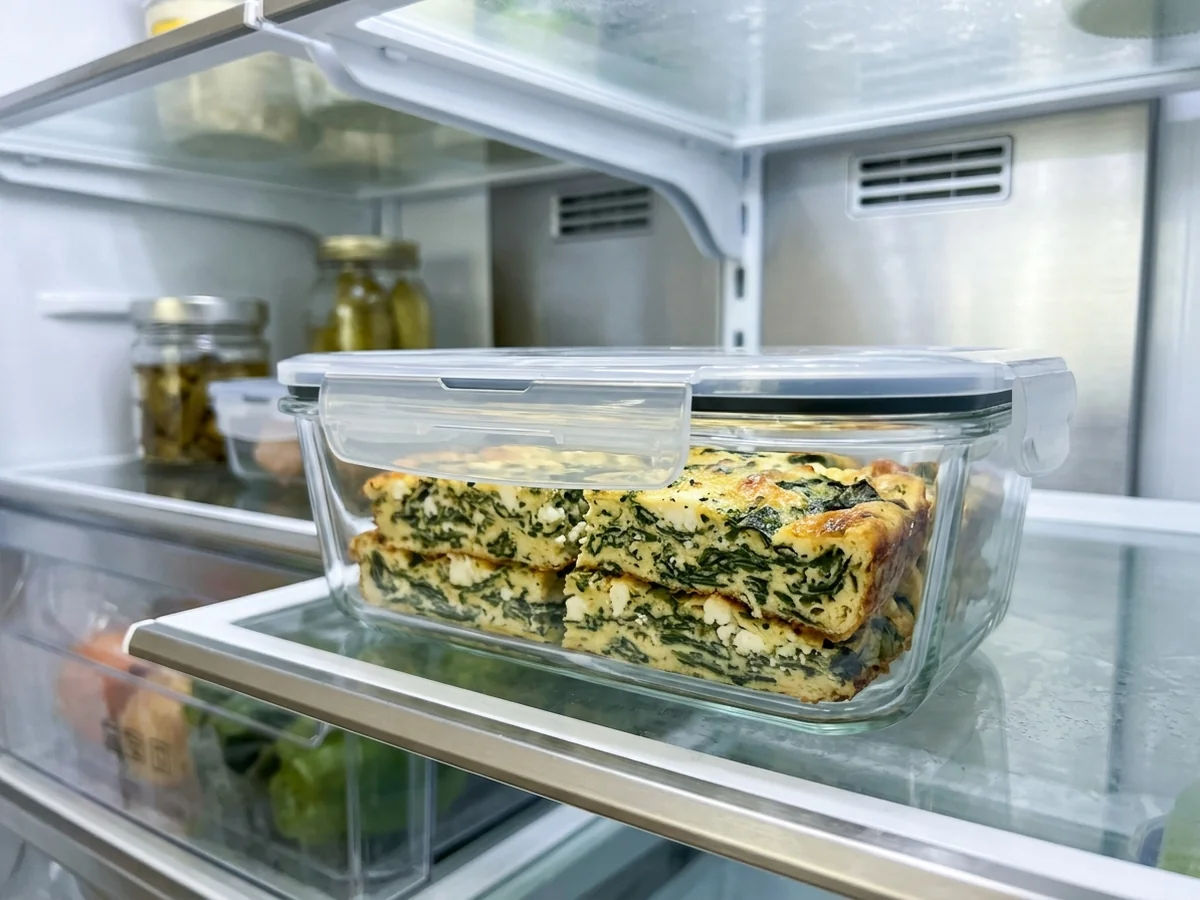
Maintaining high standards for food safety is essential when preparing egg-based meals like a spanakopita frittata. Because eggs are a high-quality protein source containing all nine essential amino acids, they require precise temperature management to remain safe and appetizing. According to the FDA, you must keep eggs and egg dishes refrigerated at or below 40 degrees Fahrenheit at all times. This temperature threshold is critical for inhibiting the growth of harmful bacteria that can thrive in nutrient-dense environments.
The transition from oven to refrigerator is a common point of failure in home meal prep. To ensure safety, you must prioritize the rapid cooling of cooked egg dishes. Leaving a frittata at room temperature for extended periods allows the internal temperature to linger in the danger zone, where bacterial multiplication occurs quickly. Aim to move your finished dish into the refrigerator within two hours of cooking. If you are portioning the meal for the week, using shallow, airtight containers facilitates faster cooling compared to leaving the entire skillet in the fridge.
When you are ready to consume your leftovers, follow these protocols to maintain quality and safety:
- Remove only the individual portion you intend to eat, rather than the entire container, to avoid repeated temperature fluctuations.
- Reheat the egg dish thoroughly until it reaches an internal temperature of 160 degrees Fahrenheit. This is the standard safe minimum internal temperature for egg dishes as established by FoodSafety.gov.
- Use a calibrated food thermometer to verify the center of the dish has reached this temperature. Relying on visual cues is often inaccurate, and ensuring the center reaches 160 degrees Fahrenheit protects you from undercooked proteins.
- Avoid reheating the same portion multiple times. Each cycle of cooling and reheating degrades the texture, as excess liquid can inhibit the proper coagulation of proteins, leading to a watery or rubbery final result.
Finally, track your storage duration carefully. If the frittata has been in the refrigerator for more than a few days, it is best to discard it. Consuming food within this window ensures you are eating at peak safety and quality. By adhering to these strict cooling and reheating practices, you can confidently enjoy your high-protein meal prep throughout the week.
FAQ
Should I cook spinach before adding it to a spanakopita frittata?
Yes, you should always cook and thoroughly drain your spinach before mixing it with eggs. Because spinach contains approximately 90 percent water by weight, failing to remove excess moisture inhibits proper protein coagulation, leading to a watery or undercooked center.
What is the safe internal temperature for an egg-based dish?
According to FoodSafety.gov, the standard safe internal temperature for egg dishes is 160 degrees Fahrenheit. Using a food thermometer ensures your meal is fully cooked while maintaining the high-quality protein benefits eggs provide.
How do I prevent my frittata from becoming rubbery?
Avoid overcooking your eggs by monitoring the internal temperature closely and removing the pan from the heat once it reaches the safe threshold. Since eggs are a high-quality protein source, they remain tender when cooked gently, but they can toughen quickly if exposed to excessive heat for too long.
Can I substitute feta cheese with other cheeses?
While you can use other cheeses, keep in mind that feta cheese is traditionally made from sheep milk or a blend of sheep and goat milk, which provides a unique tang. Feta also typically contains higher sodium levels compared to fresh cheeses like ricotta, so you may need to adjust the amount of added salt in your recipe accordingly.
How should I store leftovers of my spinach and feta frittata?
Rapidly cool your cooked egg dish to below 40 degrees Fahrenheit to prevent bacterial growth before placing it in the refrigerator. You should always keep eggs refrigerated at or below 40 degrees Fahrenheit to ensure food safety for future meals.
Why does my spinach volume decrease so much during cooking?
Cooking spinach reduces its volume significantly due to water loss during the heating process. This shrinkage is normal, so plan to use a larger quantity of raw greens than you think you need to achieve the desired density in your finished dish.
Conclusion
The success of your meal depends on managing moisture levels and ensuring proper protein coagulation. Since excess liquid interferes with the setting of eggs, thoroughly draining your greens is the most critical preparation step before you begin cooking. By maintaining an internal food temperature of 160 degrees Fahrenheit, you ensure both safety and the desired texture for your dish. Whether you are prepping for a high-protein breakfast or a quick dinner, mastering your spanakopita frittata requires attention to these core culinary fundamentals. Now that you have a firm grasp on the techniques for handling spinach and egg proteins, your next step is to select fresh ingredients and prepare your skillet to achieve that ideal, golden finish.
Sources: foodsafety.gov, pmc.ncbi.nlm.nih.gov, extension.umn.edu, fda.gov
You might also like: Blueberry Lemon Overnight Oats with chia