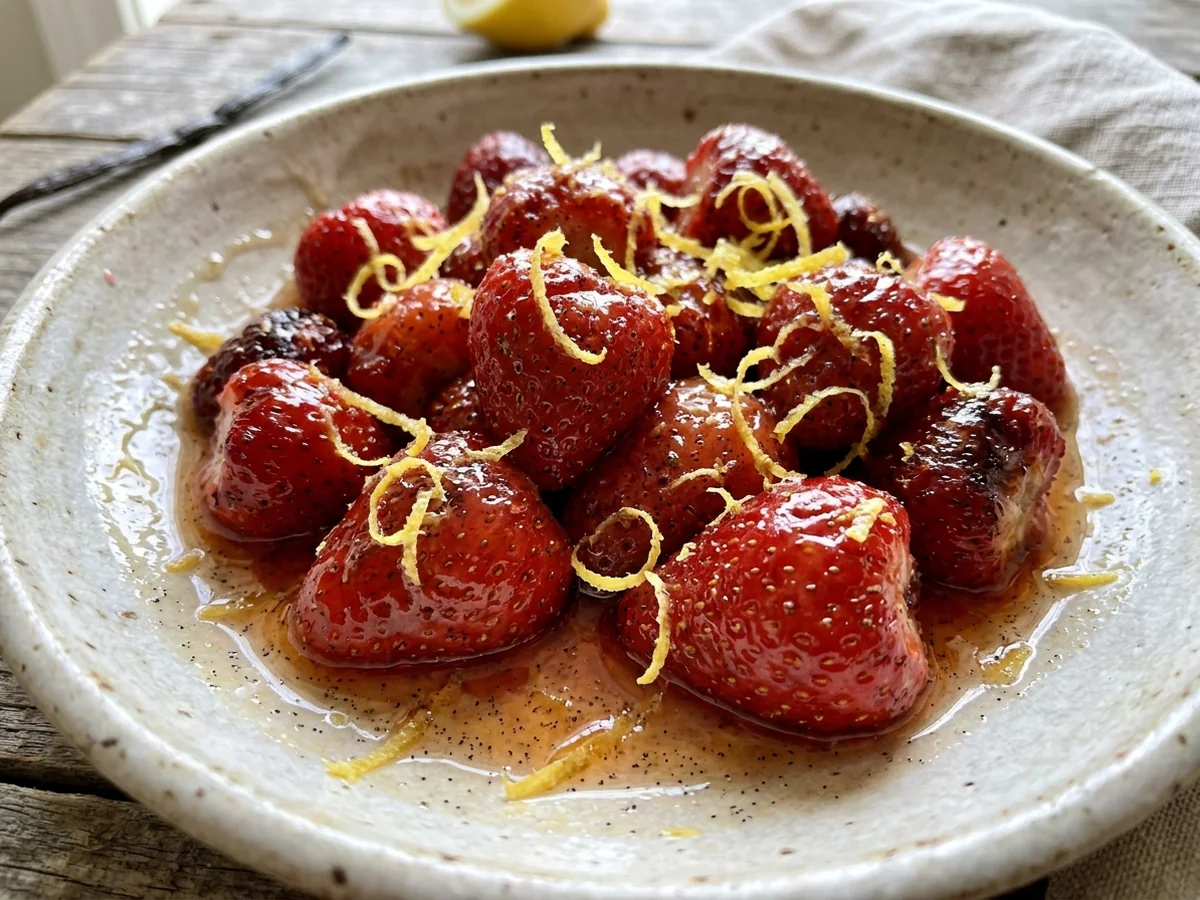
honey roasted strawberries with vanilla lemon
Introduction
Preparing honey roasted strawberries brings out the natural sweetness of the fruit while creating a rich, concentrated glaze. This simple cooking method transforms fresh berries into a warm, tender treat that works well in both sweet and savory dishes.
This guide covers everything you need to know about making this dessert at home. Readers will learn the exact oven temperatures, preparation steps, and flavor pairings like vanilla bean and lemon zest to get the best results every time.
Understanding the Appeal of Honey Roasted Strawberries
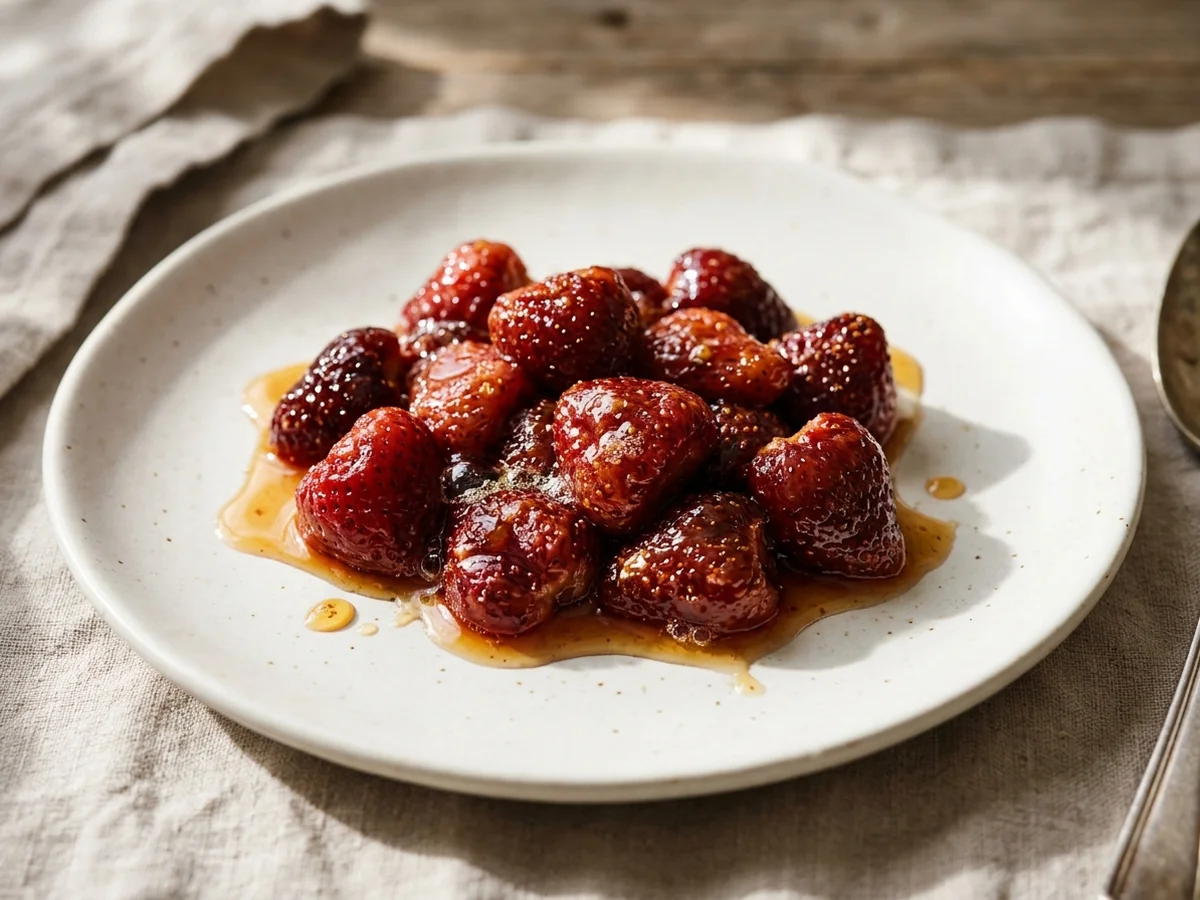
Roasting transforms natural fruit sugars through gentle heat, concentrating their sweetness and creating a rich, jammy texture that raw fruit cannot match. Applying heat breaks down cellular walls, allowing natural juices to release and thicken into a concentrated syrup. Preparing honey roasted strawberries in oven environments brings out the deepest flavors of the harvest while keeping the technique straightforward for any home cook.
Pairing the warm fruit with aromatic vanilla bean, lemon zest, and bright citrus oils elevates the dish from a simple side into a complex culinary experience. The floral notes of the vanilla soften the natural tartness, while fresh citrus oils provide a vibrant contrast that balances the sweetness of the glaze. When wondering how do you roast strawberries, the secret lies in choosing the right temperature and preparation method to achieve that ideal texture.
Following a reliable roasted strawberries recipe requires paying attention to a few practical steps to avoid common mistakes like watery fruit or burnt edges. Setting the oven to the correct temperature ensures even caramelization. According to guidelines from the University of Illinois Extension, the oven should be preheated to 375 degrees Fahrenheit. Additionally, the baking sheet should be lined with parchment paper, a standard practice supported by City University of New York safety guidelines, to prevent sticking and make cleanup easier.
Home cooks often incorporate the finished fruit into everyday meals for several reasons:
- Spoon the warm, syrup-soaked fruit over morning oats, yogurt bowls, or chia pudding
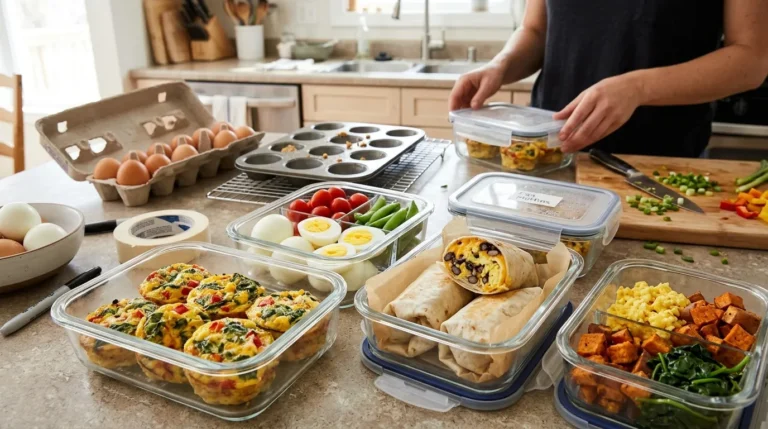
- Layer the ingredients into wholesome meal prep containers for quick weekday snacks
- Pair the warm berries with simple toast spreads or morning pastries
Understanding strawberry with honey benefits reveals why this combination works so well for everyday nutrition and flavor enhancement. The natural sugars in the fruit caramelize when exposed to gentle heat, blending smoothly with the honey to create a luscious glaze. Common guidance suggests that roasting takes about 30 minutes until the strawberries are softened and juices bubble, yielding roughly one cup of finished fruit that can be refrigerated for up to a week.
Selecting and Preparing Quality Fruit
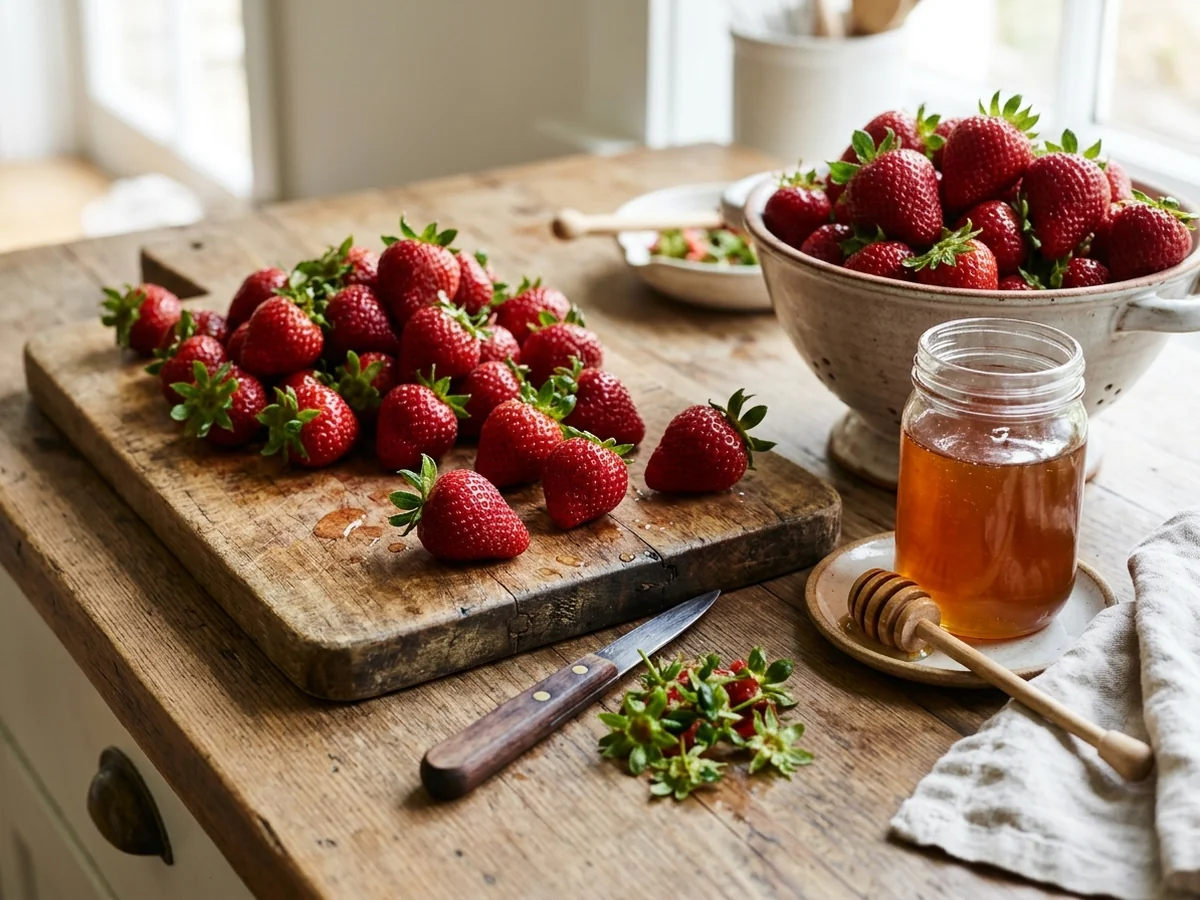
Selecting premium berries and prepping them correctly ensures your honey roasted strawberries turn out tender rather than soggy. You do not need massive quantities for a standard batch, as a couple of pints provide enough fruit to concentrate nicely in the oven without overcrowding your pan. When planning how do you roast strawberries for meal prep or healthy snacks, starting with properly chosen fruit is essential for achieving the right texture.
Inspecting and Washing Berries
Inspect each berry for firmness and bright red color before beginning. Regional agricultural sources note that Southern California strawberries are available year round, giving you reliable access to fresh produce for baking. Always wash your berries gently and pat them completely dry with a clean towel before trimming. Many home cooks make the mistake of chopping fruit while it is still damp, which introduces excess moisture and prevents proper caramelization in the oven.
Trimming and Slicing
Proper hulling involves slicing off the green stem and the tough white core just beneath the surface. Remove stems cleanly without gouging the flesh. According to USDA FoodData Central, whole strawberries supply essential micronutrients like vitamin C and dietary fiber. Roasting concentrates these natural components as the water content reduces, intensifying both flavor and nutritional density per serving.
Pan Preparation and Flavor Enhancements
Before adding your prepared fruit to the pan, line your baking sheet with parchment paper to prevent sticking and make cleanup easier. While arranging your honey roasted strawberries in oven ready setups, you can incorporate flavor pairings such as fresh lemon zest or scraped vanilla bean to elevate the natural strawberry with honey benefits. Keeping pieces uniform helps the fruit soften evenly as the natural juices bubble during cooking.
- Inspect each berry for firmness and bright red color
- Remove stems cleanly without gouging the flesh
- Pat dry thoroughly to encourage caramelization
Essential Equipment for Even Roasting
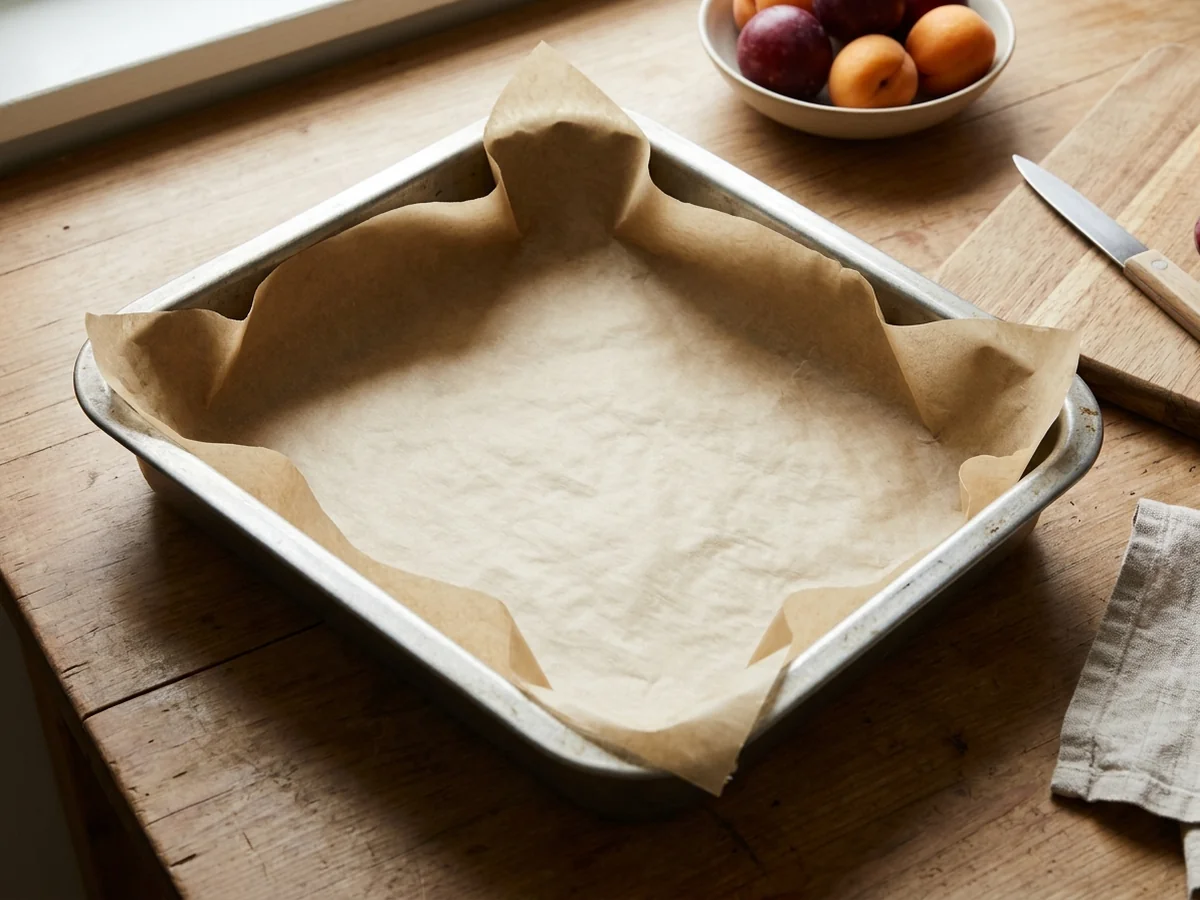
Preparing the right equipment ensures fruit caramelizes evenly without steaming in excess moisture. When making honey roasted strawberries in the oven, having a sturdy metal pan and the proper lining makes the entire process easier and prevents sticking.
According to safety guidelines from the City University of New York, a baking sheet should always be lined with parchment paper before adding juicy fruits. This step stops natural sugars from burning directly on bare metal and makes cleanup completely effortless.
Choosing the correct pan size prevents fruit pieces from overlapping. A common mistake is crowding too many pieces onto a single pan. When pieces pile on top of each other, they release liquid that traps steam, which prevents proper browning and keeps the fruit soggy.
Proper airflow requires enough space between each piece of fruit on your baking sheet. Spreading the ingredients in a single layer lets moisture evaporate quickly so the natural sugars concentrate properly. If you are preparing a larger batch, use two pans rather than crowding a single one.
The Oven Roasting Method
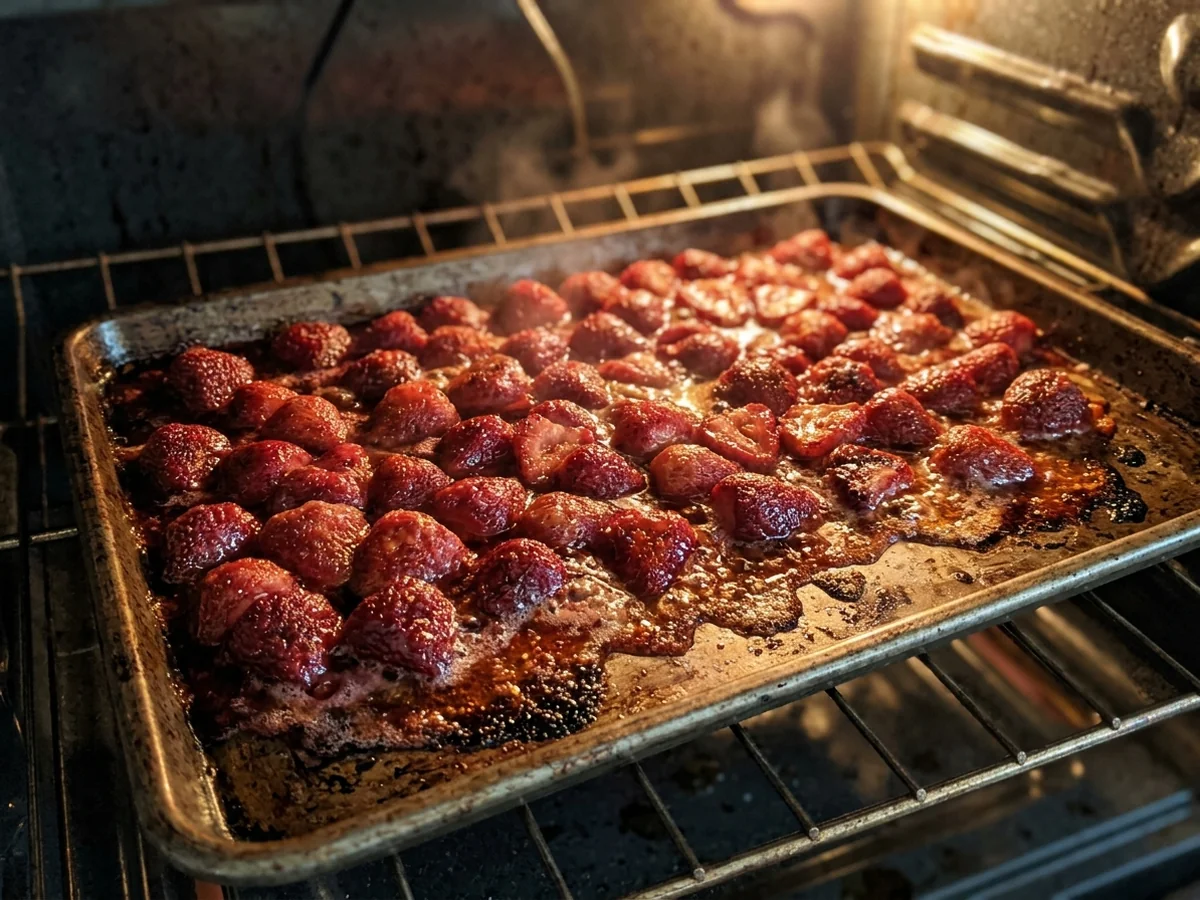
Preparing honey roasted strawberries in the oven is a simple culinary process that enhances the natural sweetness of the fruit while creating a rich, concentrated glaze. When preparing your ingredients for the baking pan, proper preparation ensures even cooking and prevents sticky messes. According to University of Illinois Extension guidelines, the oven should be preheated to 375 degrees Fahrenheit before any baking begins. Additionally, lining your baking sheet with parchment paper is essential for keeping the fruit from sticking and making cleanup much easier.
Many home cooks wonder how do you roast strawberries properly without burning them or turning them into mush. While preparation styles can vary depending on fruit size, cutting your berries into uniform pieces ensures even heat distribution. As the fruit bakes, natural juices release and meld smoothly with honey, vanilla bean, and lemon zest. This slow reduction thickens the liquid into a glossy syrup that coats each piece.
Typical guidance suggests that the roasting time takes about 30 minutes until the berries are fully softened and their juices bubble gently across the pan. Keeping a close eye on the oven near the end prevents scorching, especially since natural fruit sugars can caramelize quickly. Avoiding common mistakes, such as overcrowding the pan or skipping the parchment lining, guarantees a better texture. Once cooled, roasted strawberries can typically be refrigerated for up to a week in a sealed container, making them a versatile topping for yogurt, oatmeal, or high-protein breakfast bowls.
Infusing Vanilla Bean and Lemon Zest
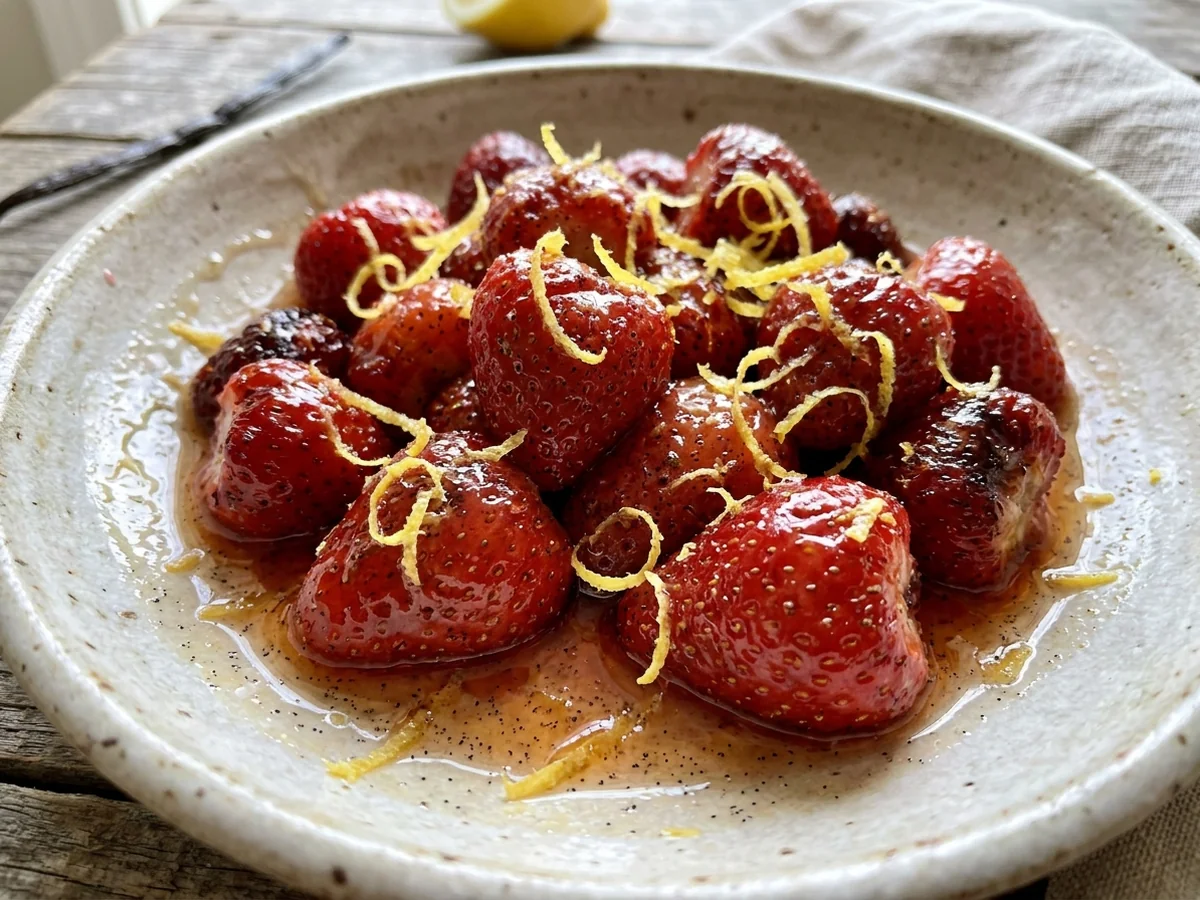
Incorporating fresh vanilla bean scrapings and bright lemon zest creates a layered flavor profile by pairing rich, floral sweetness with sharp citrus aromatics that cut through the natural fruit sugars. These delicate ingredients transform a standard pan of honey roasted strawberries into a sophisticated dessert topping or a flavorful addition to breakfast bowls like oatmeal and yogurt. When preparing these flavor pairings, home cooks often wonder about the best method for roasting fruit without losing the delicate aromatics of the botanicals.
Timing matters significantly when adding these ingredients during the baking process to prevent them from burning in the hot oven. Delicate botanicals and citrus oils easily scorch at high heat, turning bitter rather than fragrant. Following a careful sequence ensures the flavors meld correctly while the fruit softens on your baking sheet lined with parchment paper.
- Stir the vanilla scrapings directly into the fruit mixture before it goes into the oven to let the pods infuse the natural juices as they warm and soften.
- Save the lemon zest to sprinkle over the hot fruit immediately after it comes out of the oven, which preserves the vibrant essential oils without exposing them to direct heat that destroys their brightness.
- Monitor the roasting process closely since typical guidance suggests cooking for about 30 minutes until the strawberries soften and their juices bubble gently across the baking sheet.
Balancing sweetness with vibrant citrus notes relies on restraint and proper proportion. A light touch of citrus brightens the rich profile of honey roasted strawberries without overpowering the delicate fruit flavor or masking the natural taste of the harvest.
Troubleshooting Common Roasting Issues
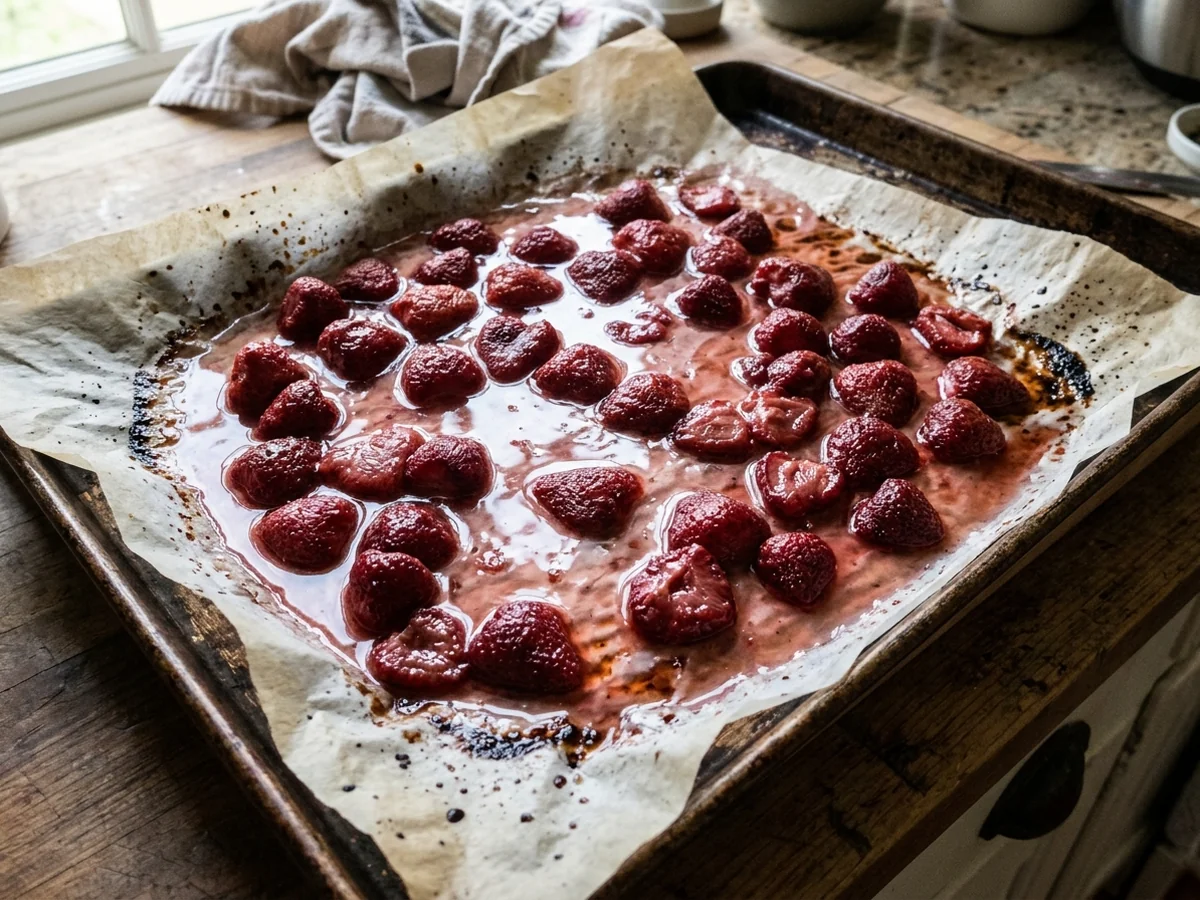
Preparing honey roasted strawberries in oven methods is usually straightforward, but excess liquid release can turn your fruit waterlogged if not managed correctly. Fresh berries naturally release a high volume of water as heat breaks down their cell walls. Controlling this moisture prevents the fruit from stewing in its own juices and helps achieve the right consistency.
Preventing Watery Fruit and Overcrowding
One of the most frequent mistakes is overcrowding the baking sheet. When fruit pieces touch or overlap, they trap steam instead of allowing the natural juices to evaporate efficiently. According to guidelines from the City University of New York, your baking sheet should be lined with parchment paper, which prevents sticking and aids even heat distribution. Ensuring enough space between every piece lets excess moisture escape quickly so the natural sugars can concentrate properly.
Managing Temperature and Consistency
Another variable to watch is fruit size and ripeness, since softer berries release liquid much faster than firmer ones and create uneven texture if sizes vary wildly. You should ensure your oven is preheated to 375 degrees Fahrenheit, a standard temperature recommended by the University of Illinois Extension, before placing the pan inside. This specific heat level starts the cooking process immediately and prevents the fruit from becoming mushy before the heat penetrates.
Achieving the Right Syrup Reduction
Achieving a concentrated syrup depends on letting the juices reduce properly during the final minutes of cooking. If your liquid looks too thin when the roasting time is up, simply return the pan to the heat for a few extra minutes until the natural sugars thicken. Common guidance notes that about 30 minutes is typical for the fruit to soften and the juices to bubble nicely. Once finished, typical practice suggests that roasted strawberries can be refrigerated for up to a week if you want to prepare them ahead of time for meal prep bowls or morning yogurt pairings.
Pairing Ideas for Yogurt and Breakfast Bowls
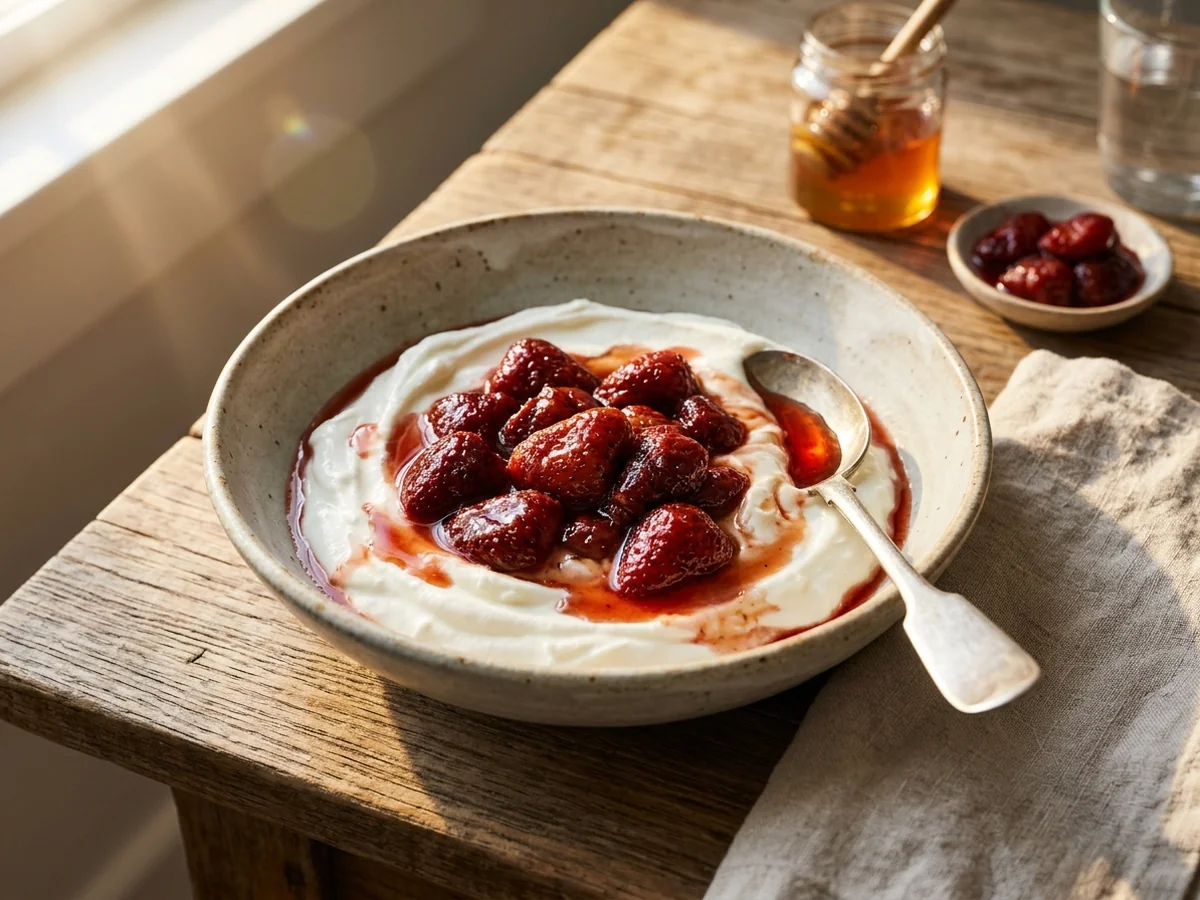
Folding warm honey roasted strawberries into morning dairy or plant based yogurt creates an effortless contrast of temperature and texture. Spooning the softened fruit and its fragrant juices straight into a bowl of plain Greek yogurt instantly upgrades a simple morning routine. Connecting this preparation method to healthy breakfast meal planning goals keeps busy weekdays organized and flavorful. Batch roasting fruit ahead of time allows for quick assembly during hectic mornings when wholesome eating goals require fast, nourishing choices.
Building a Balanced Breakfast Bowl
To assemble a satisfying morning meal that supports high protein goals without sacrificing flavor, follow these practical steps:
- Start with a base of plain Greek yogurt, cottage cheese, or morning oats to provide a rich protein foundation.
- Spoon a generous portion of the warm fruit directly over the top, allowing the juices to seep into the base.
- Finish the bowl with fresh lemon zest, a pinch of vanilla bean, or toasted nuts for added texture.
Flavor Enhancements and Seasoning Ideas
When you want to elevate your morning routine, incorporating simple aromatics makes a noticeable difference. Pairing warm fruit with fresh lemon zest or a touch of vanilla bean brightens the natural sweetness of the honey roasted strawberries prepared with dry heat. You can also explore a roasted strawberries recipe that highlights these botanical notes, creating a versatile topping that fits seamlessly into meal prep containers for busy work weeks.
Troubleshooting Common Fruit Preparation Mistakes
A common mistake when adding fruit to dairy is using overly wet ingredients that make the bowl soggy. Roasting the fruit properly until the juices bubble helps concentrate the natural flavors and thickens the liquid. This ensures your breakfast bowl remains rich and flavorful without watering down your morning meal. Proper storage also plays a role, as roasted strawberries can typically be refrigerated for up to a week in a sealed container.
Creative Uses in Oatmeal and Baked Goods
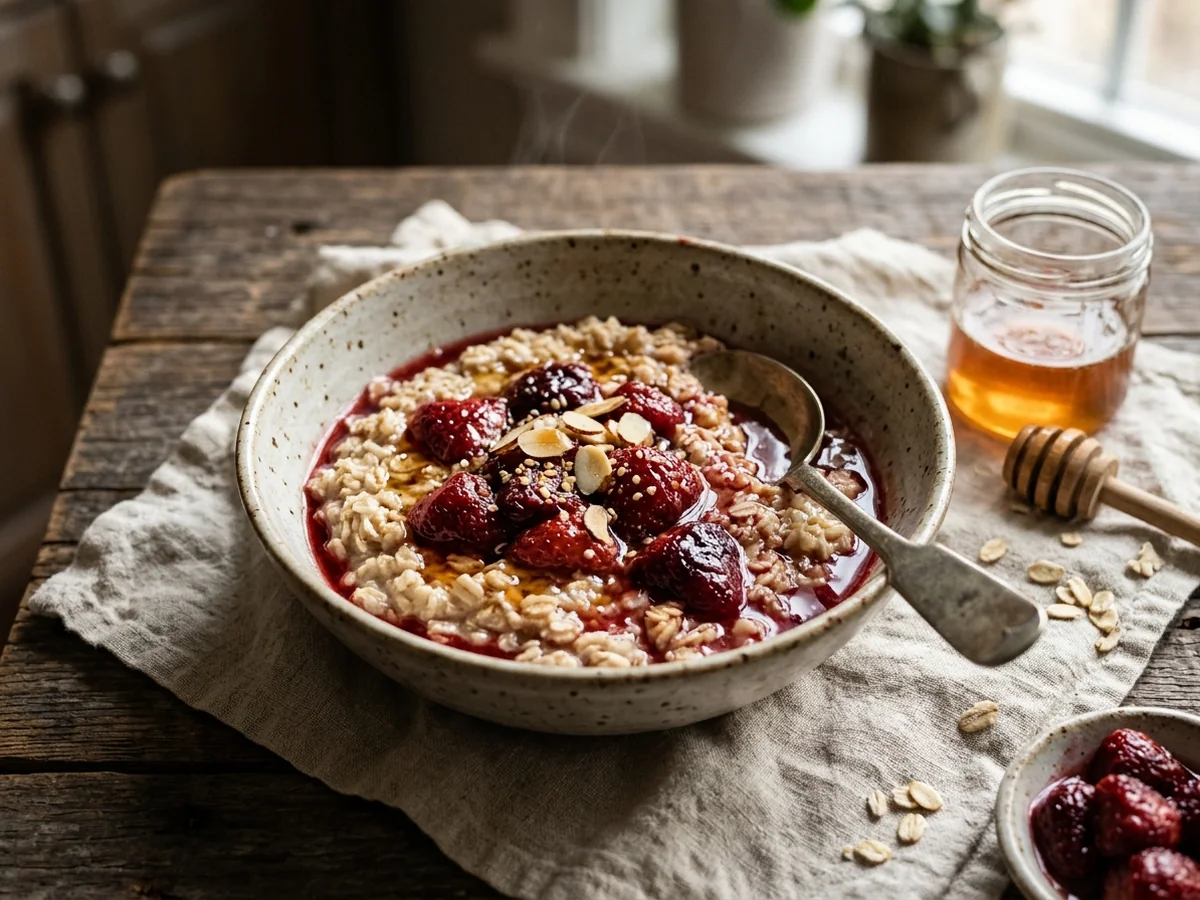
Incorporating honey roasted strawberries into morning grain dishes and healthy bakes brings a concentrated fruit flavor to everyday breakfasts. The natural heat from the oven breaks down the cell walls of the fruit, releasing rich juices that blend smoothly into warm oats and morning treats. Understanding how to use these tender berries effectively helps elevate simple meal prep routines without relying on heavy processing or refined sugars.
Flavor Pairings for Warm Oats and Parfaits
When planning your weekly meals, consider how specific aromatics enhance the natural sweetness of your ingredients. Pairing the warm fruit with complementary elements like grated lemon zest and fresh vanilla bean creates a vibrant addition to both sweet breakfasts and savory brunch spreads. Typical guidance suggests that a standard preparation yields about 1 cup of finished fruit, which suits several portions of morning grains.
- Spoon the warm fruit and its released juices over a steaming bowl of steel cut oats or overnight grains.
- Layer the tender berries into yogurt parfaits along with fresh vanilla bean and grated lemon zest.
- Top toasted sourdough bread that has been spread with a thick layer of creamy ricotta cheese.
Preventing Excess Liquid in Baked Goods
One common mistake when adding fruit to baked goods is introducing too much liquid, which can lead to soggy textures. To prevent this, drain any excess pooled pan juices before folding the berries into dense batters, and save those concentrated juices to drizzle over the top of pancakes or yogurt bowls instead. Mixing the fruit into your dishes at the right stage ensures an even distribution of flavor. For instance, stirring the berries into pancake batter right before cooking on the griddle distributes pockets of sweetness throughout the meal. When preparing your ingredients, remember that the oven should be preheated to 375 degrees Fahrenheit, and the baking sheet should be lined with parchment paper to prevent sticking.
Storage and Meal Prep Tips
For home cooks looking to streamline their weekly routines, batch preparation offers significant convenience. Common guidance indicates that roasted strawberries can be refrigerated for up to a week in an airtight container. This makes them easy to fold directly into muffin batter or healthy scone recipes whenever needed, or simply spooned over cold morning bowls for a burst of seasonal flavor.
Storage and Meal Prep Guidelines
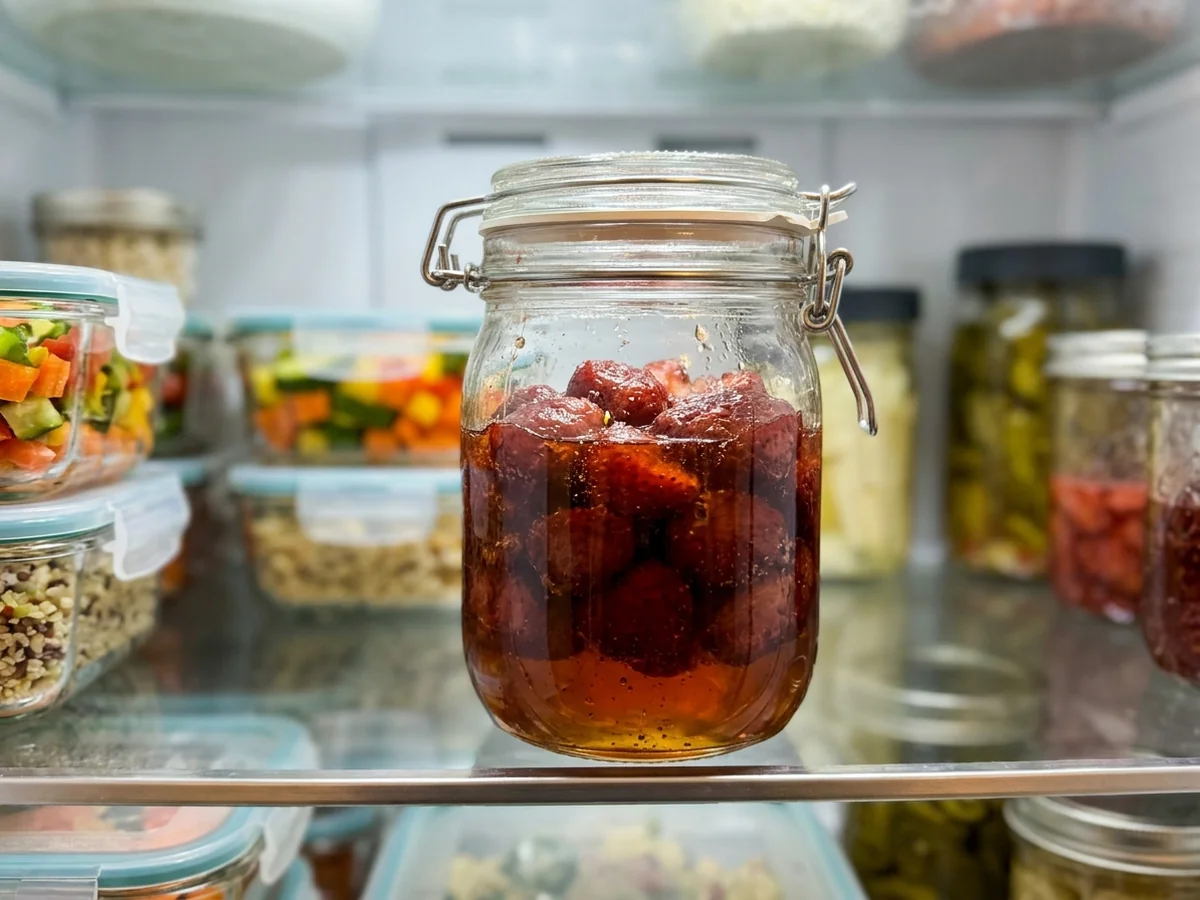
Proper storage ensures your warm-baked fruit stays fresh and maintains vibrant flavor throughout the week. When kept in a sealed airtight container in the refrigerator, this oven-roasted fruit can typically be refrigerated for up to a week. This makes the recipe ideal for weekly meal prep routines where you can prepare a double batch on a single baking sheet lined with parchment paper to save time and streamline your kitchen workflow.
Cooling and Handling Best Practices
To achieve the best texture and prevent premature spoilage, follow safe cooling and handling practices before sealing your containers:
- Allow the warm fruit to cool completely to room temperature on your counter before placing a lid on the container. Sealing warm fruit traps steam, which creates condensation and leads to a soggy texture and faster spoilage.
- Portion the fruit into smaller containers if you prefer grabbing single servings for busy mornings.
- Keep containers near the front or middle shelves of the refrigerator where temperature fluctuations are minimal.
Incorporating Your Warm-Baked Fruit Into Meals
Having a ready supply of this baked fruit in your kitchen allows you to quickly stir portions into morning yogurt bowls, oatmeal dishes, or work lunch containers throughout the week. You can also pair the finished fruit with fresh lemon zest or a hint of vanilla bean to elevate the flavor profile.
Common Mistakes to Avoid
Common mistakes to avoid include sealing the storage container while the fruit is still hot and failing to line your baking sheet, which makes cleanup difficult and can cause delicate fruit pieces to stick. By taking a few extra minutes to cool and store the batch correctly, you ensure every serving tastes as fresh as the day it came out of the oven preheated to 375 degrees Fahrenheit.
Techniques for Roasting and Seasoning Sweet Oven Baked Berries
Preparing oven baked berry treats transforms fresh fruit into a rich, concentrated topping that works well for wholesome breakfasts and simple fruit desserts. When you want to bake fruit in the oven to concentrate its flavor, the process relies on gentle heat to draw out moisture and caramelize natural sugars. Standard kitchen practices require lining a baking sheet with parchment paper to prevent sticking and ensure even caramelization without burning. According to guidelines from the University of Illinois Extension, the oven should be preheated to 375 degrees Fahrenheit before you slide the pan inside.
Step by Step Roasting Instructions
To make honey glazed fruit treats, start by tossing your prepared ingredients in a bowl with your liquid sweetener and flavorings so every piece is evenly coated. Spread the pieces in a single layer on your prepared baking sheet to avoid overcrowding, which can trap steam and make the fruit watery instead of roasted. Common guidance suggests that roasting takes about 30 minutes until the fruit softens and the juices begin to bubble. Yields typically vary, though a standard batch often makes about one cup of finished fruit.
Best Seasonings and Flavor Pairings
It is good to put honey on strawberries because the heat encourages the sugars to develop a deep, complex flavor profile. The best seasonings to add to strawberries include fresh lemon zest and scraped vanilla bean, which cut through the sweetness and brighten the overall taste. When you explore how to make sweet baked berry toppings part of your routine, pairing the warm fruit with protein rich yogurt or oatmeal makes a wholesome snack. For storage, roasted strawberries can typically be refrigerated for up to a week in a sealed container.
Frequently Asked Questions
What is the process for oven-cooking fresh berries?
You prepare the fruit by trimming the stems, arranging them on a lined baking sheet, and baking them at 375 degrees Fahrenheit. This simple cooking method concentrates the natural flavors and creates a thick syrup as the juices release.
How do you make honey glazed strawberries?
You make honey glazed strawberries by tossing the fruit in a bowl with honey, lemon zest, and vanilla before transferring them to the oven. Ensuring each piece is lightly coated helps create a glossy and sweet finish during the baking process.
Is it good to put honey on strawberries?
It is good to put honey on strawberries because the natural floral notes of the honey complement the tartness of the fruit. As the mixture heats, the honey thickens into a rich syrup that enhances both texture and flavor.
What are the best seasonings to add to strawberries?
The best seasonings to add to strawberries include vanilla bean, fresh lemon zest, and a tiny pinch of salt to heighten the sweetness. These additions cut through the natural sugars and add depth to your finished dish.
How long do roasted strawberries last in storage?
Roasted strawberries can typically be refrigerated for up to a week when stored in a tightly sealed glass container. You can easily reheat them or spoon them cold over breakfast bowls and desserts.
Conclusion
Transforming fresh produce with sweet honey, fragrant vanilla bean, and bright lemon zest elevates simple ingredients into a versatile culinary staple. Everyday home cooks can easily integrate this roasted fruit preparation into balanced meals, yogurt bowls, or morning oatmeal routines. Give this batch of oven baked fruit a try tonight, and enjoy how effortless fruit preparation can enhance your weekly menu.
Sources: eat-move-save.extension.illinois.edu, pressbooks.cuny.edu
You might also like: Blueberry Lemon Overnight Oats with chia