high protein chimichurri grain bowl
Introduction
A high protein chimichurri grain bowl provides a balanced, nutrient-dense meal by combining hearty whole grains with fresh, herb-forward flavors. This high protein chimichurri grain bowl is designed for those seeking an efficient way to hit their macronutrient targets while enjoying vibrant, fresh ingredients.
This guide covers selecting the best grain bases, such as quinoa or farro, and pairing them with high-quality protein sources like grilled chicken or chickpeas. You will learn how to prepare a traditional chimichurri sauce using garlic, vinegar, and parsley, along with essential techniques for meal prepping your bowls to keep ingredients fresh and flavorful throughout the week. Whether you are looking for a quick work lunch or a post-workout dinner, these assembly tips ensure your meals remain delicious and structurally sound for storage.
High Protein Chimichurri Bowl Recipe
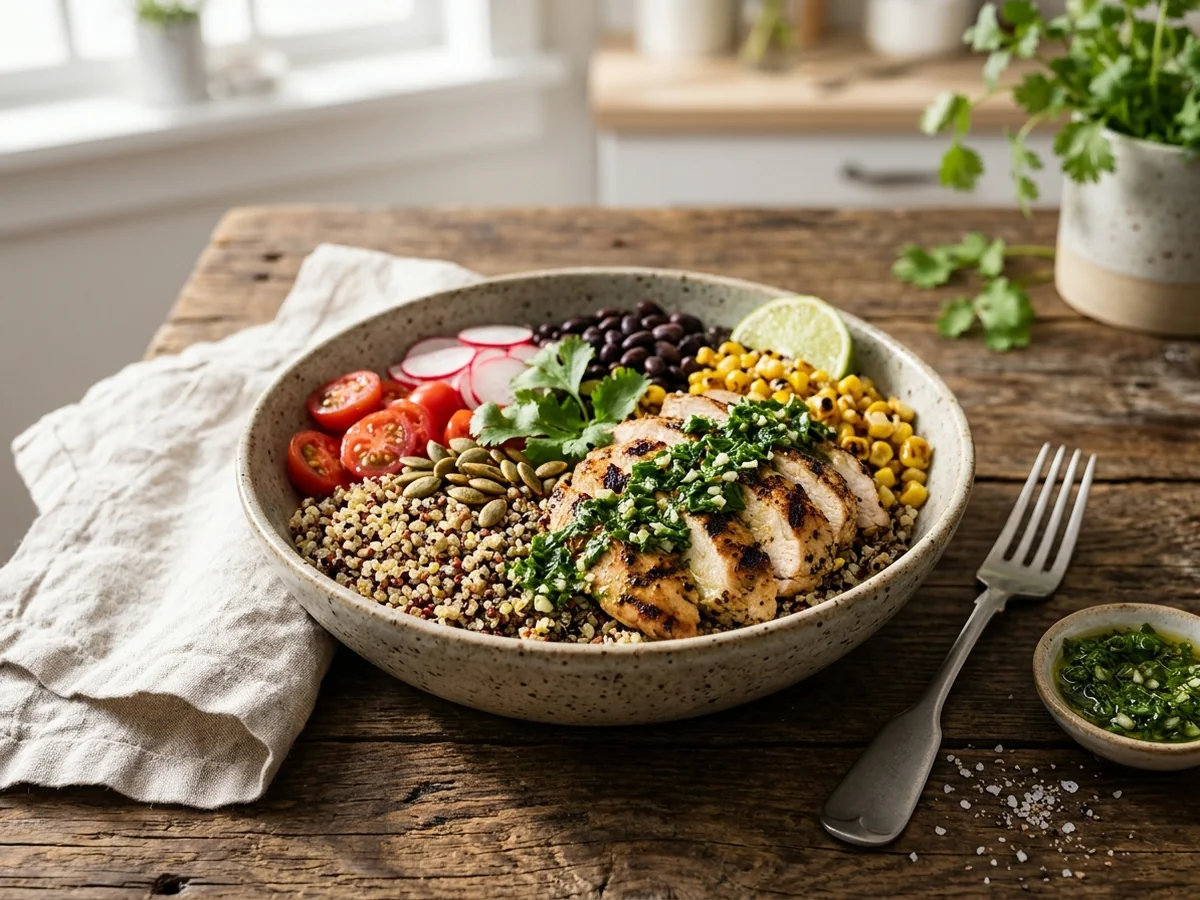
Building a nutritious meal prep bowl relies on balancing lean protein, fiber-rich grains, and fresh, flavorful aromatics to hit your macro goals efficiently. When you combine nutrient-dense bases with high-quality protein sources, you create a satisfying meal that stays fresh for days when stored correctly.
For the grain base, choosing options that offer both texture and nutritional value is key. Quinoa is an excellent choice, as it contains approximately 8 grams of protein per cooked cup. If you prefer a nuttier profile, farro is a great alternative because it provides more fiber per serving than white rice. Common practice suggests cooking these grains in broth rather than water to boost both flavor and sodium levels before assembly.
Integrating protein sources like grilled chicken breast, which typically contains roughly 31 grams of protein per 100 grams, helps you meet daily targets. For those seeking plant-based options, chickpeas are a reliable choice and contain approximately 14.5 grams of protein per cooked cup. Balancing these proteins with the right sauce ensures the bowl remains enjoyable throughout the week.
The sauce component, a traditional chimichurri, relies on fresh ingredients that do not require cooking. Common guidance involves whisking together parsley, garlic, vinegar, and olive oil to create a bright, acidic topping. Fresh parsley is a primary source of Vitamin K, while red wine vinegar serves as the traditional acid used in authentic versions. Because garlic contains allicin, which is released when crushed or minced, preparing the sauce fresh allows for maximum flavor impact. Extra virgin olive oil, which contains primarily monounsaturated fats, forms the base of this emulsion, and many home cooks add red pepper flakes for heat.
Proper assembly is essential for maintaining the quality of your meal prep grain bowls with chimichurri. Follow these steps to ensure your ingredients remain fresh:
- Cool all grains completely before placing them in a sealed container to avoid unwanted moisture buildup.
- Store the chimichurri dressing in a separate small container to prevent the herbs from wilting or the grains from becoming soggy.
- Use airtight meal prep containers to keep your components safe and fresh for 3 to 4 days.
Selecting Your Protein Base
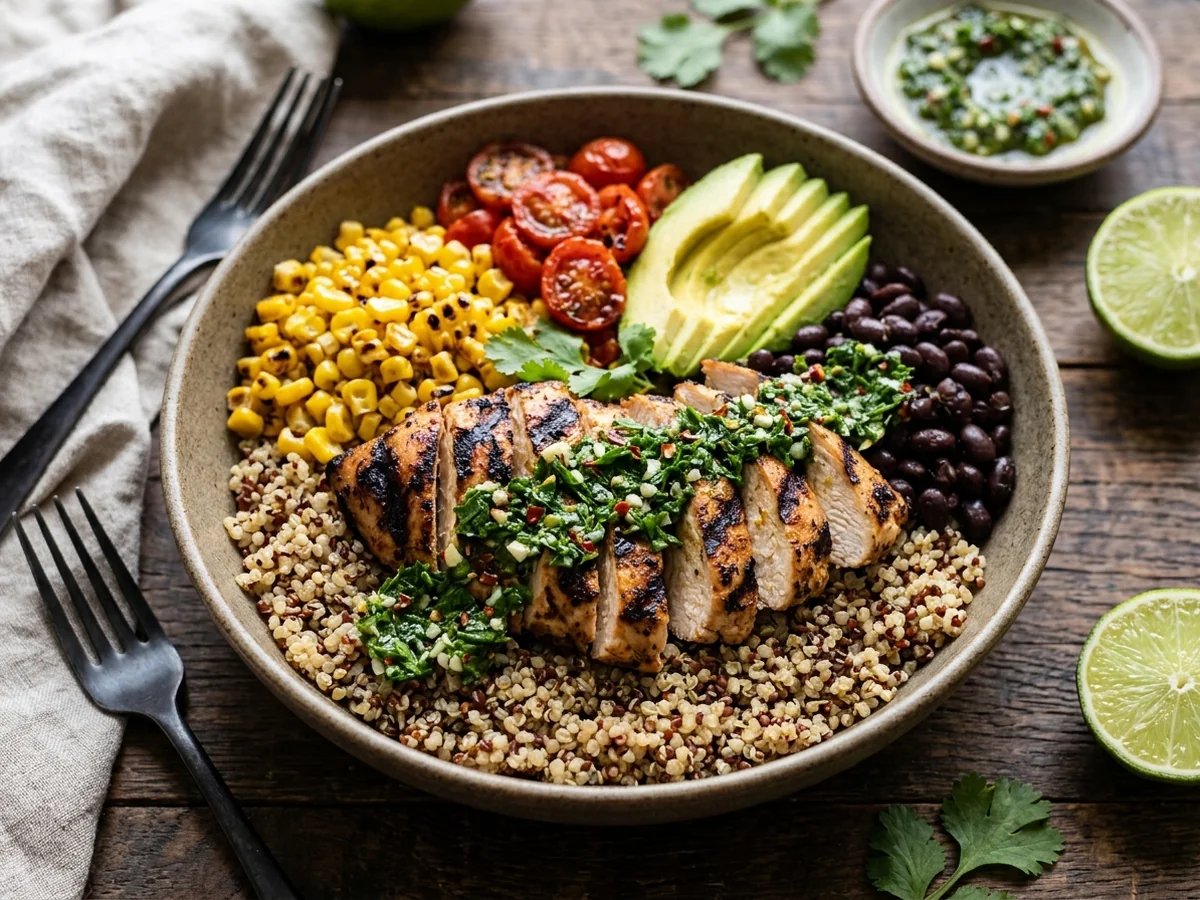
Choosing the right protein source is essential for creating a balanced and satisfying meal. Whether you prefer animal-based options or plant-forward ingredients, selecting a component that aligns with your nutritional goals ensures your high protein chimichurri grain bowl remains both filling and flavorful.
Protein Options and Nutrition
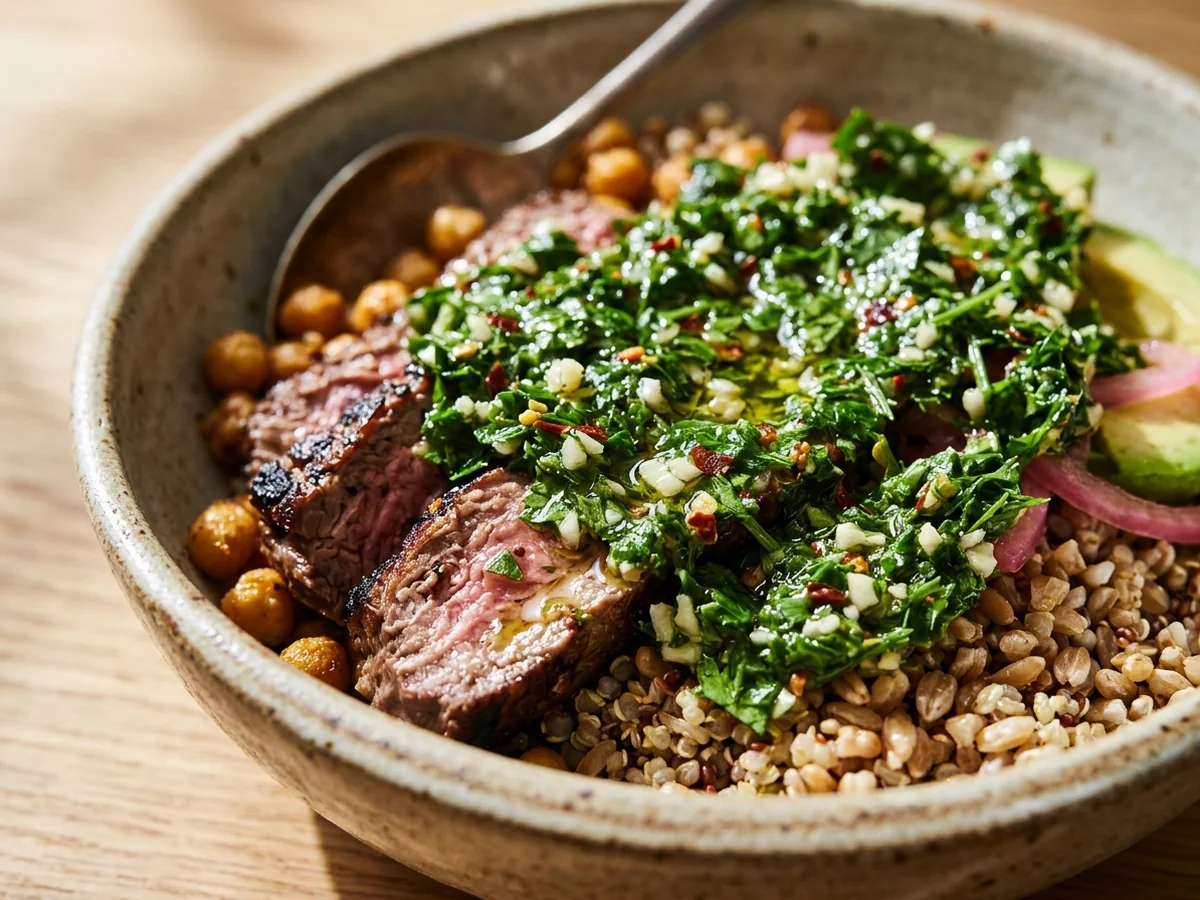
For those building a chimichurri steak grain bowl, thinly sliced lean beef provides a dense protein punch that pairs exceptionally well with the acidity of the herb-based sauce. If you are preparing a meal for higher volume, grilled chicken breast is a common choice, as it is understood to contain roughly 31 grams of protein per 100 grams. If you prefer a high protein vegetarian grain bowl, chickpeas are a versatile plant-based alternative that typically offers approximately 14.5 grams of protein per cooked cup.
When selecting your base, consider how these proteins interact with your chosen grains. Combining proteins with nutrient-dense grains creates a complete meal, with options like quinoa providing approximately 8 grams of protein per cooked cup. If you desire a heartier texture, farro is an excellent alternative that provides more fiber per serving than white rice. You can further enhance your bowl by cooking your grains in broth rather than water to increase both sodium and flavor content.
Texture and Temperature Considerations
When incorporating these proteins, consider the texture and temperature of your bowl. Animal proteins like chicken or steak often benefit from being served warm or at room temperature, which helps the fats in a healthy chimichurri sauce, typically made with extra virgin olive oil, coat the grains more effectively. Extra virgin olive oil contains primarily monounsaturated fats, providing a high-quality fat source that complements the herbal notes of the sauce.
Best Practices for Freshness
To maximize your results, keep your dressing separate until you are ready to eat. This simple habit prevents the grains from becoming oversaturated and keeps the fresh flavor of the parsley and red wine vinegar vibrant. Fresh parsley is a primary source of Vitamin K, making it a nutrient-dense addition to your meal prep grain bowls with chimichurri.
Proper storage is critical for maintaining quality. Grains should be cooled completely before being placed in a sealed container to avoid moisture buildup. Meal prep containers should be airtight to maintain freshness for 3 to 4 days. By focusing on these high-quality protein foundations and storing components separately, you build a sustainable meal that satisfies your hunger without compromising on the fresh, bold tastes of the sauce.
Nutritional Powerhouse Grains
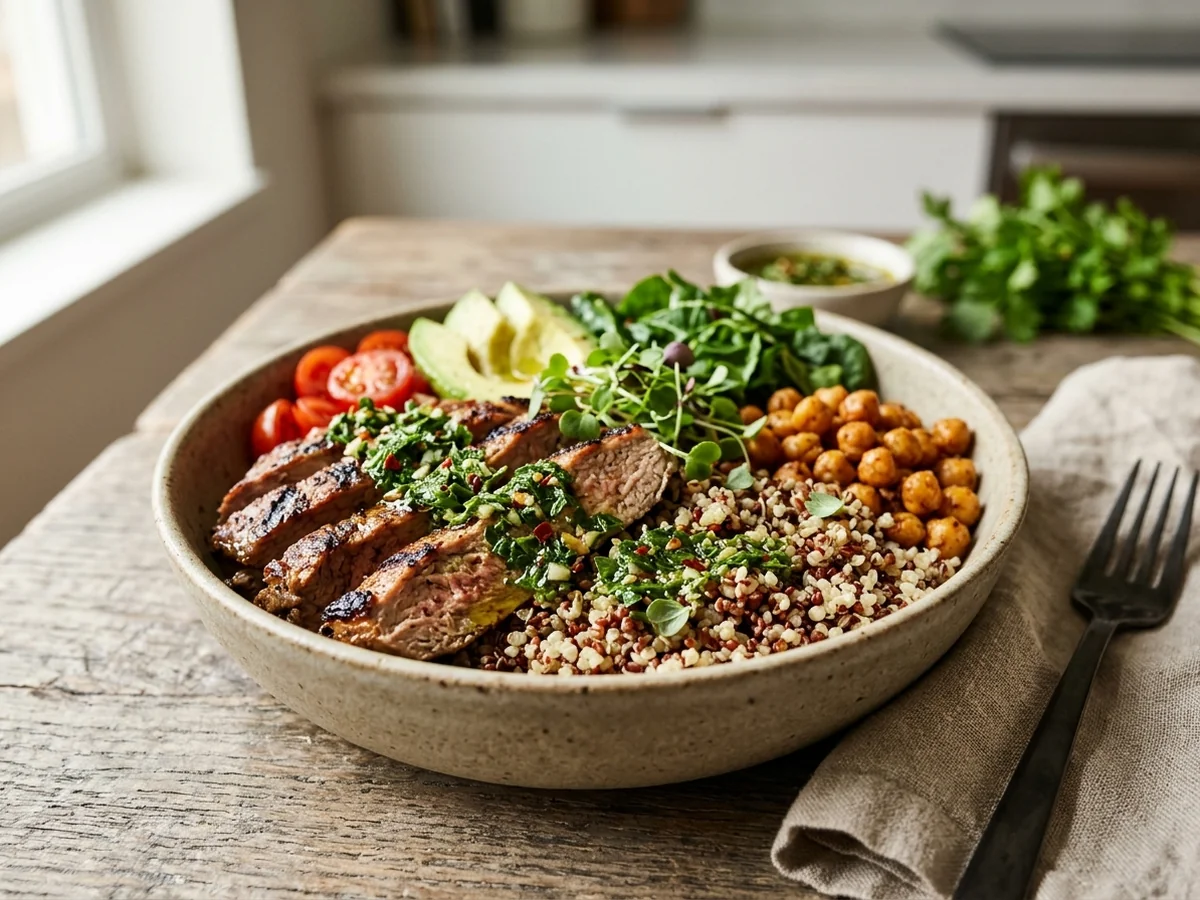
The foundation of any high protein chimichurri grain bowl relies on selecting a base that supports both your macro goals and the structural integrity of your meal prep. Quinoa is a standout option for those prioritizing protein, as it contains approximately 8 grams of protein per cooked cup. Its light, fluffy consistency makes it an excellent neutral canvas that absorbs the vibrant, acidic notes of a fresh chimichurri dressing without becoming mushy.
For those who prefer a more substantial mouthfeel, farro is a robust alternative. Research confirms that farro provides more fiber per serving than white rice, which can help keep you feeling satisfied for longer throughout the day. Because of its chewy texture, farro holds up exceptionally well when stored in the refrigerator, making it a reliable choice for meal prep grain bowls with chimichurri that need to last several days.
Enhancing the Grain Base
To elevate the nutritional and flavor profile of your bowl, consider the cooking liquid. While water is a standard choice, it is common practice among home cooks to use vegetable or chicken broth instead. This simple swap adds depth to each bite by introducing additional flavor and sodium.
When preparing your grains, it is common practice to ensure they are cooled completely before being placed in a sealed, airtight container. This step helps avoid excess moisture buildup, which is a common cause of soggy meal prep components.
Nutritional Comparison Table
| Grain | Key Benefit |
|---|---|
| Quinoa | Complete plant-based protein source |
| Farro | High fiber content for satiety |
Balancing Your Proteins
Once your grain base is set, incorporating high-quality proteins is essential to reach your daily targets. For a high protein vegetarian grain bowl, chickpeas are a versatile addition, as it is common practice to include them for a boost of roughly 14.5 grams of protein per cooked cup. If you prefer animal-based sources, grilled chicken breast is a popular option, typically containing roughly 31 grams of protein per 100 grams.
Whether you are assembling a chimichurri steak grain bowl or a plant-forward dish, it is common practice to store your dressing separately from the grains until serving. This is the most effective way to maintain the freshness of the herbs and the texture of the base. According to the USDA Food Safety and Inspection Service, using airtight containers is the best practice to maintain food safety and quality for 3 to 4 days.
Crafting Fresh Chimichurri Sauce
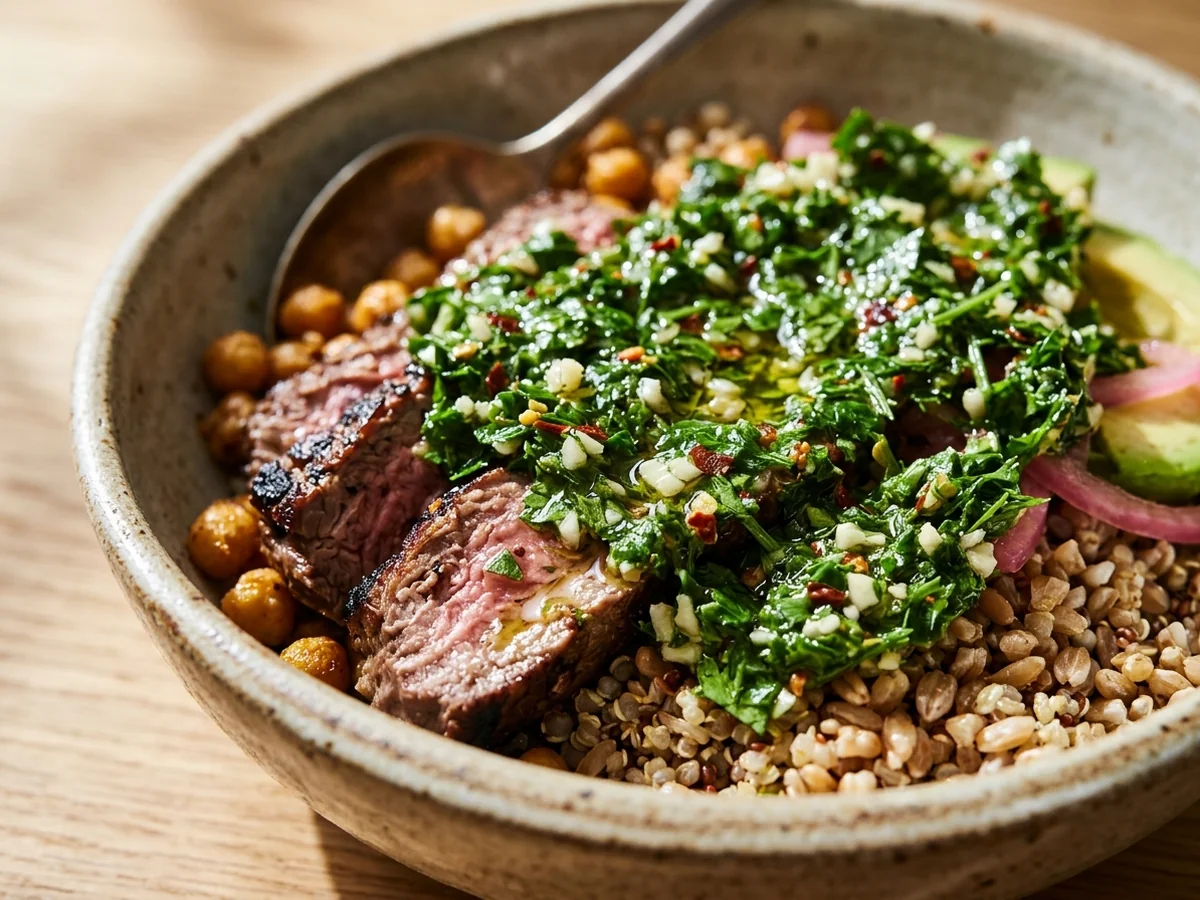
A high protein chimichurri grain bowl relies on the interplay between a dense protein source and a bright, herbaceous topping. A healthy chimichurri sauce recipe typically features a vibrant combination of fresh parsley, garlic, red wine vinegar, and extra virgin olive oil. It is common guidance that standard chimichurri does not require cooking the ingredients, so the quality of your fresh herbs is the most important factor in achieving a balanced, zesty result.
Selecting and Preparing Your Ingredients
The foundation of this sauce is extra virgin olive oil, which contains primarily monounsaturated fats. Red wine vinegar is the traditional acid used in authentic chimichurri, providing the necessary sharp tang to cut through the richness of the oil. Fresh parsley is a primary source of Vitamin K and adds a clean, peppery profile to the mixture.
Garlic contains allicin, which is released when the cloves are crushed or minced. For the best flavor, mince your garlic finely and let it sit for a few minutes before mixing it into the vinegar and oil. Red pepper flakes are also commonly added to the mix for a subtle heat.
Techniques for Success
To keep your sauce vibrant, avoid bruising the parsley during preparation. Using a sharp knife instead of a food processor helps maintain the integrity of the herb leaves. If you are preparing batches of these bowls for the week, it is common guidance to store the dressing separately from your grains. Storing the sauce separately prevents the grains from becoming soggy and helps maintain their texture.
Because grains should be cooled completely before being placed in a sealed container to avoid moisture buildup, allow both your grain base and your sauce to reach room temperature before packing them away.
Optimizing Your Bowl for Nutrition
When selecting a base for your bowl, consider the nutritional profile of your grains. Quinoa contains approximately 8 grams of protein per cooked cup, while farro provides more fiber per serving than white rice. It is common practice to cook these grains in broth rather than water to increase both the sodium and flavor content of the final dish.
Whether you choose a high protein vegetarian grain bowl featuring chickpeas, which contain approximately 14.5 grams of protein per cooked cup, or a meat-based option like grilled chicken breast, which contains roughly 31 grams of protein per 100 grams, the sauce ties the components together. Regardless of the protein chosen, keep your meal prep containers airtight to maintain freshness for 3 to 4 days.
Meal Prep Tips for Bowls
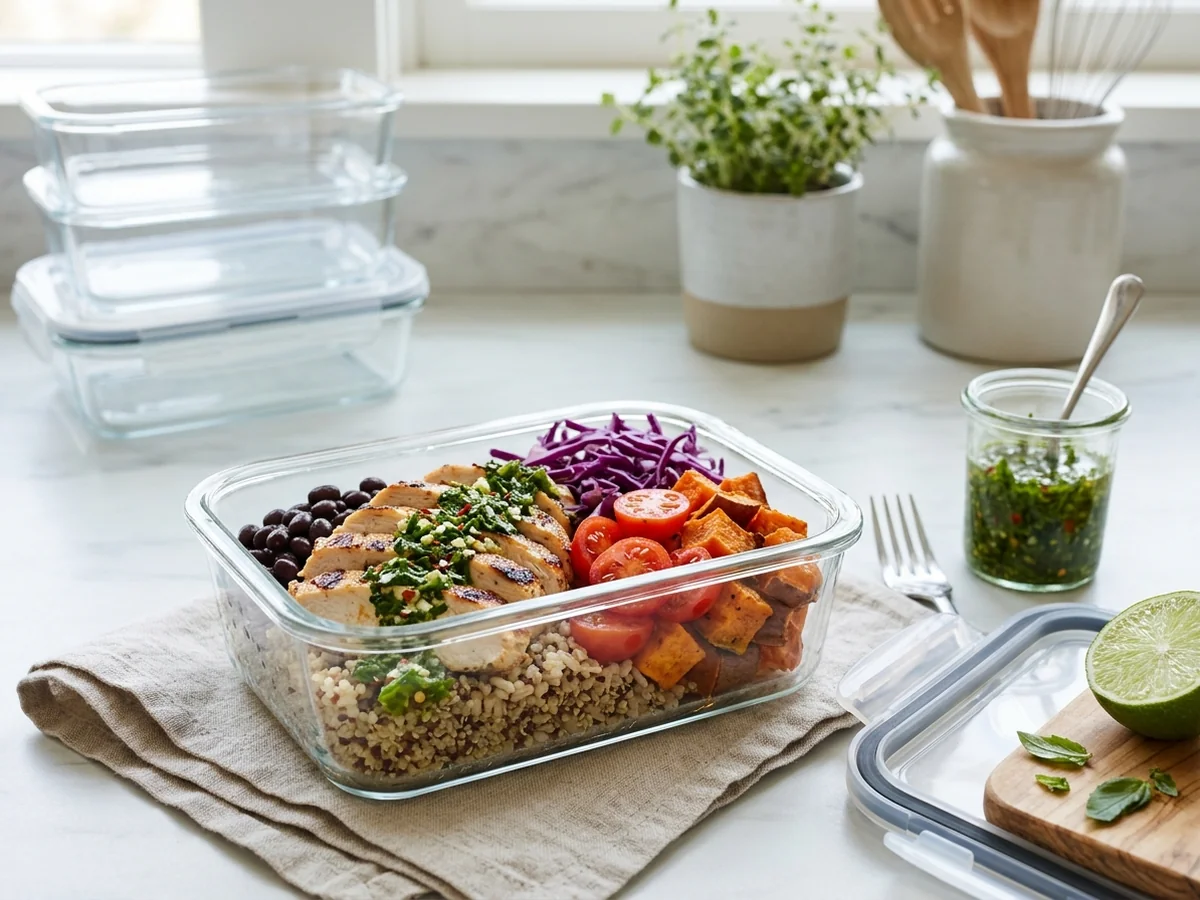
Proper storage is the most effective way to ensure your grain bowls featuring chimichurri remain both appetizing and safe to consume throughout the work week. Because chimichurri is traditionally made with fresh parsley, garlic, red wine vinegar, and extra virgin olive oil, maintaining its vibrancy requires attention to detail during assembly. According to the USDA, meal prep containers should be airtight to maintain food freshness for 3 to 4 days.
To preserve the quality of your ingredients, follow these practical steps:
- Control Moisture: Grains should be cooled completely before being placed in a sealed container. This common practice prevents moisture buildup, which is the primary cause of soggy textures in meal prep.
- Separate Components: Storing dressing separately from grains is a common practice that significantly extends the shelf life of your bowls. If you mix the sauce too early, the vinegar may begin to soften the grains and wilt fresh herb components.
- Smart Assembly: Keep fresh herb components crisp by storing them in a separate small compartment or adding them just before you serve your meal. Fresh parsley is a primary source of Vitamin K, and keeping it fresh ensures you get the most out of your nutrient-dense additions.
- Labeling: Always label your containers with the preparation date. This ensures you consume your meals within the optimal window for both quality and food safety.
- Protein Management: Whether you use grilled chicken breast, which typically contains roughly 31 grams of protein per 100 grams, or plant-based options like chickpeas, which contain approximately 14.5 grams of protein per cooked cup, ensure your protein is fully chilled before sealing your containers.
A common mistake is adding the sauce to the bowl while the grains are still warm. Since standard chimichurri does not require cooking the ingredients, the heat from freshly boiled farro or quinoa can cause the garlic to become pungent and the oil to separate. By allowing your grains to reach room temperature first, you protect the integrity of the sauce.
Remember that choosing hearty grains helps your meal stand up better to the storage process. Farro provides more fiber per serving than white rice, while quinoa contains approximately 8 grams of protein per cooked cup. By keeping your wet and dry components separate until the final moment, you ensure your meal remains as fresh on the fourth day as it was on the first.
Customizing Your Grain Bowl
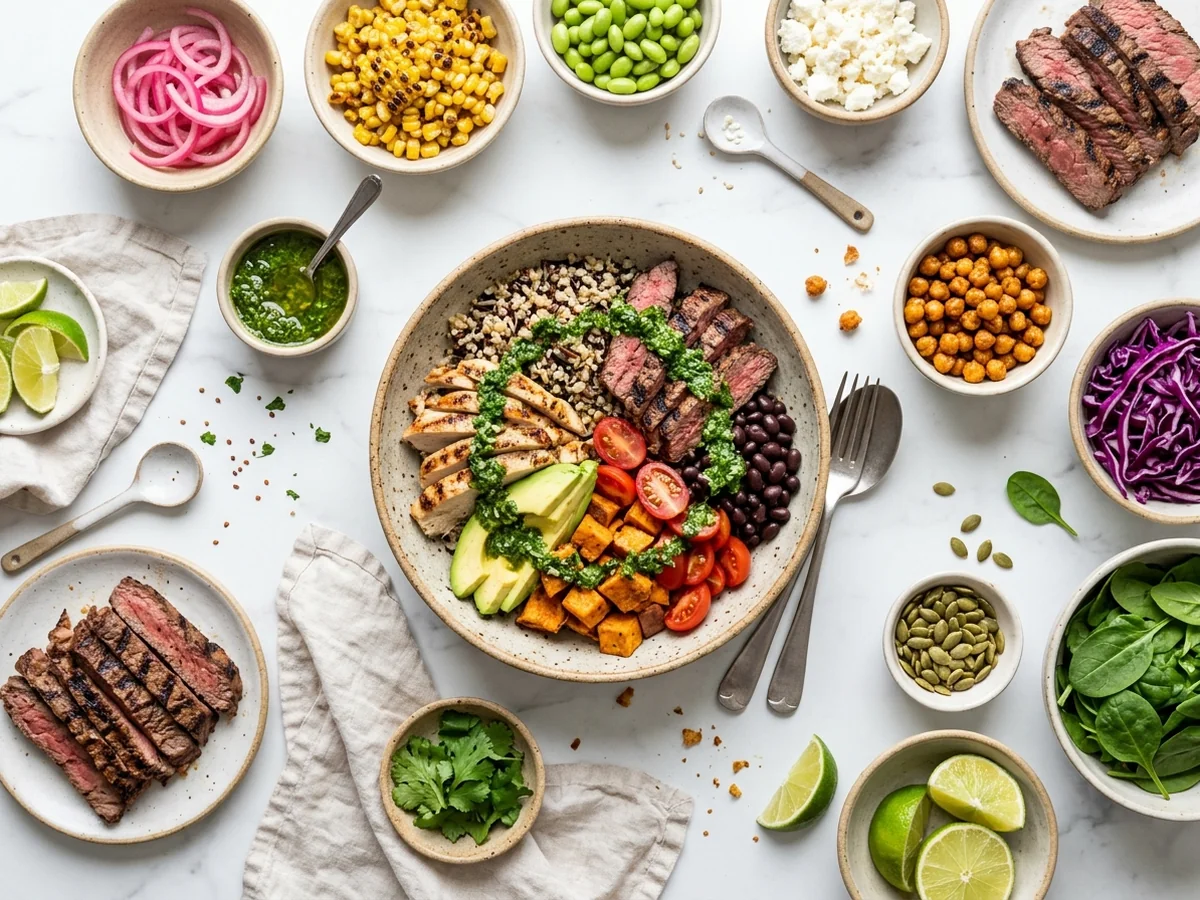
Building a high protein chimichurri grain bowl requires balancing density, moisture, and flavor. By selecting complementary grains and proteins, you can create a meal that remains satisfying throughout your prep week. The following table provides a breakdown of common components used in these assemblies.
| Component | Approximate Protein Content | Key Characteristic |
|---|---|---|
| Quinoa (1 cup cooked) | 8 grams | Complete protein source |
| Chickpeas (1 cup cooked) | 14.5 grams | High fiber content |
| Grilled Chicken Breast (100g) | 31 grams | Lean animal protein |
| Farro (1 cup cooked) | Varies | Higher fiber than white rice |
Selecting Your Base and Protein
Your choice of grain provides the foundation for the dish. Farro is an excellent choice as it provides more fiber per serving than white rice, contributing to satiety. For those seeking a bowl rich in plant-based protein, combining chickpeas with quinoa helps meet nutritional targets, as quinoa contains approximately 8 grams of protein per cooked cup. If you prefer animal proteins, a chimichurri steak grain bowl or a classic quinoa and chicken grain bowl are reliable options, with grilled chicken breast providing roughly 31 grams of protein per 100 grams.
Refining Your Chimichurri
A healthy chimichurri sauce recipe relies on fresh, raw ingredients. Typically, this sauce is made with parsley, garlic, vinegar, and olive oil. Because standard chimichurri does not require cooking the ingredients, you retain full control over the pungency of the garlic, which contains allicin that is released when crushed or minced. Red wine vinegar serves as the traditional acid in authentic preparations, while extra virgin olive oil provides primarily monounsaturated fats. You can adjust the flavor profile by adding red pepper flakes, which are commonly used to introduce a subtle heat. Fresh parsley serves as a primary source of Vitamin K, keeping the bowl vibrant and nutrient-dense.
Storage and Freshness Techniques
Maintaining texture during the preparation of herb-forward grain bowls is vital. A common mistake is packing components while they are still warm, which creates excess steam. Grains should be cooled completely before being placed in a sealed container to avoid moisture buildup. To maintain quality, storing the dressing separately from the grains is the most effective way to extend the shelf life of your meal. According to food safety guidelines, you should use airtight containers to maintain freshness for 3 to 4 days. If you want to boost flavor during the initial preparation, consider cooking your grains in broth rather than water, which can increase the overall sodium and flavor content of the bowl.
Tips for Perfect Chimichurri Bowls
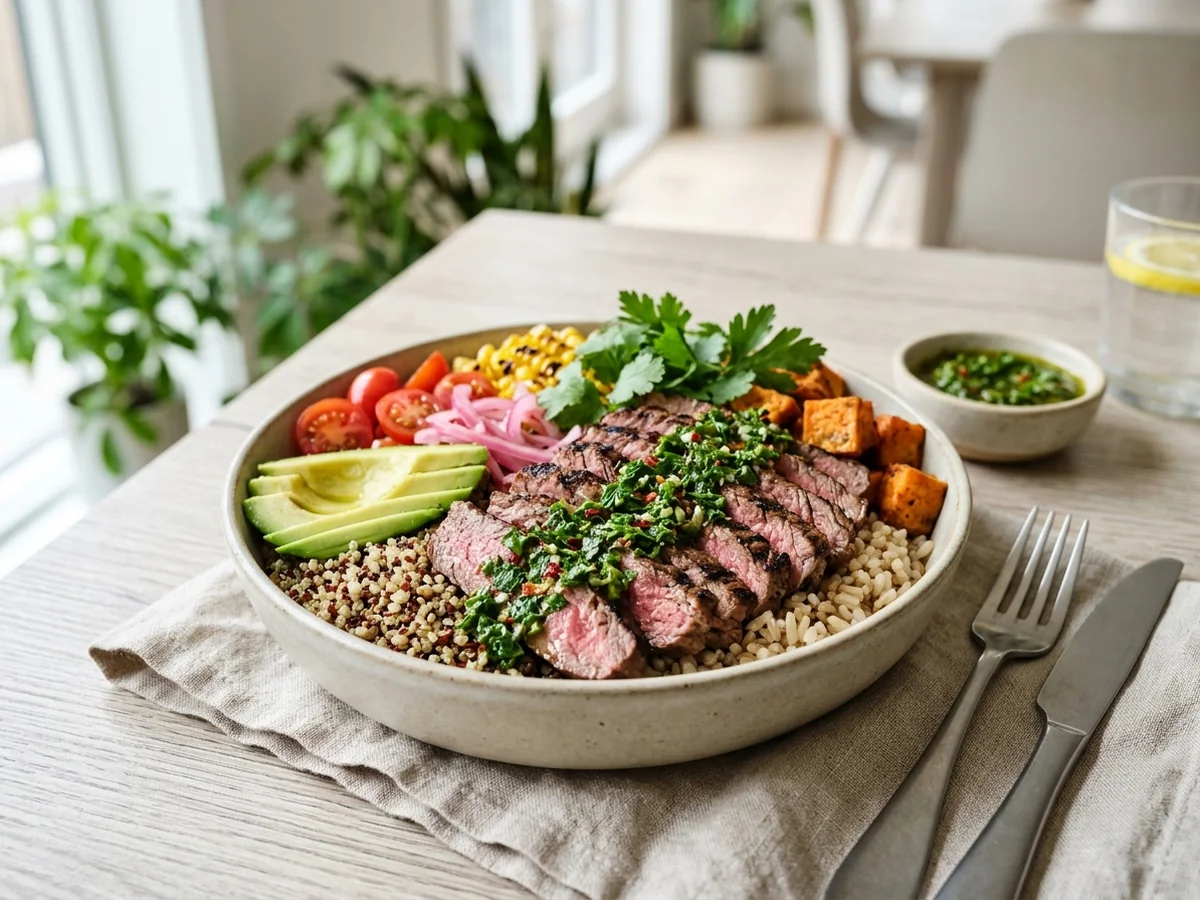
Building high-quality meal prep bowls with a chimichurri base requires a balance of fresh aromatics and structural integrity. Because standard chimichurri does not require cooking the ingredients, the quality of your raw components determines the final profile of your meal. Following these steps ensures your bowls remain flavorful and safe to eat throughout the week.
Mastering the Sauce and Aromatics
Authentic flavor typically relies on parsley, garlic, red wine vinegar, and olive oil. Since fresh parsley is a primary source of Vitamin K, keeping it raw preserves its nutritional density. Extra virgin olive oil contains primarily monounsaturated fats, providing a stable base for the sauce. When preparing the garlic, ensure it is freshly minced to release allicin, which provides the characteristic savory punch. If you prefer heat, red pepper flakes are commonly added to the mixture. Because of the delicate nature of these herbs, avoid applying heat to the sauce, as cooking dulls the brightness and alters the texture.
Optimizing Your Grain Base
The foundation of a successful high protein chimichurri grain bowl often starts with nutrient-dense grains. Quinoa contains approximately 8 grams of protein per cooked cup. For those seeking additional texture and variety, farro is an excellent alternative, as it provides more fiber per serving than white rice. To elevate the flavor of your base, common practice suggests cooking grains in broth rather than water, which increases both sodium and savory depth. Always allow your cooked grains to cool completely before placing them into a sealed container to avoid unwanted moisture buildup, which can lead to soggy ingredients.
Safe Storage and Assembly
Proper storage is essential for maintaining freshness for 3 to 4 days, as recommended by the U.S. Department of Agriculture. Always use airtight meal prep containers to protect the quality of your components. A standard practice to extend the shelf life of your pre-made bowls is to store the dressing separately from the grains and protein. This prevents the acidity of the red wine vinegar from breaking down the texture of your grains before you are ready to eat.
Whether you are assembling a bowl with steak or a version featuring chickpeas, which contain approximately 14.5 grams of protein per cooked cup, keeping elements separate until serving maintains the best possible eating experience.
FAQ
What are the best grains for a high protein bowl?
Quinoa is an excellent base for any high protein chimichurri grain bowl because it contains approximately 8 grams of protein per cooked cup. Farro is another popular choice, which provides more fiber per serving than white rice for a heartier texture.
How long does a chimichurri grain bowl last in the fridge?
Meal prep containers should be airtight to maintain freshness for 3 to 4 days in the refrigerator. To keep your ingredients at their best, it is common guidance to ensure grains are cooled completely before sealing them to avoid excess moisture buildup.
Can this recipe be made vegan?
You can easily create a grain bowl without animal products by swapping proteins for plant-based alternatives like chickpeas. Chickpeas typically contain approximately 14.5 grams of protein per cooked cup, making them a dense and satisfying addition.
How do I make chimichurri from scratch?
Standard chimichurri does not require cooking the ingredients, as it is typically made by combining fresh parsley, garlic, vinegar, and olive oil. Red wine vinegar is the traditional acid used in authentic versions, while red pepper flakes are commonly added for a touch of heat.
What proteins pair best with chimichurri?
Grilled chicken breast is a common choice for a high protein chimichurri grain bowl, as it provides roughly 31 grams of protein per 100 grams. You can also use steak as a classic topping for a grain bowl featuring chimichurri, or lean into plant-based options like tofu or legumes.
How can I keep my meal prep ingredients fresh?
Storing dressing separately from grains is common guidance to extend the shelf life of your meals and keep textures crisp. Using high-quality extra virgin olive oil in your sauce adds healthy monounsaturated fats that hold up well during storage.
Conclusion
The next step for creating your own nutrient-dense grain bowl with herbaceous sauce is to select your base grains and preferred protein source to match your personal fitness targets. Once you have your ingredients ready, prioritize cooling the grains completely before assembly to avoid moisture buildup and maintain the best texture. Storing the sauce in a separate airtight container will keep the flavors vibrant for three to four days in the refrigerator, as meal prep containers should be airtight to maintain freshness for this duration. Begin your weekly routine by batch-cooking your chosen grains and preparing a fresh batch of chimichurri to keep your lunches both convenient and flavorful.
Sources: nutritionsource.hsph.harvard.edu, pmc.ncbi.nlm.nih.gov, blogs.ifas.ufl.edu, ask.ifas.ufl.edu
You might also like: Blueberry Lemon Overnight Oats with chia