healthy tuna pasta salad
Introduction
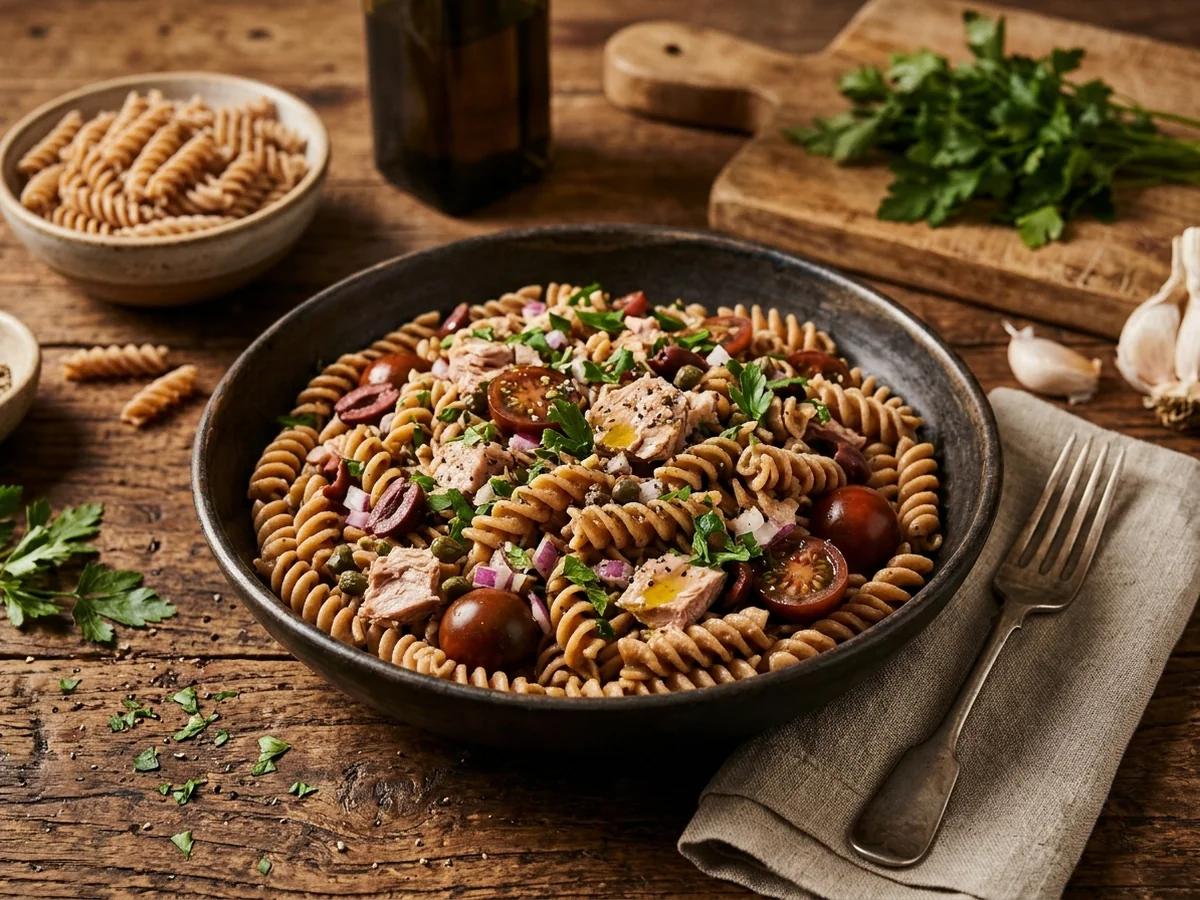
A healthy tuna pasta salad is a nutrient dense meal option that combines lean protein with fiber rich complex carbohydrates. By swapping traditional heavy condiments for lighter alternatives, you can create a satisfying dish that fits perfectly into your meal prep routine.
This guide covers how to assemble a balanced bowl using high protein pasta and smart ingredient swaps. You will learn why canned tuna serves as an accessible and affordable lean source of protein for your diet. We also explore the ideal ratio of Greek yogurt and a bit of mayo to provide the best texture and flavor for your dressing. Whether you are looking for a quick lunch or a reliable dinner, these tips ensure your meal remains delicious for up to three days in the refrigerator.
Healthy Tuna Pasta Ingredients

Creating a balanced meal starts with selecting ingredients that prioritize both flavor and nutritional value. Tuna is an accessible and affordable lean source of protein, making it an ideal anchor for any meal prep routine. When combined with fiber-rich grains and fresh produce, it transforms from a basic pantry staple into a sustaining, high-protein lunch.
Selecting Your Pasta and Protein
The foundation of your healthy tuna pasta salad depends on your choice of base. While traditional white pasta is a common pantry item, opting for whole grain varieties significantly increases your fiber intake, which helps manage hunger throughout the afternoon. For those focused on hitting specific protein targets, high-protein pasta brands like Goodles offer a nutrient-dense alternative that keeps the texture satisfying while boosting the total protein content of the meal.
Optimizing the Dressing
Many traditional recipes rely heavily on mayonnaise, which can increase the fat content without adding significant micronutrients. A highly effective strategy is to use Greek yogurt and a bit of mayo to provide the texture and flavor for the dressing. This combination maintains a creamy mouthfeel while lowering the overall calorie count and adding a boost of protein. If you are aiming for a version without mayonnaise, you can substitute the mayo entirely with extra Greek yogurt, though the flavor profile will be tangier. If you find the yogurt too thick, a splash of lemon juice or water helps achieve the perfect coating consistency without making the dish watery.
Essential Components for Success
To ensure your meal remains fresh and appetizing, consider the following ingredient breakdown:
- Canned tuna: Look for varieties packed in water to keep the fat content lean and the sodium levels manageable.
- Pasta: Choose whole grain or high-protein options to support sustained energy.
- Dressing: A mix of Greek yogurt and a small amount of mayonnaise provides the best balance of creaminess and nutrition.
- Add-ins: Incorporate diced celery, bell peppers, or red onion to provide crunch and essential vitamins.
Storage and Preparation Tips
Proper storage is essential for maintaining food quality, especially when preparing multiple servings for the work week. General guidelines suggest that this prepared dish usually remains good for roughly three days when kept inside a chilled refrigerator. To prevent the pasta from absorbing too much dressing and becoming soggy, consider storing the dressing separately until you are ready to serve. This simple step ensures each portion retains its intended texture and fresh flavor profile until the very last bite.
Nutritional Benefits of Tuna
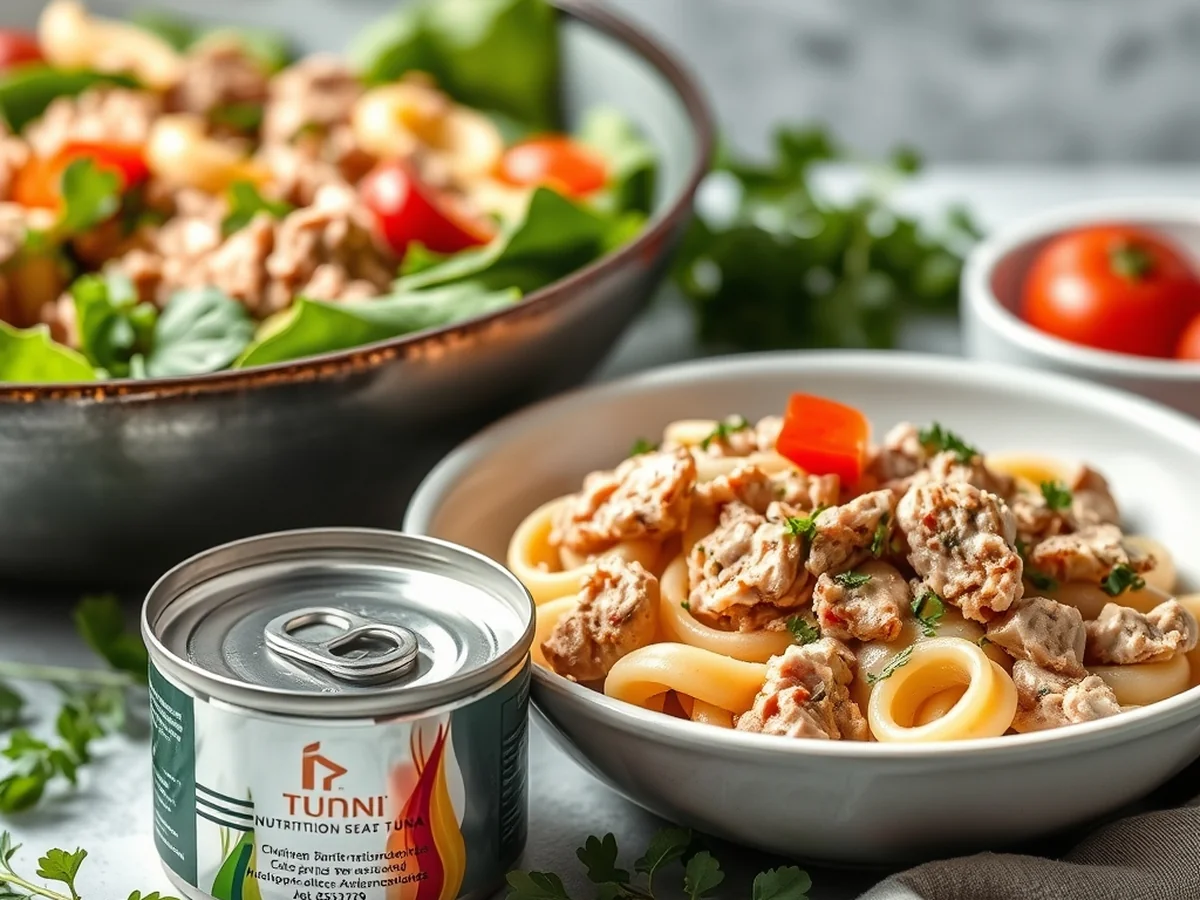
Tuna is an accessible and affordable lean source of protein, making it an excellent foundation for a healthy tuna pasta salad. Because it is widely available in shelf-stable cans, it provides a convenient way to boost the nutritional profile of your meals without the high cost of fresh fish. Integrating this staple into your diet supports muscle maintenance and enhances satiety, which is why many people include it when preparing meals for weight management.
When you prepare your dish, the dressing choices play a major role in the overall health profile. While traditional recipes rely heavily on mayonnaise, Greek yogurt and a bit of mayo provide the texture and flavor for the dressing. Greek yogurt adds a creamy consistency while boosting the protein content and reducing the saturated fat often found in full-mayo versions. If you prefer a lighter profile, you can experiment with different tuna pasta salad dressing substitutes, such as tahini or lemon juice mixed with herbs, though adding a small amount of mayonnaise usually provides the best flavor balance.
To maximize the health benefits, consider these practical steps:
- Select high-quality pasta: Swap standard white pasta for whole grain options or high-protein varieties like Goodles to increase your fiber and protein intake.
- Manage sodium levels: Look for labels indicating low sodium or no salt added. You can also rinse canned tuna under cold water before mixing to further reduce excess salt.
- Prioritize portion control: A healthy tuna pasta salad without mayo is a great goal, but focus on the ratio of vegetables to pasta to ensure you are getting enough volume and nutrients.
A common mistake is over-dressing the meal, which can mask the flavor of the fish and add unnecessary calories. Start with a small amount of dressing and incorporate it gradually. For those planning their weekly menu, remember that the salad typically lasts up to three days in the refrigerator. To keep the pasta from getting soggy during meal prep, add your dressing and fresh vegetables just before serving or store them in separate containers until you are ready to eat.
Smart Dressing Swaps
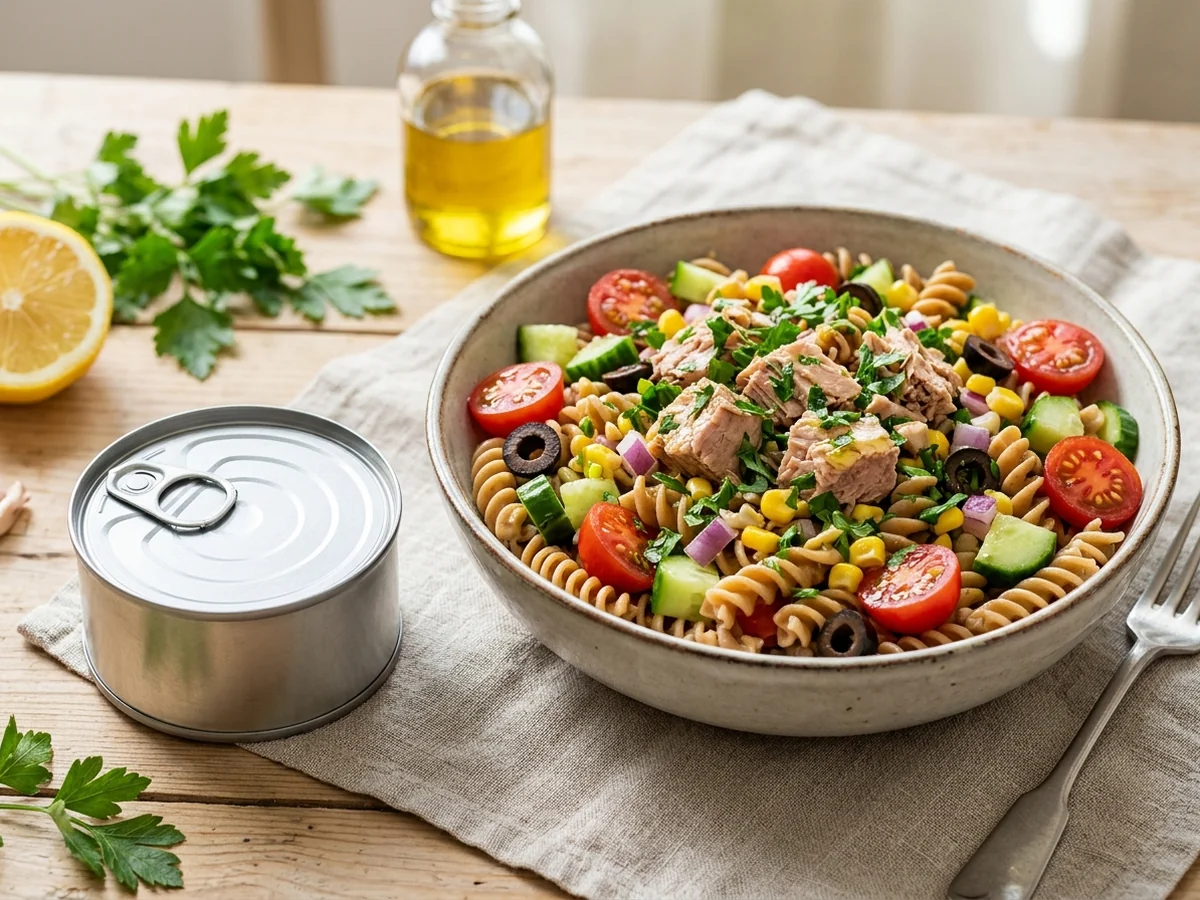
Greek yogurt and a bit of mayo provide the texture and flavor for the dressing in a balanced lunch bowl. This blend bridges the gap between a rich, traditional mouthfeel and a lighter profile that keeps your meal prep feeling fresh. Because tuna is an accessible and affordable lean source of protein, pairing it with a nutrient-dense dressing base is an effective way to elevate the nutritional value of your meal.
Finding the Right Balance
Using this specific combination often outperforms relying on only one base ingredient. If you use all Greek yogurt, the dressing can become overly acidic or thin, which may cause the pasta to lose its appetizing texture over time. Conversely, relying solely on mayonnaise adds significant fat without the protein boost you get from yogurt. By mixing them, you achieve a creamy consistency that adheres well to noodles while maintaining a more balanced nutritional profile. For those prioritizing a healthy tuna pasta salad with Greek yogurt, the addition of a small amount of mayonnaise helps emulsify the sauce and prevents the yogurt from breaking down when mixed with warm pasta.
Alternative Base Options
If you need to adjust your recipe for specific dietary needs or personal preference, there are several effective tuna pasta salad dressing substitutes available:
- Mashed avocado: Offers a creamy, heart-healthy fat source that replaces the need for mayo entirely.
- Tahini: Provides a nutty, savory depth that works well as a dairy-free alternative to yogurt.
- Hummus: Works as a thick, protein-rich binder that adds extra flavor without additional oil.
- Silken tofu: Can be blended until smooth for a neutral, high-protein base that mimics the consistency of yogurt or mayo.
When you aim to create a healthy tuna pasta salad without mayo, these alternatives provide the necessary moisture to keep whole grain pasta or high-protein options like Goodles from drying out. When selecting your base, consider the salt content of your canned tuna. Some varieties are higher in sodium, so choosing a lower-sodium option allows you to control the final flavor of the dressing more accurately.
Storage and Freshness Tips
Regardless of which base you choose, remember that this dish generally remains at its best for up to three days when stored in the refrigerator. To ensure your meal prep remains appetizing throughout the week, keep the dressing separate until you are ready to serve if possible. If the salad is already dressed, store it in an airtight container to prevent the pasta from absorbing too much moisture or drying out. This common guidance helps ensure your meal prep stays as crisp and delicious as the day you made it.
Selecting the Best Pasta
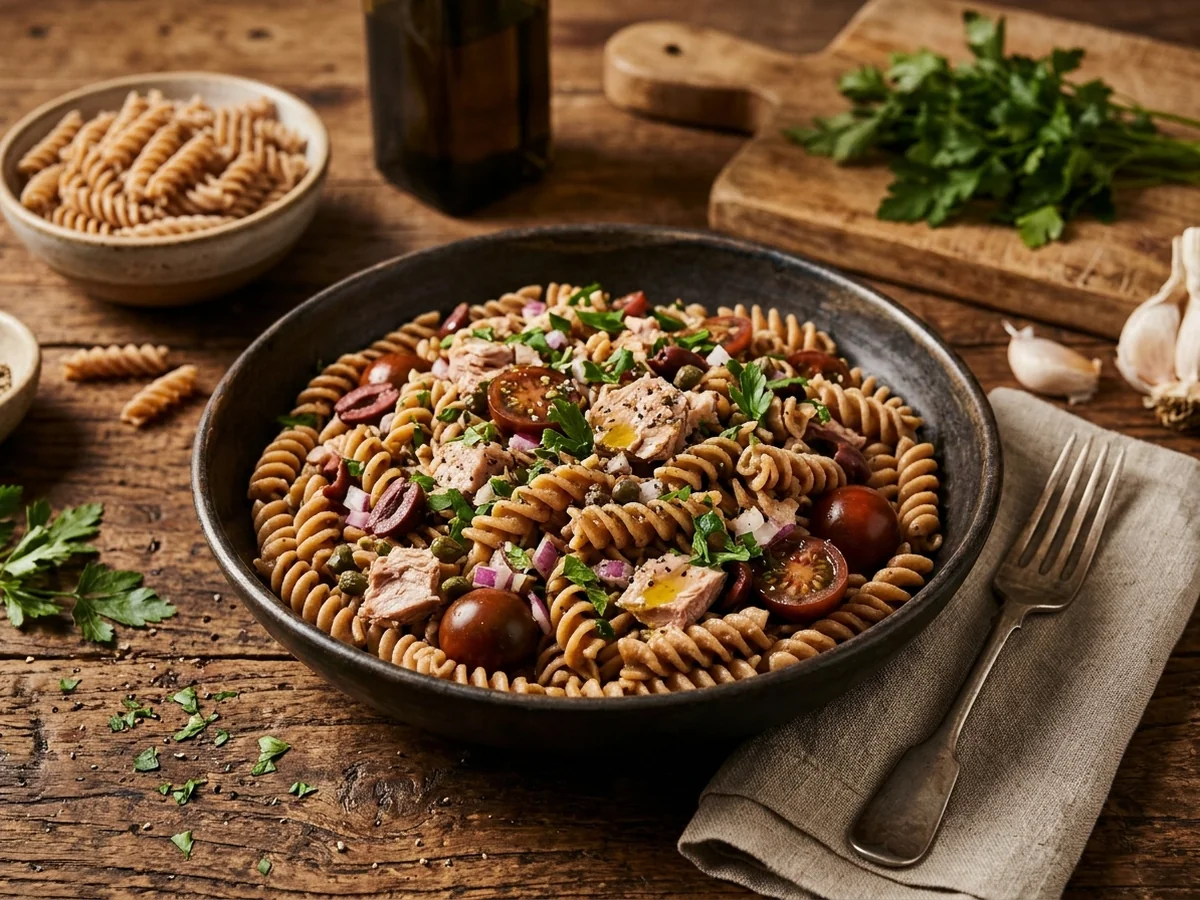
The most effective way to elevate the nutritional profile of your meal is by choosing a base that offers more than just empty carbohydrates. While traditional refined white pasta is a common pantry staple, it lacks the fiber and micronutrients found in more robust alternatives.
Whole grain pasta serves as a superior choice because it retains the bran and germ of the wheat kernel. This structural difference means it provides significantly more fiber, which helps regulate blood sugar levels and keeps you feeling satisfied for longer periods. If you are learning how to make tuna pasta salad healthier, swapping to a whole grain variety is often the simplest first step.
For those focused on hitting specific macronutrient targets, high protein pasta options like Goodles offer a functional upgrade. These products are engineered to deliver a higher protein count per serving compared to standard wheat noodles, making them an excellent choice for a post-workout meal or a protein-packed lunch. By integrating these varieties, you can easily boost the total protein content of your dish without changing your entire preparation method.
Fiber is an essential component of a balanced diet, as it supports digestive health and aids in maintaining steady energy levels throughout the day. When you prioritize ingredients with higher fiber content, you transform your meal from a simple snack into a nutrient-dense option that supports long-term wellness. Consider these factors when selecting your noodles:
- Whole grain options provide sustained energy through complex carbohydrates.
- High protein pasta helps meet daily intake goals for active individuals.
- Fiber-rich selections contribute to better satiety and digestive regularity.
- Texture and cooking time can vary, so monitor your boiling process to maintain an al dente bite.
Balancing your carbohydrate source with these nutrient-dense alternatives ensures that every bite contributes to your dietary goals. Whether you prioritize fiber or total protein, selecting the right base sets the stage for a more functional and satisfying meal.
Avoiding Common Preparation Mistakes
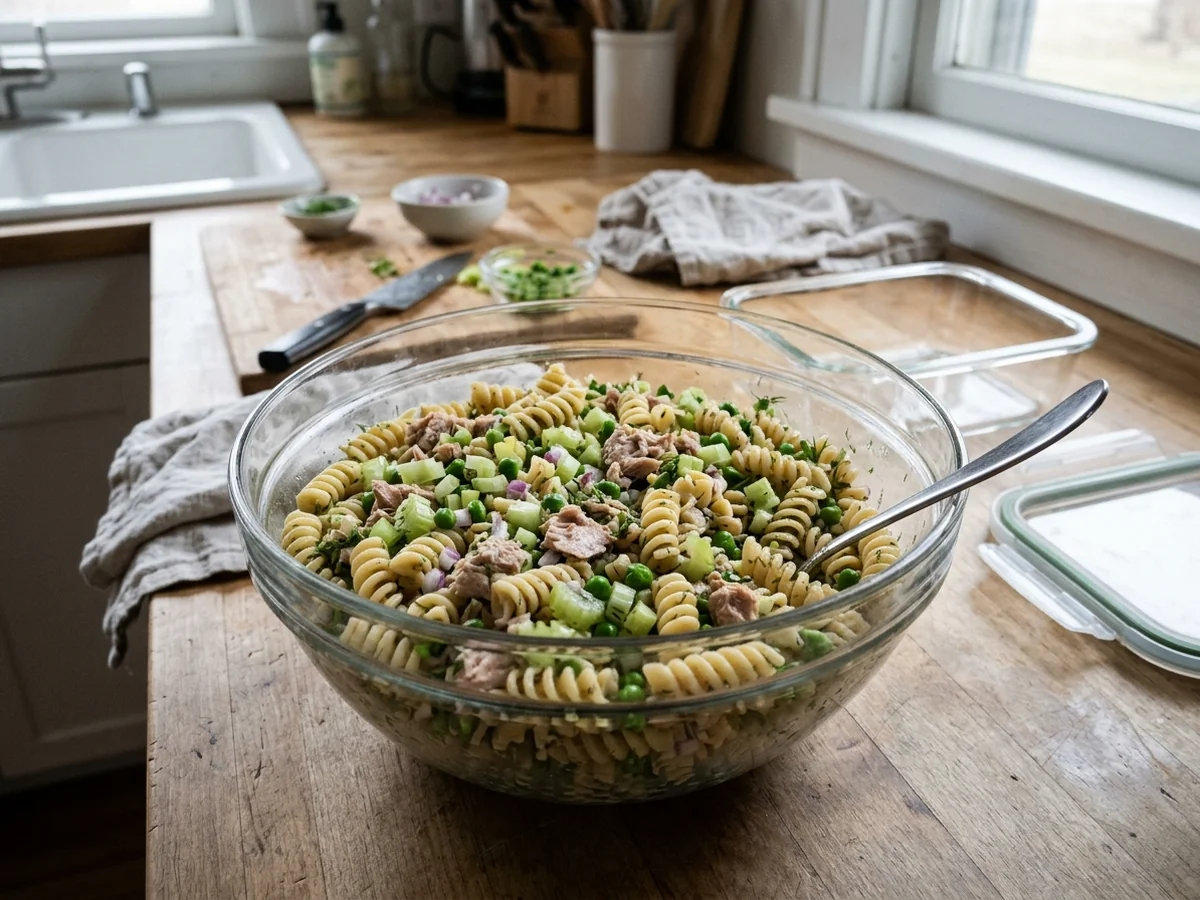
Creating a consistent, satisfying healthy tuna pasta salad requires more than just mixing ingredients in a bowl. For those focusing on high protein meals, moisture control is the primary challenge. When pasta remains too soft or the dressing separates, the meal loses its appeal by the second day. Following refined preparation habits ensures your lunch remains fresh and appetizing for up to three days in the refrigerator.
Mastering Pasta Texture and Cooling
The most frequent error in preparing pasta salad is overcooking the base. You should aim for al dente, as noodles that are too soft will continue to absorb liquid from the dressing, leading to a mushy consistency. Once the pasta reaches the right texture, drain it immediately and rinse under cold water. This step is critical because it halts the carryover cooking process and washes away excess surface starch that would otherwise create a gummy texture.
After rinsing, spread the noodles in a single layer on a baking sheet. Allowing them to air dry for a few minutes ensures they are not dripping wet when they meet the dressing. Never mix your sauce into warm pasta. If the noodles are still radiating heat, they will soak up the dressing instantly, leaving you with dry, flavorless pasta by the time you sit down to eat. Waiting until the components reach room temperature is the most effective way to preserve the desired mouthfeel.
Balancing the Dressing and Protein
When you want to know how to make tuna pasta salad healthier, the dressing is the best place to start. Greek yogurt and a bit of mayo provide the texture and flavor for the dressing. While some recipes suggest substituting the mayonnaise entirely, keeping a small amount helps stabilize the yogurt and improves the overall mouthfeel.
Tuna is an accessible and affordable lean source of protein, but it must be prepared correctly to avoid adding unwanted liquid to your meal. Always drain your canned tuna thoroughly before incorporating it into the mix.
Smart Storage Strategies
Proper storage is the final piece of the puzzle for a successful healthy tuna pasta salad. If you are prepping for several days, store your components strategically. Using airtight containers is essential to limit exposure to moisture and keep the ingredients fresh. To prevent the salad from becoming soggy, mix only a light coating of dressing into the pasta initially.
Keep the remaining dressing in a separate small container and stir it in just before you eat. This technique keeps the pasta firm and the flavors bright. If you are looking to increase the nutritional profile further, consider using high protein pasta options like Goodles, which offer a sturdier structure and additional fiber compared to traditional semolina noodles. By separating the dressing and choosing the right pasta, you maintain the integrity of your meal through the entire work week.
Meal Prep and Storage
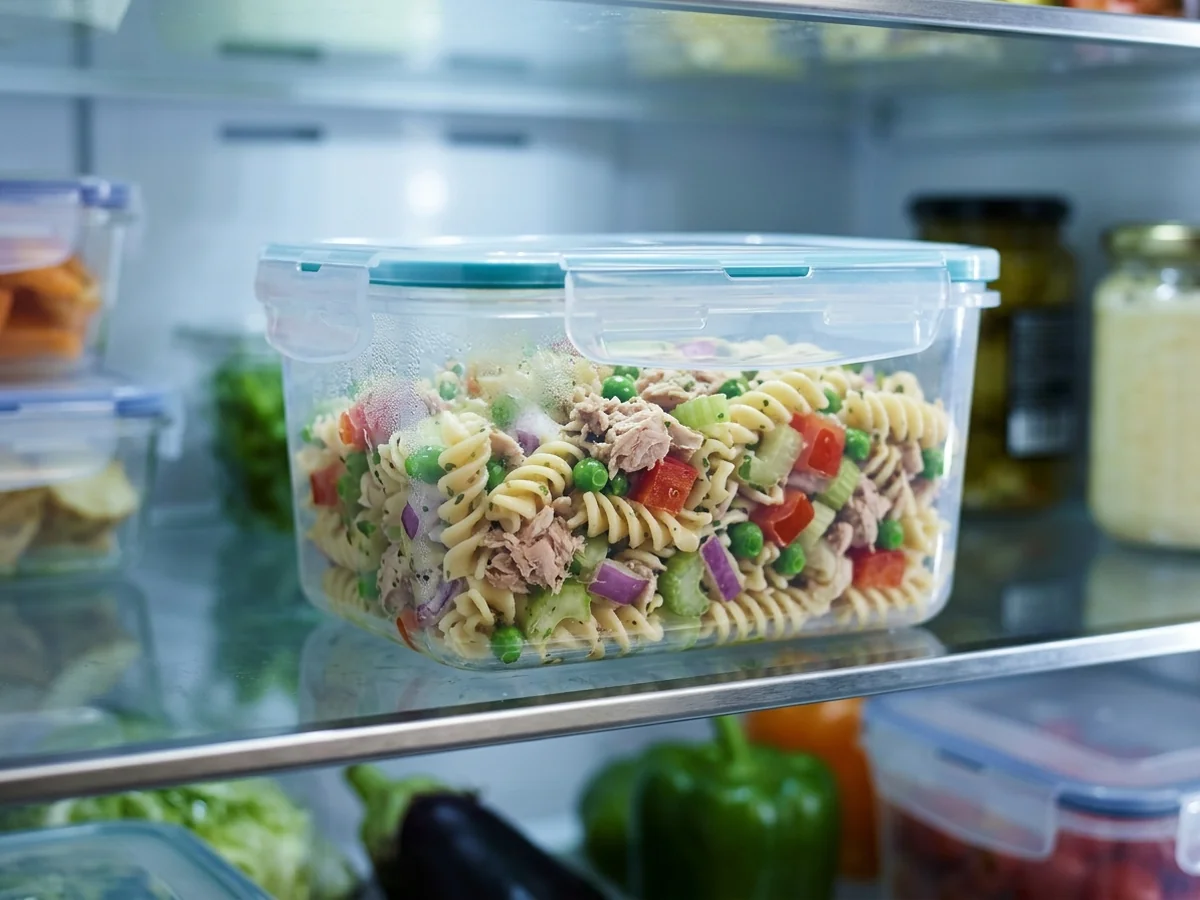
Proper storage is essential for maintaining the quality and safety of your meals throughout the work week. As common guidance suggests, this high protein lunch typically lasts up to three days when stored correctly in the refrigerator. Because tuna is an accessible and affordable lean source of protein, it serves as an excellent foundation for batch cooking. To ensure your meal stays fresh, prioritize the use of airtight containers, which prevent the absorption of odors from other refrigerated items.
Optimizing Your Containers
Portioning your salad into individual, single-serving containers is the most effective way to maintain texture and convenience. Using glass or BPA-free plastic containers allows you to grab a lunch quickly without exposing the entire batch to air and temperature fluctuations. This method preserves the integrity of the pasta and prevents the dressing from separating. If you prefer a lighter profile, you can experiment with tuna pasta salad dressing substitutes, noting that Greek yogurt and a bit of mayo provide the texture and flavor for the dressing without relying solely on high-fat ingredients.
Maintaining Texture During Storage
A common challenge with pasta salads is the tendency for the noodles to soak up moisture, leading to a soggy texture by day two. To mitigate this, ensure your pasta is cooled completely to room temperature before mixing in the tuna and dressing. If you are preparing this protein-packed meal for weight loss or daily lunches, consider these practical steps to keep your ingredients at their best:
- Store the salad in the coldest part of your refrigerator, such as the back of a shelf, rather than the door where temperatures fluctuate.
- If you enjoy crunchy additions like celery, bell peppers, or cucumbers, pack them in a separate small container and toss them into the salad just before serving.
- If the salad seems slightly dry after a day in the fridge, revive the flavors by adding a small squeeze of fresh lemon juice or a tablespoon of Greek yogurt right before you eat.
- Always inspect your meal for any changes in appearance or off odors before consumption to ensure it remains at peak quality.
While some recipes suggest using all Greek yogurt for the dressing, incorporating a small amount of mayonnaise helps stabilize the mixture and provides a balanced mouthfeel. This combination allows the dressing to hold up well in the fridge without losing its creamy consistency, ensuring every serving of your prepared dish remains as satisfying as the first.
Customizing Your Tuna Salad
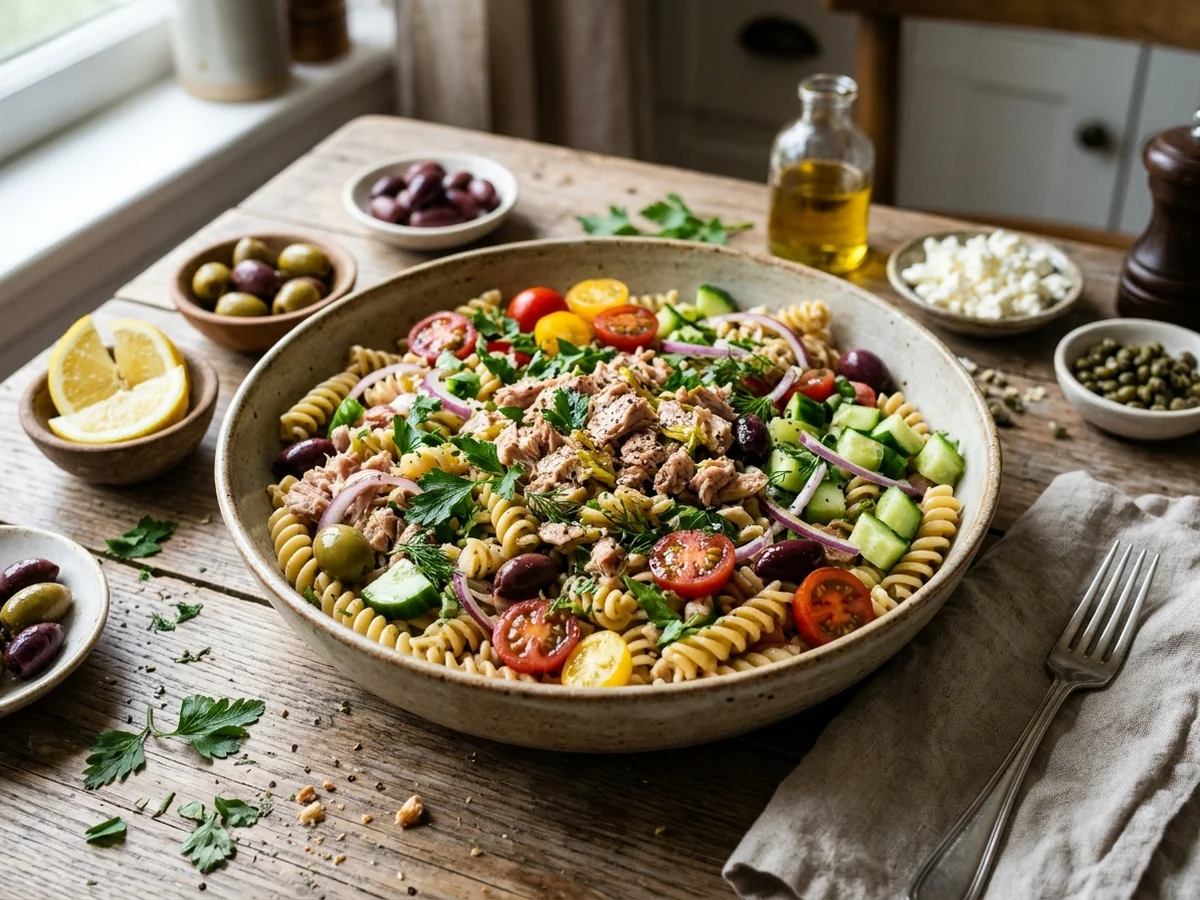
Choosing the right protein base
Tuna is an accessible and affordable lean source of protein, making it an ideal foundation for a nutritious tuna noodle dish. When selecting canned tuna, look for varieties packed in water and with reduced sodium to keep the overall sodium load lower. Drain the tuna well and give it a quick pat with paper towels, because excess liquid can make the dressing watery and affect texture.
Balancing the dressing for flavor and texture
Greek yogurt and a bit of mayo provide the texture and flavor for the dressing, delivering creaminess without the full calorie load of a mayo-only blend. For the best balance, combine one cup of whole-milk Greek yogurt with one tablespoon of light mayonnaise. This mixture coats the pasta evenly and adds a subtle tang that brightens the dish. If you prefer to eliminate mayo entirely, you can use all Greek yogurt, but expect a slightly thinner consistency, and adding a teaspoon of olive oil can help restore body.
Adding nutrients and preventing sogginess
Incorporate fresh produce that contributes crunch, vitamins, and fiber. Finely diced celery or red onion offers a refreshing bite that contrasts with the tender tuna. Fresh herbs such as dill, parsley, or chives not only lift the flavor but also supply antioxidants. For heart-healthy fats, slice olives or cube ripe avocado, as these fats promote satiety and support weight-loss goals. To keep the pasta from getting soggy during meal prep, toss the cooked pasta with a light drizzle of olive oil before mixing in the dressing. This creates a protective barrier that slows moisture absorption.
When aiming for a higher-protein, lower-carb option, swap traditional semolina pasta for whole-grain varieties or high-protein alternatives like Goodles. These choices increase fiber and protein per serving, helping you stay fuller longer. A typical serving of this customized meal provides roughly 30 g of protein, aligning with macrofork.com’s focus on high-protein meals.
Seasoning is another easy way to enhance taste without adding calories. Cracked black pepper, smoked paprika, or red pepper flakes introduce depth and a gentle heat. Remember to taste as you go, because a little seasoning goes a long way, especially when the yogurt base already carries a mild tang.
Practical steps for assembly:
- Cook the pasta according to package directions, drain, and rinse with cold water.
- While the pasta cools, whisk together Greek yogurt, mayo, a splash of olive oil, and chosen spices.
- Combine tuna, vegetables, herbs, and olives or avocado in a large bowl.
- Add the pasta, drizzle with the dressing, and toss gently to coat.
- Portion into airtight containers, keeping in mind that standard food storage practices generally recommend consuming prepared seafood dishes within three days for optimal freshness.
Common mistakes to avoid include over-mixing, which can break down delicate ingredients, and adding the dressing before the pasta cools, which leads to a mushy texture. This approach works well for anyone seeking a nutritious lunch, from busy professionals to athletes tracking protein intake. By adjusting ingredients thoughtfully, you create a versatile protein-packed lunch option that supports weight-loss goals while delivering satisfying flavor and texture.
FAQ
What makes tuna pasta salad healthy?
A nutritious tuna pasta salad relies on nutrient dense ingredients like lean protein from canned tuna and fiber from whole grain pasta or high protein alternatives. Incorporating fresh vegetables and using a lighter dressing made from Greek yogurt and a bit of mayo significantly boosts the nutritional profile compared to traditional versions.
Is it possible to use all Greek yogurt for the dressing?
You can substitute all the mayonnaise with Greek yogurt, though the flavor and texture will be noticeably tangier and less creamy. Many home cooks prefer using a mix of Greek yogurt and a small amount of mayonnaise to achieve the perfect balance of richness and lightness.
How long does tuna pasta salad last in the refrigerator?
Common guidance suggests that tuna pasta salad stays fresh for up to three days when stored in an airtight container. To maintain the best quality, keep it refrigerated at all times and consider adding fresh greens or crunchy toppings right before serving.
How do I stop my pasta salad from getting soggy?
To prevent soggy pasta, ensure your noodles are cooked al dente and rinsed under cold water to stop the cooking process completely. Dressing the salad shortly before serving or keeping the dressing separate until mealtime helps maintain the ideal texture of your ingredients.
Can I use high protein pasta for this salad?
Using high protein pasta options like Goodles is an excellent way to turn a standard side dish into a more substantial meal. These varieties often provide more protein and fiber than traditional white pasta, helping you hit your daily macros while keeping you satisfied for longer.
Conclusion
To enjoy your meal throughout the week, keep your finished dish in an airtight container in the refrigerator. It typically stays fresh for up to three days, making it an ideal candidate for advance preparation. Once you have mastered the balance of lean protein and creamy textures, you can easily customize your next batch of this protein packed lunch dish to suit your flavor preferences. Gather your favorite ingredients and start your meal prep today to stay on track with your nutritional goals.
Sources: etc.usf.edu, brunswick.ces.ncsu.edu
You might also like: Blueberry Lemon Overnight Oats with chia