
tempeh stir fry with spicy coconut sauce
Introduction
A tempeh stir fry with spicy coconut sauce is a flavorful plant based meal that combines fermented soy with a rich, aromatic glaze. You can easily prepare this tempeh stir fry with spicy coconut sauce at home by balancing the nutty profile of the soy with fresh ginger, garlic, and creamy coconut milk.
This article covers the essential techniques for preparing tempeh, including how to reduce its natural bitterness before cooking. You will learn the science behind using a wok for high heat stir frying, which is a technique derived from the Chinese word chao. We also provide a reliable method for emulsifying your coconut sauce to ensure it coats your ingredients perfectly. Whether you are looking for an easy vegan dinner or simply want to improve your stir fry skills, this guide provides the practical steps needed to master this dish.
Why You’ll Love This Recipe
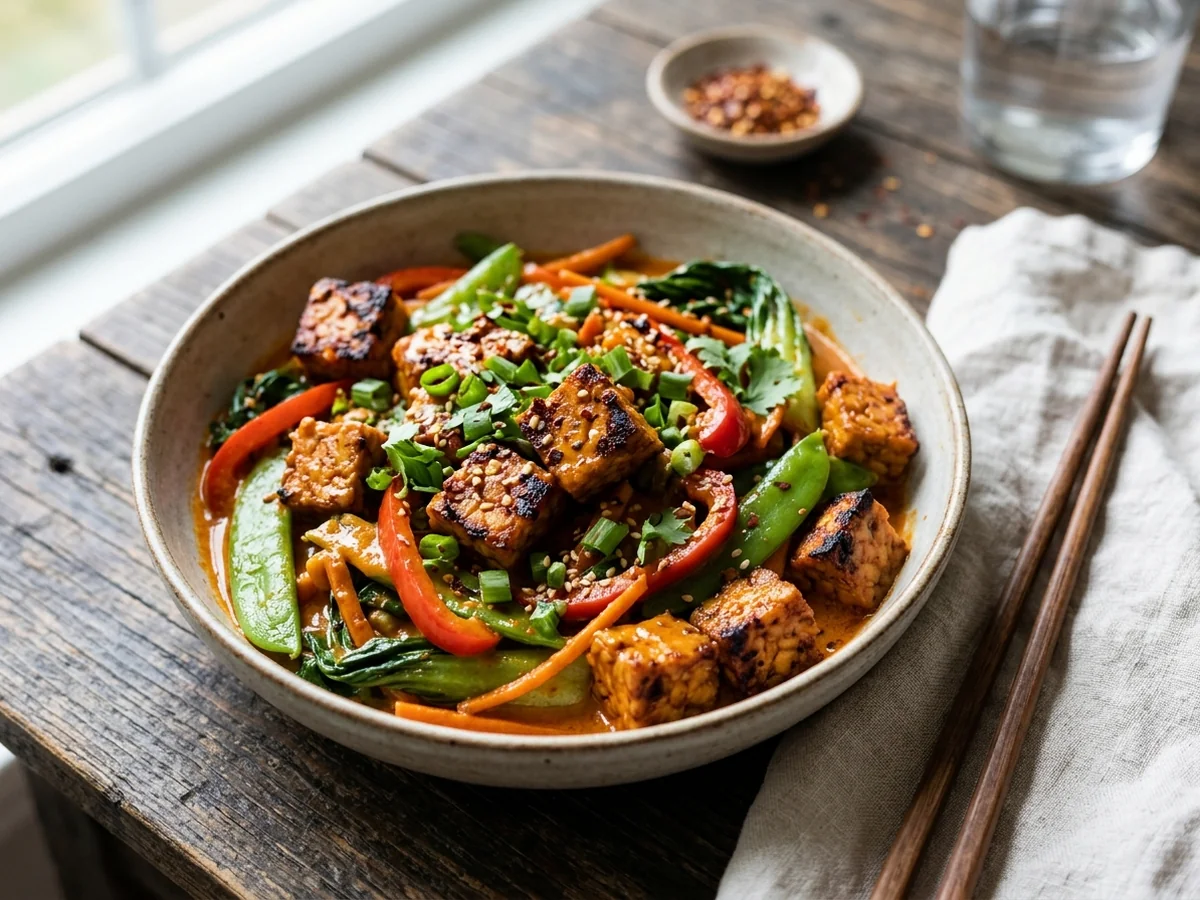
This tempeh stir fry with spicy coconut sauce brings together contrasting textures and flavors, making it a standout choice for an easy vegan tempeh dinner. Tempeh is a fermented soy product made of cooked, dehulled soybeans inoculated with mold. This fermentation process creates a dense, earthy cake that holds its shape under high heat, providing a satisfying, chewy protein source that serves as a perfect canvas for bold aromatics.
Mastering the Base
One common challenge when working with this ingredient is its natural, slightly bitter profile. To improve the flavor before cooking, many home cooks steam the block for about ten minutes before frying. This gentle heat treatment mellows the intensity of the fermentation and helps the soy absorb your tempeh stir fry sauce recipe more effectively. Once prepared, the protein can be seared until golden, creating a crisp exterior that contrasts beautifully with a silky, spicy coconut sauce for tofu and tempeh.
The Technique of High-Heat Cooking
Cooking this dish follows the principles of chao, a Chinese term meaning stir-fry. This method relies on cooking ingredients over high heat while stirring constantly to lock in textures and maintain freshness. A wok is often used for this purpose, as its concave shape is known for distributing heat evenly across ingredients. Because the surface area of a wok is large, it allows for quick evaporation of liquids, which is essential when building a concentrated, flavorful glaze. If you add ginger, garlic, and chili paste, you can deglaze the pan with a splash of coconut milk, ensuring the aromatics caramelize and coat the soy evenly without burning.
Why Coconut and Soy Work Together
The success of this dish lies in the science of flavor balancing. The fatty, cooling nature of coconut milk acts as a buffer against the sharp heat of chili components like sambal oelek. When combined, these elements create a harmonious coating that softens the natural earthiness of the fermented soy while adding a luxurious mouthfeel. This pairing is particularly effective in a tempeh stir fry with vegetables, as the creamy sauce helps bring diverse textures together into a cohesive meal.
- Fermented soy offers a distinct, nutty depth that pairs naturally with the sweetness of coconut.
- The high-heat cooking method creates a crisp exterior on the soy while keeping the sauce silky.
- This combination of ingredients is entirely plant-based, making it suitable for a wide range of dietary preferences.
- Balancing spicy elements with coconut milk provides a sophisticated flavor harmony that is both comforting and exciting.
Tempeh Benefits for Stir-Fries
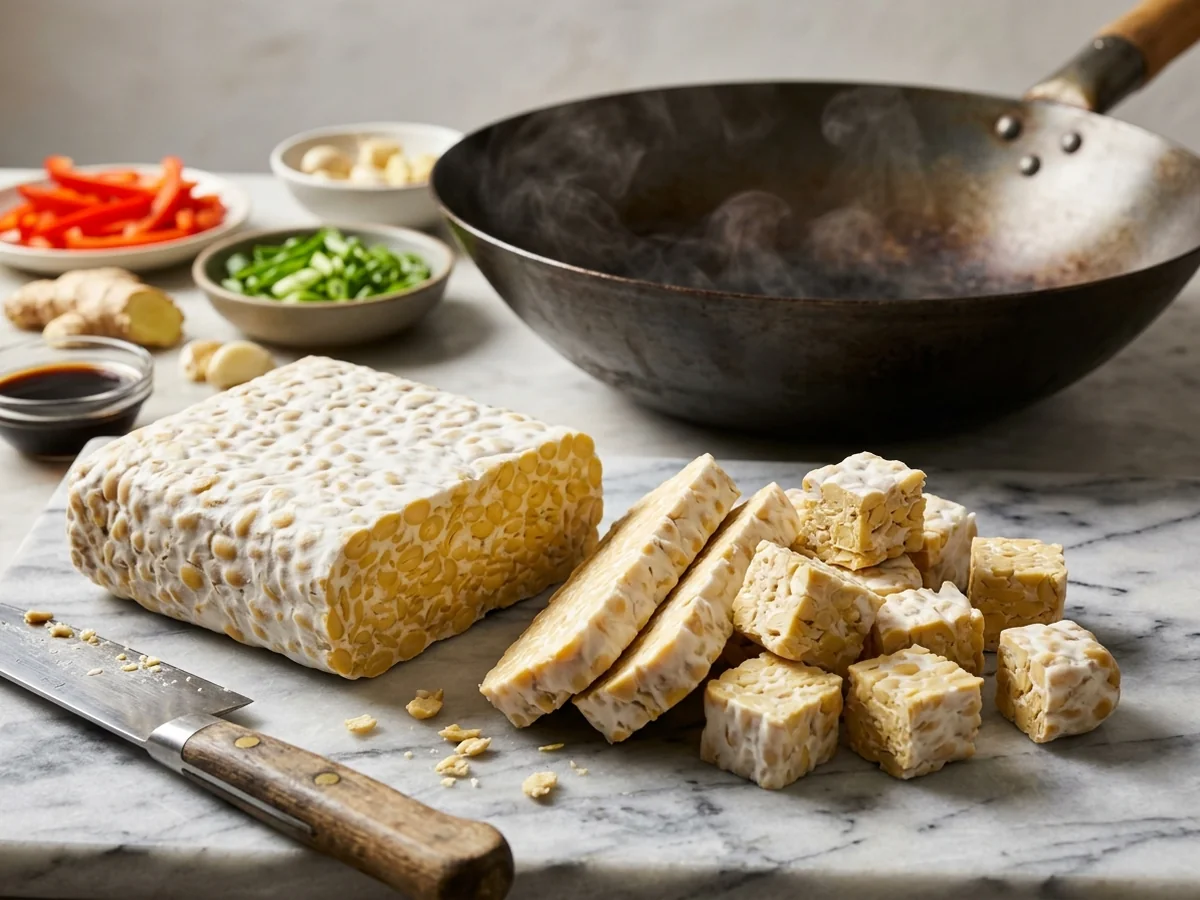
Tempeh is a fermented soy product made of cooked, dehulled soybeans inoculated with mold. This fermentation process is essential because it binds the beans into a dense, solid cake. Because of this structure, tempeh is an ideal protein for high heat cooking methods like the Chinese technique of stir-frying, known as chao. Unlike softer soy products, tempeh maintains its integrity when exposed to the rapid motion and high temperatures typically achieved in a wok, a pan designed to distribute heat evenly across its concave surface.
One of the primary advantages of using this ingredient for an easy vegan tempeh dinner is its ability to brown effectively. When you slice or cube the block, the surface area allows for a deep, crisp crust while the interior retains a pleasant, chewy texture. A common mistake home cooks make is skipping the preparation step of steaming. Briefly steaming your tempeh for ten minutes before browning can help reduce its inherent bitterness, leading to a more balanced final dish.
When preparing a tempeh stir fry with spicy coconut sauce, the structural benefits become even more apparent. The fermented nature of the soy gives it a savory, earthy foundation that stands up well to the richness of coconut milk. Because the texture is compact and porous, it absorbs liquids efficiently. This allows the protein to act as a sponge for your sauce, ensuring that every bite is infused with the ginger, garlic, and chili-based heat of your seasonings.
Understanding how to prepare tempeh for stir fry allows you to experiment with various flavor profiles. To get the best results, consider these practical tips:
- Steam the tempeh briefly before slicing to mellow the flavor.
- Brown the pieces thoroughly in a hot pan or wok before adding any liquid to ensure a crispy texture that resists becoming soggy.
- Add your spicy coconut sauce during the final minutes of cooking to deglaze the pan and coat the protein without breaking down its structure.
- Use the firm consistency to your advantage by pairing it with crunchy vegetables, which provides a satisfying contrast in mouthfeel.
By leveraging the structural stability of this fermented soy, you can create a substantial meal that remains hearty and flavorful. Whether you are tossing it with aromatics or simmering it in a rich sauce, tempeh offers a unique combination of texture and flavor depth that few other plant based proteins can provide.
Preparing Tempeh for Stir Fry
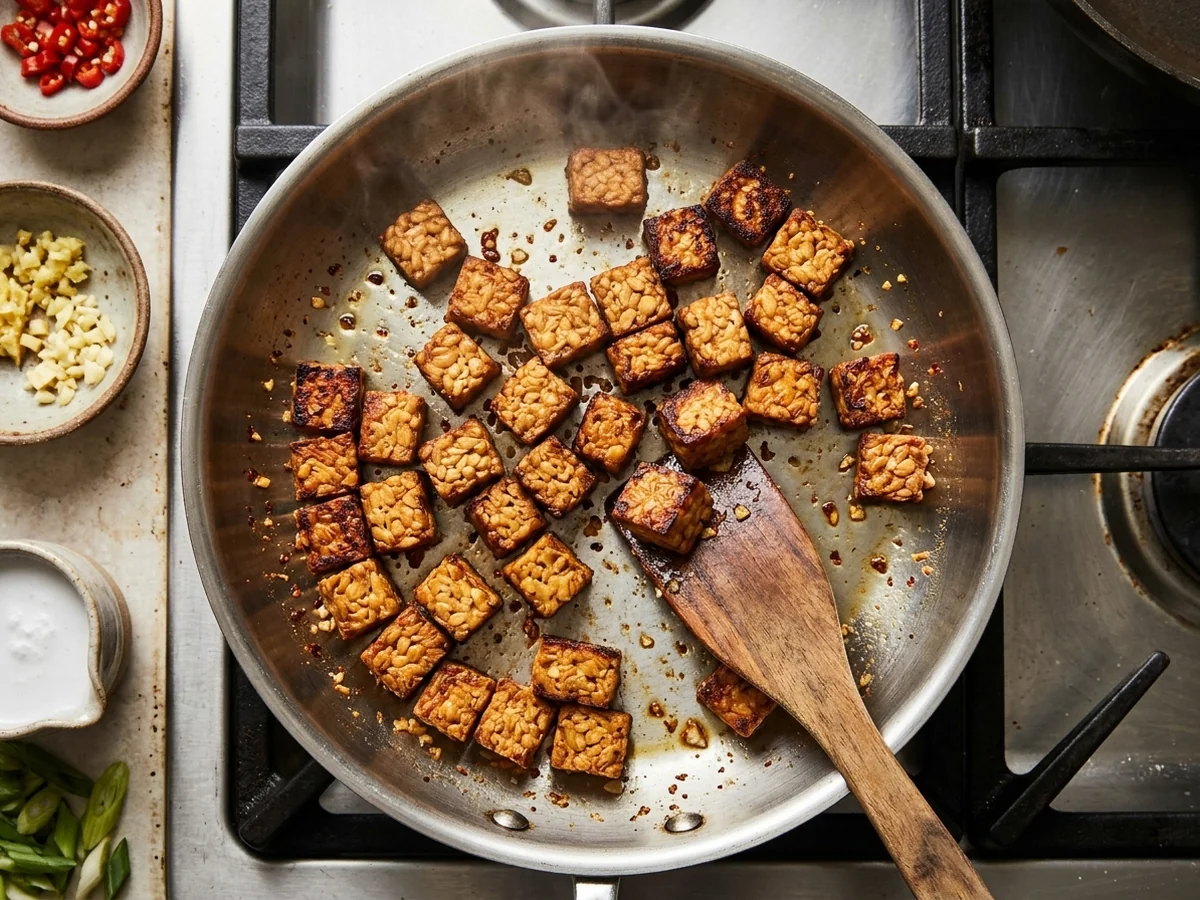
Tempeh is a fermented soy product made of cooked, dehulled soybeans inoculated with mold. Because of this fermentation process, the ingredient possesses a dense texture and a distinct, earthy flavor that can sometimes lean toward bitterness. Proper preparation is essential to ensure the ingredient absorbs your spicy coconut sauce while maintaining a satisfying bite.
The Steaming Technique
Many home cooks find that steaming tempeh before frying is the most effective way to mellow its natural intensity. By placing the block in a steamer basket for about ten minutes, you soften the dense soy structure. This step allows the proteins to hydrate slightly, which makes the interior more receptive to absorbing the flavors of your stir fry sauce recipe later on. If you skip this step, the interior may remain dry or overly firm, failing to integrate with the creamy coconut base.
Slicing and Drying for Texture
Once steamed, slice the block into uniform cubes or strips. Consistency is key to ensure each piece cooks at the same rate. After cutting, pat the pieces thoroughly dry with a paper towel. Moisture is the enemy of a crispy exterior. If the surface remains damp, the soy will steam in the pan rather than brown, resulting in a soggy final texture. For those preparing an easy vegan tempeh dinner, achieving that golden, firm crust is the best way to create a structural contrast against the liquid sauce.
Frying in the Wok
When you are ready to cook, heat a neutral oil in your pan. A wok is a common tool for this task, as its concave shape is often used to distribute heat evenly. This cooking method aligns with the Chinese technique known as chao, which means stir-fry. Place your prepared pieces in a single layer to avoid overcrowding, as too many items in the pan will drop the temperature and prevent browning. Cook over medium-high heat until the edges are deep golden brown and firm.
Once the pieces are crisp, they are ready to be tossed with your aromatics like ginger and garlic. Because you have already developed a crust on the soy, it will hold its shape well when you introduce the spicy coconut sauce for tofu and tempeh. Adding the liquid at this final stage essentially deglazes the pan, coating the crispy surfaces in a rich, flavorful layer that balances the fermentation notes of the soy. This methodical approach to preparation ensures your final meal is structurally sound, flavorful, and perfectly textured.
Mastering the Stir Fry Technique

Mastering the art of the stir fry relies on agility and high heat. In Chinese, the term for this technique is chao. It is a method that demands preparation before you ever ignite the burner, as the process happens rapidly once the ingredients hit the pan. To succeed, you must keep your components in constant motion, a practice that prevents ingredients from scorching against the hot surface.
Common guidance suggests that the wok, with its iconic concave shape, is the ideal tool for this method. Its design allows for efficient heat distribution, concentrating energy at the base to sear ingredients quickly. While often associated with the Han dynasty, the primary functional benefit remains its ability to cook food evenly through rapid movement. This technique is particularly effective when working with tempeh, a fermented soy product made of cooked, dehulled soybeans inoculated with mold. Because tempeh has a dense, firm texture, the intense heat of a wok helps achieve a crisp exterior while maintaining the integrity of the fermented soy blocks.
Preparing Tempeh for the Pan
Before beginning your stir fry, you may want to address the natural bitterness often found in tempeh. Many home cooks find that steaming the tempeh for ten minutes before slicing and frying significantly improves the flavor profile. This pre-cooking step softens the texture and removes any harsh notes, ensuring the final dish is balanced. Once steamed, pat the blocks completely dry. Moisture is the enemy of a good sear, so removing excess water ensures your tempeh browns beautifully rather than steaming in the pan.
The Logic of Heat and Timing
To maintain control, follow these practical steps:
- Prepare all aromatics, such as sliced ginger and garlic, and measure your liquids before starting.
- Ensure the wok is sufficiently hot before adding oil and your first ingredients to seal in textures.
- Add items in stages based on their density, starting with hearty proteins like tempeh, then moving to vegetables that require less time.
- Maintain a rhythmic tossing motion, pushing food from the center toward the cooler edges of the vessel.
When incorporating a spicy coconut sauce for tofu and tempeh, wait until the final stage of cooking. Adding the liquid too early causes sugars in the coconut milk to burn quickly under high heat. By adding the sauce at the very end, you effectively deglaze the pan. This process lifts the flavorful browned bits from the surface and coats your ingredients in a vibrant, creamy layer without compromising the texture of your protein base.
Spicy Coconut Sauce Ratios
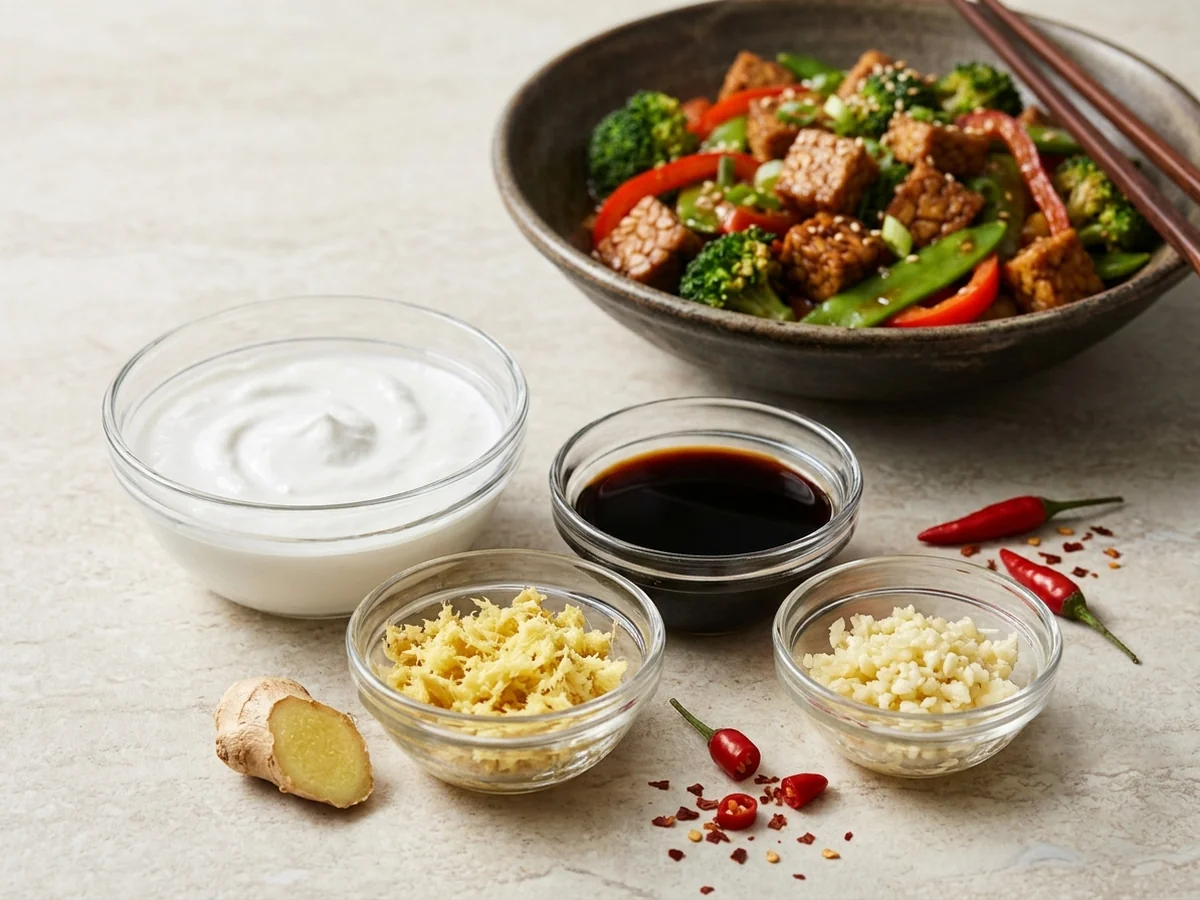
Balancing a spicy coconut mixture for plant-based proteins requires careful management of savory, aromatic, and heat-forward ingredients. Tempeh is a fermented soy product made of cooked, dehulled soybeans inoculated with mold. Because this fermentation process contributes a distinct earthiness, the sauce must be bold enough to complement rather than mask the flavor of the soy.
| Ingredient | Role in Sauce | Consistency Impact |
|---|---|---|
| Full-fat Coconut Milk | Base liquid | Light to medium body |
| Coconut Cream | Base liquid | Thick, velvety body |
| Soy Sauce | Salt/Umami | Liquid dilution |
| Sambal Oelek | Heat/Acidity | Minimal impact |
Choosing Your Coconut Base
The texture of your tempeh stir fry with spicy coconut sauce depends on your choice of coconut product. Full-fat coconut milk provides a thinner, pourable consistency that works well when you want the sauce to reduce slightly in the pan. Coconut cream, which has a higher fat content, creates a thick, luxurious coating that adheres aggressively to the tempeh. If you are preparing a quick plant-based meal, coconut cream is often preferred for a richer mouthfeel, whereas coconut milk is better for a lighter, more fluid sauce.
Refining the Flavor Profile
A successful sauce for this dish relies on the interplay of essential aromatics. Ginger and garlic are fundamental to cutting through the richness of the coconut milk. When building your tempeh stir fry sauce recipe, start by whisking your coconut base with soy sauce, which provides necessary umami, and sambal oelek, which introduces both heat and acidity. If the sauce tastes flat, a small splash of lime juice or rice vinegar can brighten the profile, ensuring the acidity balances the natural sweetness of the coconut.
Mastering the Stir-Fry Technique
Stir-frying is a cooking technique that involves cooking ingredients over high heat while stirring constantly. The word chao in Chinese means stir-fry. Using a wok, which features a concave shape that distributes heat evenly, is common guidance for this method. To achieve the best results, steam your tempeh for ten minutes before frying to reduce any inherent bitterness. Once the tempeh is browned, pour your sauce directly into the hot wok. This deglazing process lifts the caramelized bits from the surface, incorporating them into the sauce for a deeper, more complex finish. Continue to stir until the mixture coats the back of a spoon, ensuring each piece of tempeh is evenly glazed.
Vegetable Pairing Suggestions

Selecting vegetables that maintain a firm, satisfying bite is essential when preparing a dish involving high-heat cooking and a creamy sauce. Tempeh is a fermented soy product made of cooked, dehulled soybeans inoculated with mold, providing a dense, nutty base that pairs exceptionally well with various textures. When creating a tempeh stir fry with vegetables, the goal is to balance the richness of a coconut-based sauce featuring heat-forward ingredients with produce that retains its structural integrity.
Matching Texture to Technique
The Chinese technique known as chao, which means stir-fry, involves cooking ingredients over high heat while stirring constantly. Because this method is rapid, vegetable selection is critical. Choose varieties that resist wilting to ensure the final result is crisp-tender rather than mushy.
- Bell peppers: Offer a vibrant crunch and retain their shape under intense heat.
- Snap peas: Provide a refreshing, sweet snap that cuts through the fat in a coconut-based sauce.
- Broccoli florets: Excellent at trapping sauce within their nooks, adding substance to the meal.
- Carrots: When sliced into thin, uniform matchsticks, they cook quickly while keeping a pleasant resistance.
- Baby corn: Features a distinct, firm texture that holds up well against pungent aromatics like ginger and garlic.
- Snow peas: A delicate addition that requires minimal time in the pan to remain bright green.
Strategic Timing for Uniform Cooking
Common mistakes in stir-frying often stem from adding all vegetables at once. To achieve the best results, stagger your additions based on density. Harder vegetables like carrots and broccoli require more time to reach a crisp-tender stage, so they should enter the pan first. Ingredients with high water content or thin structures, such as bell peppers and snap peas, should be added during the final moments of cooking.
Woks are pans that distribute heat evenly due to their concave shape, making them ideal for this process. Keep the ingredients moving constantly to sear the exterior of the vegetables while preventing them from steaming in their own juices. If you have prepared a tempeh stir fry sauce recipe featuring coconut milk, add it only at the very end. A brief, final toss ensures the sauce coats the ingredients without overcooking the vegetables. This method maintains the freshness and individual textures of each component, which is vital for a plant-based meal. By understanding the cooking properties of your produce, you ensure that every bite of your meal is balanced, flavorful, and structurally sound.
Storage and Reheating Tips
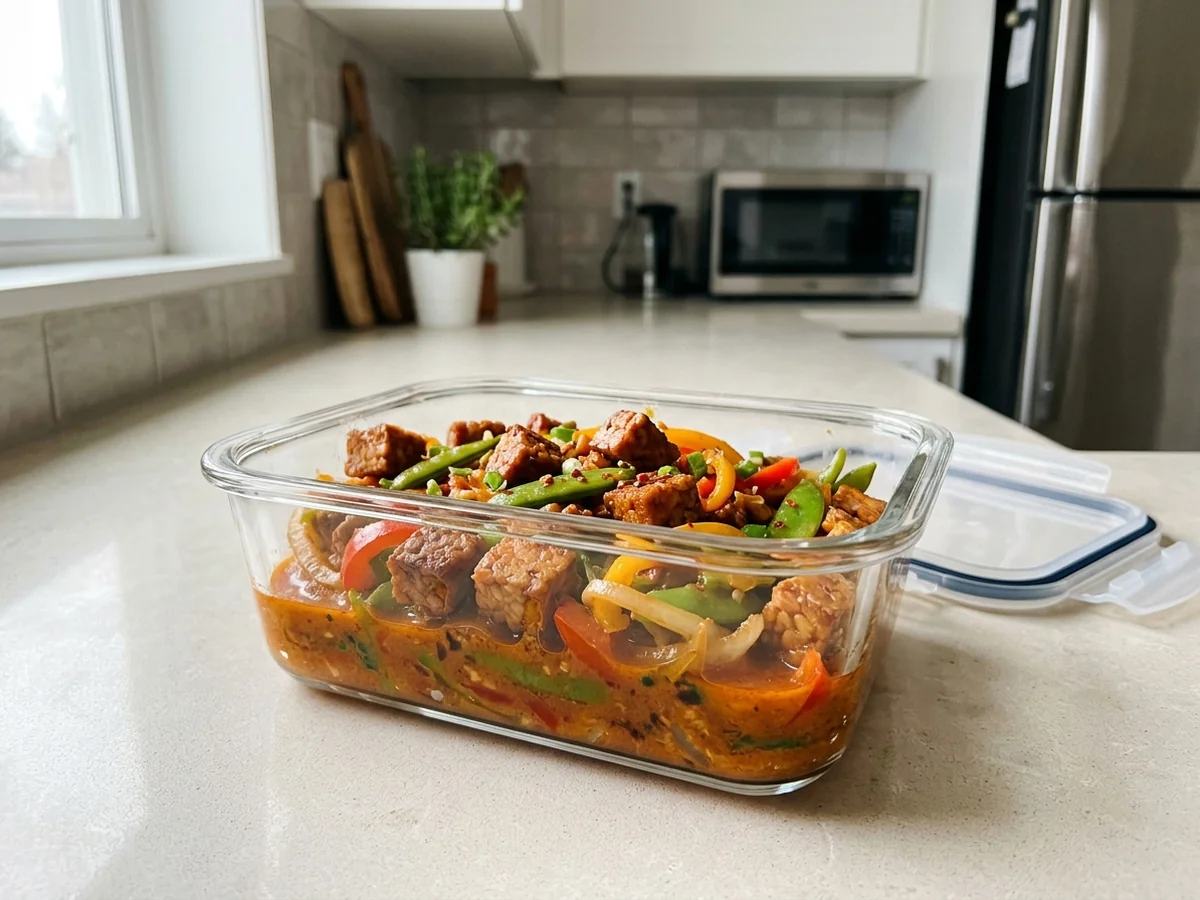
Proper storage is essential to maintain the quality of your coconut-infused fermented soy dish. Because tempeh is a fermented soy product made of cooked, dehulled soybeans inoculated with mold, its texture is sensitive to temperature fluctuations. Once the food has cooled to room temperature, transfer it into an airtight container. This prevents the coconut milk from absorbing odors from other items in your refrigerator, which can alter the flavor profile of the dish.
When you store the meal, you will likely notice the sauce thickens or solidifies. This is a natural reaction caused by the high fat content in coconut milk. While this might look unappealing at first, it is a normal physical property of the ingredients and does not indicate spoilage. To restore the creamy consistency of your plant-based meal, add a small splash of water or vegetable broth to the container before reheating. This provides the necessary moisture to loosen the sauce without diluting the flavor intensity of your spices.
For the best results, reheat your leftovers on the stovetop. Using a microwave can cause the tempeh to become rubbery or unevenly heated, and it often leads to the coconut milk sauce breaking or separating. Instead, place the stir fry in a pan over medium-low heat. Stir gently and consistently to ensure even heat distribution. This slow approach prevents the sauce from scorching at the bottom of the pan and helps maintain the integrity of the fermented protein.
- Use a shallow, wide container for storage. This increases the surface area, allowing the meal to cool rapidly in the refrigerator, which is safer for food quality.
- Avoid freezing this specific meal. Coconut milk-based sauces often lose their emulsion during the freezing and thawing process, which can lead to a grainy or watery texture that is difficult to fix.
- Monitor the heat carefully. If you notice the sauce starting to bubble or look oily, lower the heat immediately. Keeping the temperature moderate preserves the delicate balance of the flavors in the coconut base.
- If you prepared your meal with additional vegetables, be aware that they may soften further during reheating. Adding them to the pan during the final thirty seconds of the warming process helps maintain the best possible texture.
FAQ
What is tempeh?
Tempeh is a fermented soy product made of cooked, dehulled soybeans inoculated with mold. According to research published by the National Institutes of Health, this fermentation process creates a distinct nutty flavor and a firm, dense texture that holds up well during high-heat cooking.
How do I prepare tempeh for a stir-fry?
You should slice the tempeh into uniform cubes or strips to ensure even cooking throughout the dish. Steaming the tempeh for about 10 minutes before pan-frying is a recommended technique to help remove any slight bitterness resulting from the fermentation process.
Why does coconut sauce pair well with fermented soy?
The natural richness and sweetness of coconut milk provide a smooth contrast to the earthy, savory profile of fermented soybeans. A sauce combining creamy coconut with heat from ingredients like chili paste balances these flavors, especially when rounded out by aromatics like ginger and garlic.
What is the history of the stir-fry technique?
Stir-frying is a cooking method often associated with Chinese culinary traditions, where the word chao specifically refers to the technique of cooking ingredients over high heat while stirring constantly. A wok is commonly used for this process because its concave shape helps distribute heat evenly across the surface of the pan, a design that is widely considered to date back to the Chinese Han dynasty.
Can I meal prep this plant based dish?
You can prepare this meal in advance, though it is best to store the sauce separately from the crispy tempeh and vegetables if you want to maintain the texture. When reheating, add the sauce to the pan first to warm it through before tossing in the remaining components to prevent the meal from becoming mushy.
Conclusion
The best next step to elevate your cooking is to prepare the tempeh by steaming it for ten minutes before browning it in your pan. This simple technique softens the texture and removes any lingering bitterness, ensuring a better base for your dish. Once you have mastered this preparation, gather your ingredients and try making a spicy coconut stir fry featuring this fermented soy product for a flavorful and nutritious plant based meal.
Sources: pubmed.ncbi.nlm.nih.gov, faculty.washington.edu
You might also like: Blueberry Lemon Overnight Oats with chia