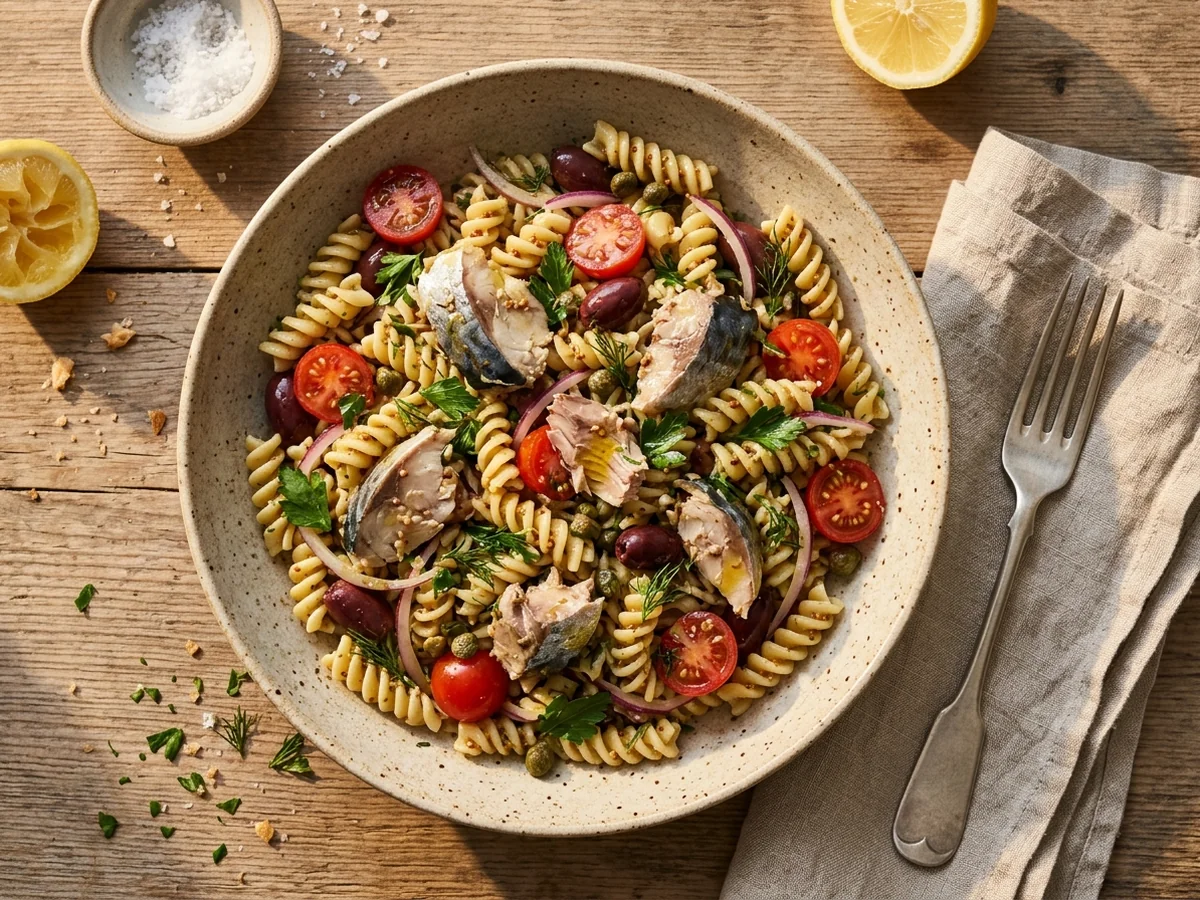
easy canned mackerel pasta salad
Introduction
A canned mackerel pasta salad is a simple, nutrient-dense meal that combines pantry staples with fresh ingredients for a quick lunch or dinner. Preparing a healthy canned mackerel pasta salad requires minimal effort and provides a versatile base for various vegetables and dressings.
This guide covers how to assemble this dish, including tips for enhancing the texture of your vegetables and ensuring the best flavor profile. You will learn about the nutritional benefits of using mackerel, which is an oily fish with high levels of omega-3 fatty acids and a natural source of vitamin B12. The following sections provide clear instructions on preparation, ingredient variations to suit your pantry, and common guidance for maintaining food quality through proper storage. Whether you are meal prepping for the week or looking for a fast, budget-friendly meal, these methods help you create a satisfying fish pasta salad.
How to make the salad
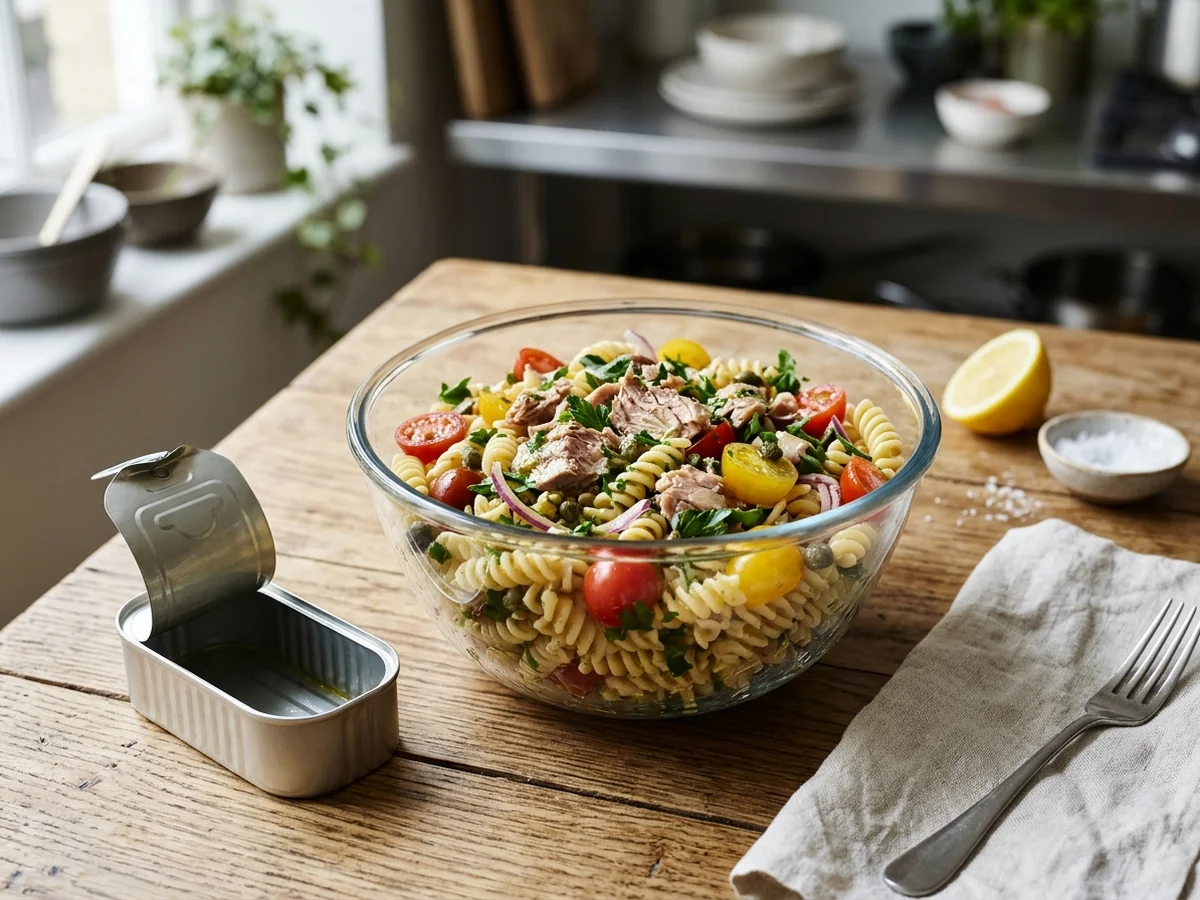
To assemble this dish, simply combine cooked pasta with flaked fish, fresh vegetables, and a light dressing. Start by boiling your preferred short pasta, such as fusilli, until it reaches an al dente texture. Drain the pasta thoroughly and let it cool completely before mixing it with other ingredients to maintain the best consistency.
While the pasta cools, prepare your mackerel. Open the tin, drain the liquid, and gently flake the fish into bite-sized pieces using a fork. Mackerel is an oily fish with high levels of omega-3 fatty acids and is also a source of vitamin B12, making it a nutrient-dense protein choice for your lunch.
Incorporate texture by adding crisp vegetables like celery or shallots. As a common practice to improve their crunch, soak sliced shallots and celery in ice water for 5 minutes before patting them dry. This simple step ensures every bite of your meal has a refreshing snap.
Create a balanced dressing using pantry staples like extra virgin olive oil and a touch of Dijon mustard. Whisk these together with fresh herbs to brighten the flavors of the oily fish. Combine the pasta, fish, vegetables, and dressing in a large bowl, tossing gently to ensure everything is evenly coated without breaking the fish apart too much.
- Boil pasta and allow it to reach room temperature.
- Drain the liquid from the tin of fish.
- Flake the fish into small, bite-sized portions.
- Soak sliced vegetables in ice water to maintain crispness.
- Whisk oil, mustard, and herbs for a simple dressing.
- Combine all ingredients and toss gently.
This dish is a practical, nutrient-dense solution for quick lunches because it relies on shelf-stable ingredients you likely already have in your kitchen. Using pantry staples allows you to assemble a satisfying meal without needing to shop for specialty items.
When storing your leftovers, follow standard food safety storage guidelines to keep the dish fresh. According to common practice, a prepared meal of this type can be stored in the refrigerator for up to 3 days. Keep it in an airtight container to ensure the best quality for your upcoming lunches.
Why mackerel is healthy
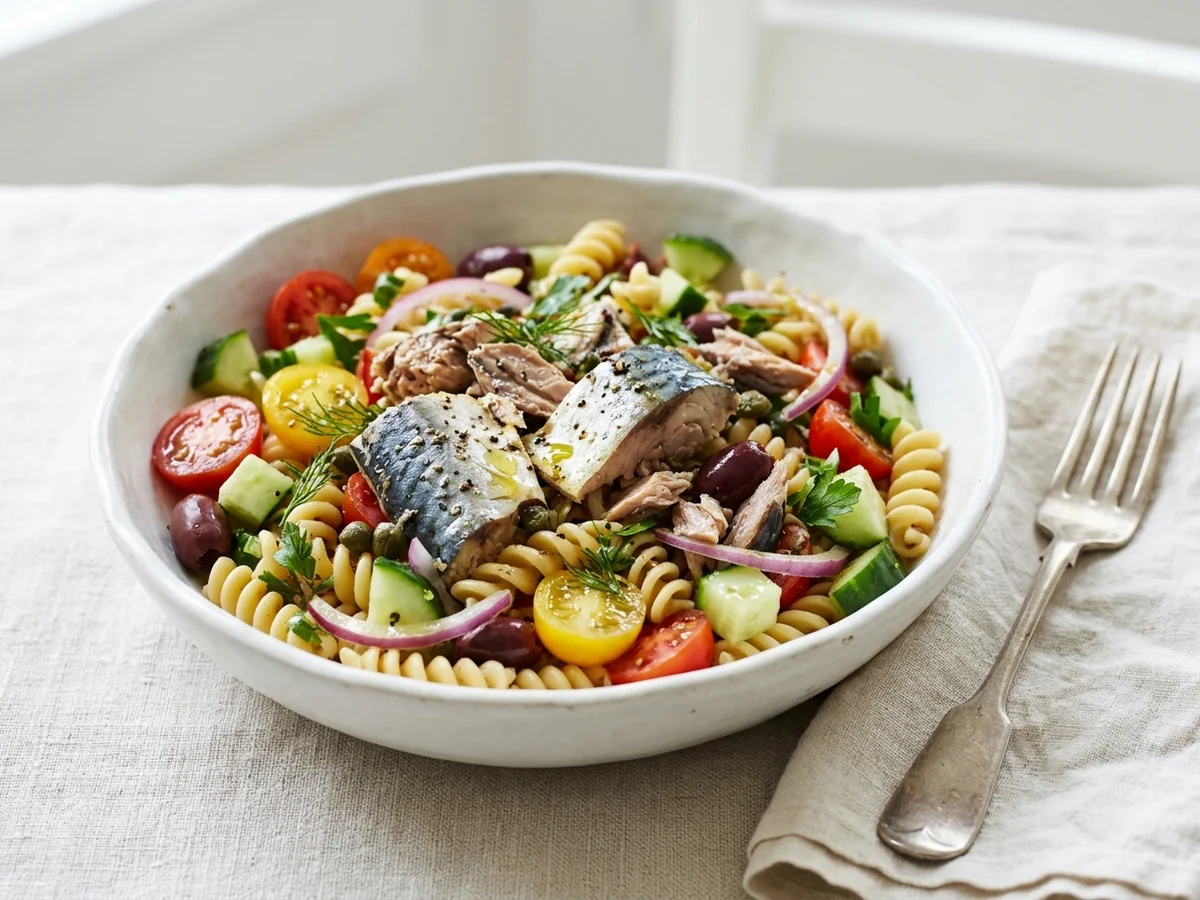
Mackerel is a highly nutritious oily fish that serves as a cornerstone for a balanced diet. According to the Cleveland Clinic, mackerel is rich in omega-3 fatty acids, which are essential fats the body cannot produce on its own. These fatty acids are widely recognized for their role in supporting heart health. In addition to these healthy fats, research published in PubMed confirms that mackerel is a significant source of vitamin B12. This nutrient is vital for maintaining energy levels and supporting overall metabolic function, making it an excellent addition to your weekly meal rotation.
A canned mackerel pasta salad is an ideal way to consume these nutrients because it relies on shelf-stable pantry staples. Using canned fish allows you to bypass the need for fresh seafood preparation, saving time while ensuring you have high-quality protein on hand. When you combine this protein with whole grain or gluten-free fusilli pasta, you create a meal that is both filling and nutritionally dense. It is a practical solution for those looking for easy fish pasta salad ideas that require minimal cooking.
To maximize the flavor and texture of your salad, consider a few practical culinary techniques. Many home cooks find that soaking sliced shallots and celery in ice water for five minutes before adding them to the bowl significantly improves their crunch. This simple step transforms the texture of the dish, preventing the vegetables from wilting under the dressing. If you prefer to use smoked mackerel instead of tinned, you can substitute it directly in your recipes, though you may need to adjust the amount of added salt or mustard in your dressing, as smoked varieties often have a more intense, salty profile.
When preparing a healthy canned mackerel pasta salad for meal prep, follow standard food safety storage guidelines to ensure quality. A prepared cold pasta salad with tinned mackerel can typically be stored in the refrigerator for up to 3 days. To maintain the integrity of the ingredients, keep the dressing separate if you are prepping several days in advance, or toss the pasta lightly in extra virgin olive oil before adding the fish and herbs. A common mistake is failing to drain the liquid from the can properly, which can make the salad overly oily. Always drain the contents thoroughly to ensure your final dish remains fresh and appetizing throughout your work week.
Best canned mackerel brands

Selecting a high quality tin of fish is essential because it serves as the base for many quick canned mackerel lunch recipes. Choosing a brand packed in water or olive oil ensures the fish retains its natural flavor without adding unnecessary sodium or vegetable oils to your dish.
- Look for fillets packed in extra virgin olive oil if you prefer a richer mouthfeel that coats the noodles evenly.
- Prioritize sustainable options by checking labels for certifications, as this guarantees the fish was caught using environmentally responsible methods.
- Avoid tins that appear dented or show signs of rust, as these indicate potential compromises in the seal and safety of the product.
- Check the ingredient list to confirm the only additives are salt, water, or oil, which helps you maintain control over the seasoning of your final meal.
- Select wild caught varieties when available to ensure the highest levels of omega-3 fatty acids and vitamin B12 in every serving.
You should always drain the liquid from the tin before incorporating the fish into your pasta. Leaving the canning liquid in the bowl can result in a soggy dish, as the excess moisture prevents the dressing from clinging properly to the noodles. Proper drainage ensures that the firm texture of the fish stands out against the bounce of your cooked pasta.
Deciding between standard tinned mackerel and smoked varieties changes the entire profile of your meal. Standard fillets offer a clean, mild taste that acts as a blank canvas for fresh herbs and acidic dressings. Smoked options bring a bold, woody depth that pairs exceptionally well with hearty ingredients like Dijon mustard or capers. If you choose the smoked variety, consider reducing the amount of other salty components in your dressing to balance the flavor intensity.
Flaking the fish correctly is the secret to getting an even distribution of protein in every bite, particularly when using shapes like fusilli. Use a fork to gently break the fillets into large, bite-sized chunks rather than mashing them into a paste. These pieces nestle perfectly into the spirals of the pasta, ensuring you get a balanced ratio of fish and starch in each forkful. For the best result, fold the flaked fish in at the very end of your preparation to prevent it from breaking down further.
Building Flavor and Texture

You can create a balanced, vibrant meal by focusing on the harmony between your dressing and fresh produce. A combination of extra virgin olive oil and Dijon mustard provides the perfect foundation for a dressing that coats the fish and pasta without overpowering them.
The olive oil adds a necessary richness that complements the natural oils in the fish, while the mustard introduces a sharp, acidic bite. This acidity cuts through the intensity of the protein, ensuring each bite feels light and well-rounded.
To improve the overall crunch of your dish, follow the common practice of soaking sliced shallots and celery in ice water for five minutes before combining them with the other ingredients. This simple technique refreshes the vegetables, keeping them crisp even after they have been tossed with the dressing and chilled.
Fresh herbs are essential for brightening the flavor profile of this cold dish. By incorporating a generous amount of chopped parsley, dill, or chives, you introduce a layer of freshness that elevates the simpler pantry staples. These herbs provide a clean finish that balances the savory nature of the mackerel.
- Use high-quality extra virgin olive oil to create a silky, emulsified dressing base.
- Whisk the Dijon mustard thoroughly with the oil to ensure a consistent, tangy flavor in every bite.
- Soak your aromatics like shallots and celery in ice water to maintain their firm texture during storage.
- Add fresh herbs just before serving to maximize their vibrant color and aromatic impact.
Since mackerel is an oily fish with high levels of omega-3 fatty acids, it benefits significantly from these bright, acidic additions. The combination of healthy fats and fresh, crisp vegetables creates a balanced meal that remains satisfying when served cold. Always remember that this fish is also a source of vitamin B12, making these preparation techniques a great way to enjoy a nutritious, pantry-friendly lunch.
Best pasta salad additions
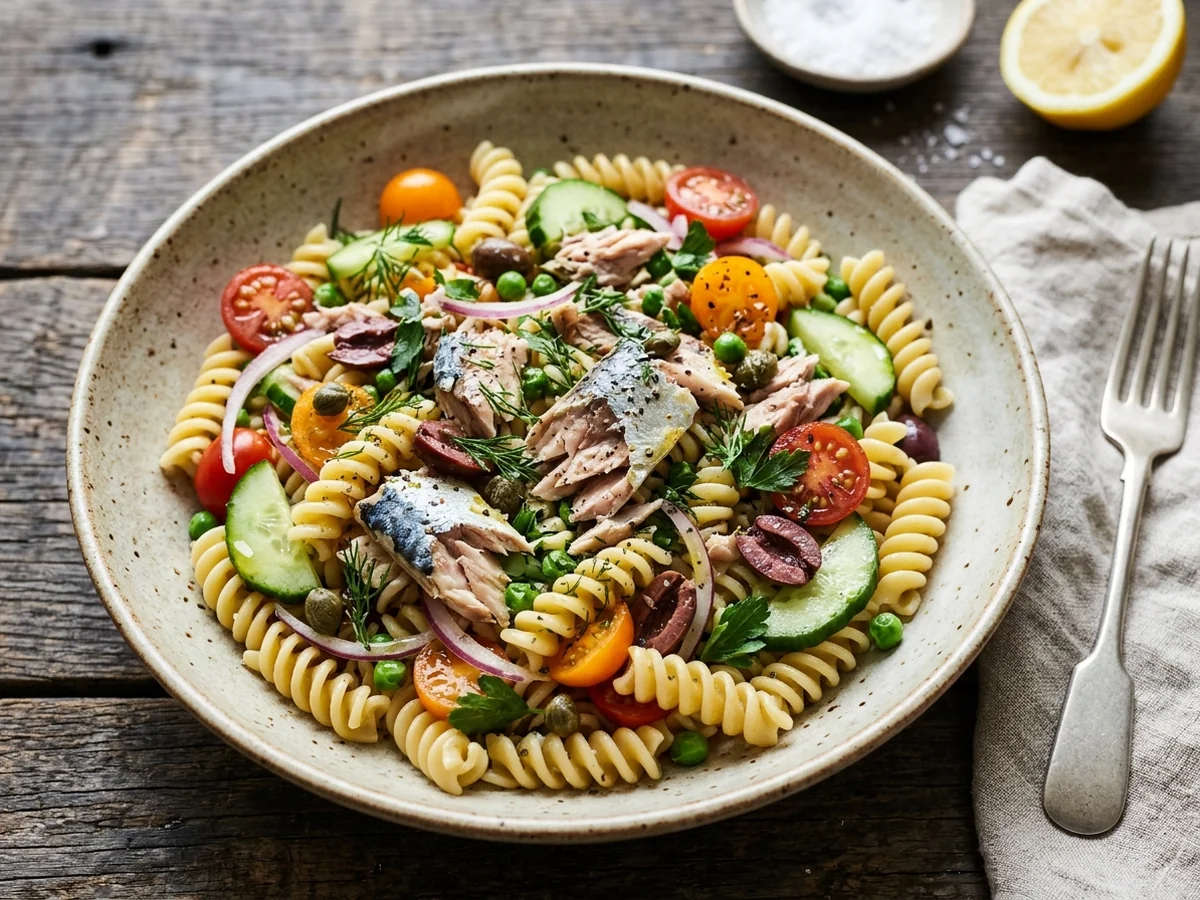
You can customize this dish by swapping core ingredients to meet dietary needs, adjusting the dressing to balance the specific flavor of the fish, or incorporating seasonal produce for variety. These easy fish pasta salad ideas ensure the meal remains versatile throughout the year.
- Substitute standard wheat-based noodles with gluten-free varieties like brown rice, chickpea, or lentil pasta to accommodate dietary restrictions while maintaining a satisfying texture.
- Balance the acidity of your dressing by tasting as you mix, adding a touch more lemon juice or vinegar if using a mild, water-packed fish, or increasing the Dijon mustard if your fillets are packed in oil.
- Add crunch and freshness by including seasonal vegetables such as crisp cucumbers or radishes in the spring, juicy heirloom tomatoes in the summer, or thinly sliced roasted beets during the autumn months.
- Incorporate fresh herbs like dill, parsley, or chives to brighten the flavor profile and create a lighter, more vibrant dish regardless of which type of tinned protein you have in your pantry.
- To ensure your aromatics stay crunchy, a common technique is to submerge thinly sliced celery and shallots in a bowl of ice water for a few minutes before draining and adding them to the pasta.
Mackerel is an oily fish with high levels of omega-3 fatty acids, and it serves as a source of vitamin B12. Because these fish varieties can range from mild to quite potent, adjusting the dressing acidity is key to a balanced result. If you use a version packed in brine or water, it will have a different impact on the dressing than one packed in oil, so adjust your extra virgin olive oil and acid ratios accordingly. Always keep in mind that food safety storage guidelines suggest that prepared pasta salad mixtures should be kept in the refrigerator for up to 3 days to maintain optimal quality.
Storage and Food Safety

Proper storage is essential for maintaining the quality of your canned mackerel pasta salad. Following standard food safety practices helps keep this meal fresh and safe to eat. As a general guideline, prepared mackerel pasta salad can be stored in the refrigerator for up to 3 days. Beyond this window, the texture of the pasta and the freshness of the fish may decline, making it best to discard any leftovers.
Because mackerel is an oily fish with high levels of omega-3 fatty acids, it is particularly sensitive to oxidation. When these fats are exposed to air, the flavor profile can change. To prevent this and keep the salad tasting its best, use an airtight container. A glass or high-quality plastic container with a secure, locking lid is ideal, as it prevents the distinct aroma of the fish from transferring to other items in your refrigerator. If your container is not truly airtight, the smell can permeate nearby dairy or produce, which is a common complaint when storing fish-based dishes.
When preparing this dish for meal prep, avoid leaving the salad at room temperature for extended periods. Bacterial growth can occur rapidly in the danger zone, which is generally between 40 and 140 degrees Fahrenheit. If you are packing this for work or a picnic, keep the container in an insulated lunch bag with a fresh cold pack. This ensures the ingredients remain stable until you are ready to eat.
A few practical steps can help you manage your storage more effectively:
- Drain the liquid from the tinned mackerel thoroughly before mixing it into the salad to prevent the pasta from becoming soggy during storage.
- Ensure your refrigerator is set to the recommended temperature of 40 degrees Fahrenheit or below to keep the ingredients stable and safe.
- If you have added fresh herbs or raw vegetables like celery, remember that these may lose their crispness over time. While the salad remains safe to eat for up to 3 days, you can revive the texture of raw aromatics by adding a fresh crunch just before serving.
- Avoid cross-contamination by keeping the salad in a dedicated section of the fridge, away from raw meat or poultry.
Beyond the convenience of meal prep, remember the nutritional value of your ingredients. Mackerel is a significant source of vitamin B12, which supports overall health. By storing your salad correctly, you ensure that you continue to benefit from these nutrients while enjoying a convenient, ready-to-eat meal.
Avoiding soggy pasta salad

You can prevent a disappointing texture in your cold fish pasta dish by monitoring your boiling time and timing your ingredient additions carefully. Following these steps ensures your meal remains appetizing and maintains a pleasant bite even after it sits in the refrigerator.
- Cook your pasta until it is al dente, as noodles that are too soft will quickly turn mushy once coated in dressing and mixed with ingredients.
- Drain your pasta well and rinse it briefly under cold water to stop the cooking process and remove excess starch that causes sticking.
- Season the warm pasta with a little salt, pepper, and vinegar or oil before adding the fish and vegetables to ensure the flavors penetrate the noodles rather than just coating the surface.
- Wait until just before serving to stir in delicate fresh herbs, as incorporating them too early causes them to wilt and lose their bright flavor.
- Combine the oily fish and dressing with the pasta only after the noodles have reached room temperature to prevent the fats from separating or becoming greasy.
- Use firm vegetables like celery or shallots, which you can soak in ice water for 5 minutes before chopping to improve their crunch and help them hold their texture in the salad.
Proper preparation makes a significant difference when working with oily fish like mackerel, which is a source of vitamin B12. Because mackerel is an oily fish with high levels of omega-3 fatty acids, the fats in the fish work best when they are not competing with overcooked, waterlogged pasta. Keeping the components distinct and correctly textured helps maintain the integrity of the dish for longer periods. As common guidance, you can store your prepared dish in the refrigerator for up to 3 days, provided you handle the ingredients to prevent premature softening.
FAQ
How long can you store canned mackerel pasta salad?
Common guidance suggests that prepared dishes of this type can be kept in the refrigerator for up to 3 days. Always use an airtight container to maintain freshness and follow standard food safety storage guidelines for fish products.
What are the nutritional benefits of mackerel?
Mackerel is an oily fish that contains high levels of omega-3 fatty acids. Additionally, this fish serves as a reliable source of vitamin B12.
Can tinned mackerel be used as a substitute for smoked mackerel?
You can substitute tinned mackerel for smoked mackerel in most cold pasta salad recipes, though the flavor profile will be significantly milder. Since tinned varieties often come in water or oil, ensure you drain the liquid thoroughly before mixing it with your pasta and dressing.
How can I make the vegetables in my pasta salad crunchier?
A common technique to ensure your vegetables stay crisp is to place sliced celery and shallots in a bowl of ice water for a few minutes before adding them to your dish. This process helps the vegetables keep a satisfying snap even after they are combined with the pasta and dressing.
What pasta shapes work best for a canned mackerel pasta salad?
Short, sturdy shapes like fusilli or penne are ideal because they hold onto dressings and small pieces of fish effectively. These shapes provide a good balance of texture and ensure every bite contains a consistent mix of ingredients.
Conclusion
The best way to enjoy this cold pasta dish is to prepare it ahead of time and allow the flavors to meld in the refrigerator. Following food safety storage guidelines, it is common practice to keep the meal chilled for up to 3 days, which makes it an efficient option for meal prep. Incorporating this oily fish into your routine provides a source of omega-3 fatty acids and vitamin B12. For a sharper crunch in your vegetables, it is common practice to soak sliced shallots and celery in ice water for 5 minutes before mixing them in. Once you have mastered these basics, you can confidently experiment with different fresh herbs or pasta shapes to suit your pantry staples.
Sources: health.clevelandclinic.org, pubmed.ncbi.nlm.nih.gov
You might also like: Blueberry Lemon Overnight Oats with chia