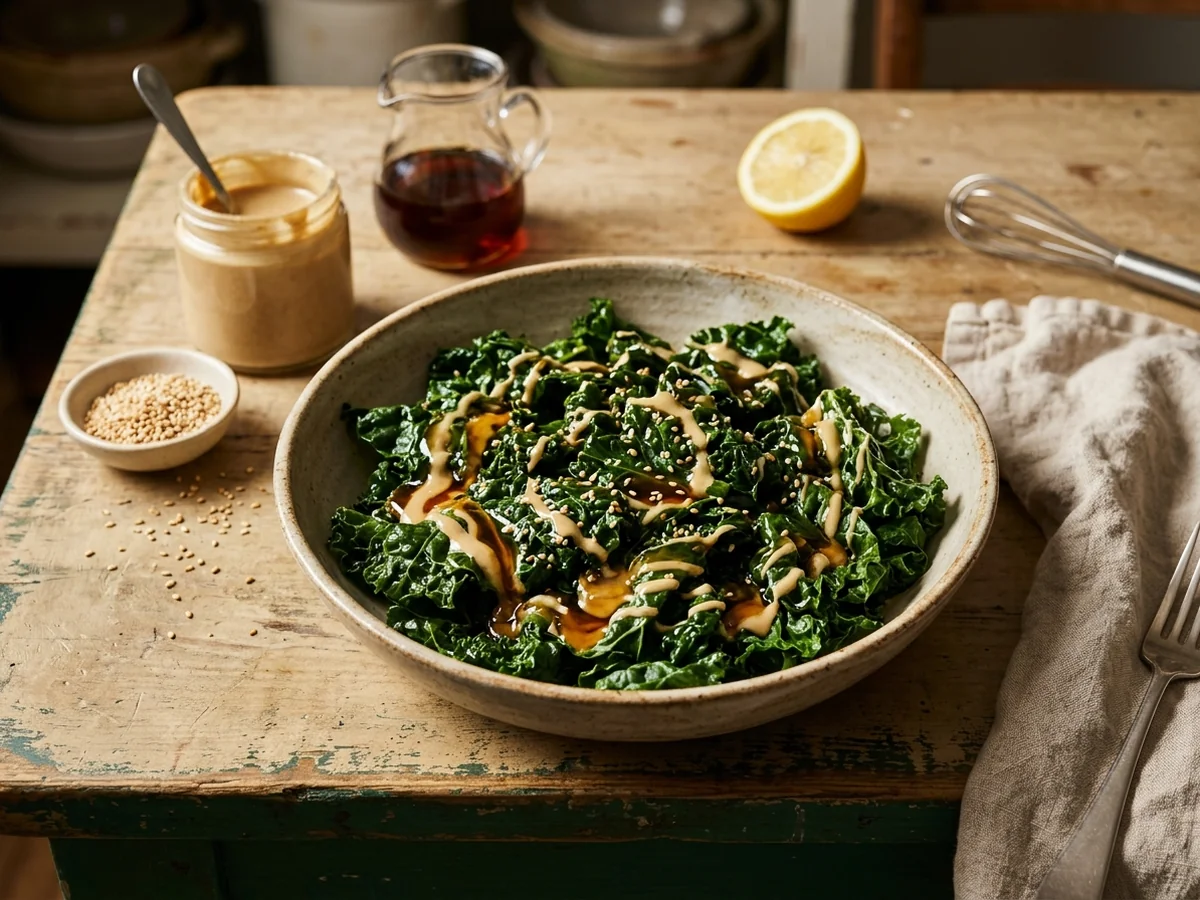
massaged kale salad maple tahini dressing
Introduction
A massaged kale salad with maple tahini dressing is a nutrient-dense dish that relies on specific preparation techniques to transform raw, fibrous greens into a tender, flavorful meal. By applying mechanical pressure to the leaves and balancing the earthy bitterness of kale with a creamy, sweet dressing, you create a salad with improved texture and taste.
This article covers the essential steps for preparing kale, including the importance of removing central stems and the science behind how massaging kale with oil or acidic dressings breaks down tough cell walls. You will also find guidance on preparing a balanced maple tahini dressing, which typically consists of ground sesame seeds, maple syrup, and lemon juice. We provide tips on managing dressing consistency, pairing suggestions for a complete meal, and important food safety information regarding sesame seeds, which the Food and Drug Administration classifies as a major food allergen.
Benefits of Massaged Kale
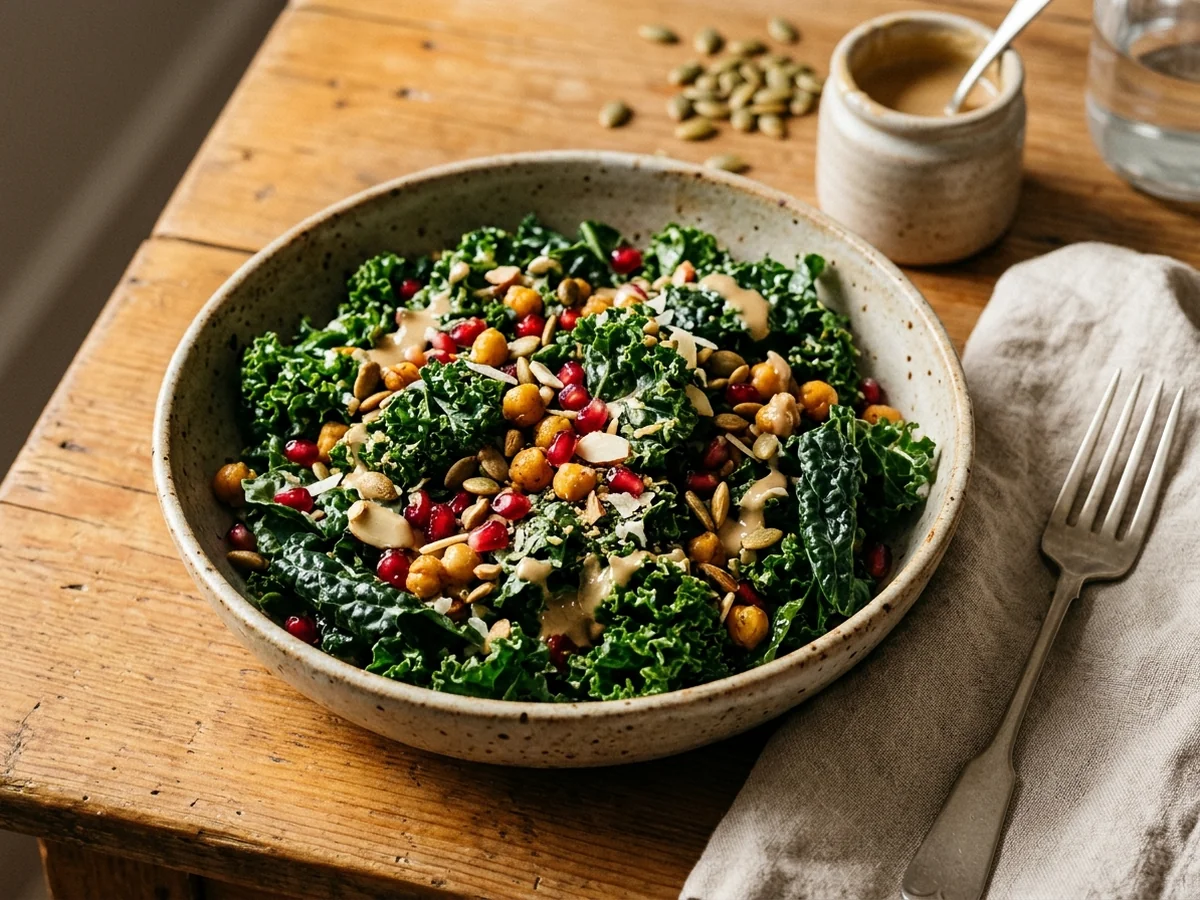
Massaging kale transforms a tough, fibrous vegetable into a tender, ready-to-eat salad base by physically breaking down its rigid cell walls. This hands-on technique significantly reduces the volume of the leaves, resulting in a silkier texture that holds dressings effectively without becoming soggy.
Botanically, kale is a member of the Brassica oleracea species. This lineage connects it directly to other well-known garden staples like broccoli and cabbage, which explains why the leaves possess such a hearty, dense structure. Because these plants are naturally robust, they require extra preparation to become palatable in raw form.
To improve the eating experience, it is essential to remove the central stem of the leaves before processing, as this part is particularly fibrous and difficult to chew. Once the stems are gone, applying pressure with an acidic element or oil helps weaken the tough fibrous cell walls of the plant, making the greens much easier to digest and consume.
Pairing these prepared greens with a rich, nutty dressing enhances the nutrient-dense profile of the meal. Using a sauce made from tahini, which is a paste typically created from toasted and ground hulled sesame seeds, adds healthy fats and a smooth consistency that complements the earthy flavor of the kale. When balanced with a hint of maple syrup, the dressing rounds out the bitterness of the greens to create a satisfying plant-based meal.
- Kale is widely recognized as a nutrient-dense food, often cited as a rich source of Vitamin K and Vitamin C.
- The preparation process usually involves adding a small amount of liquid, such as lemon juice, to the tahini base. Note that this can cause the mixture to seize temporarily before it smooths out into a creamy consistency.
- When working with ingredients like tahini, keep in mind that the Food and Drug Administration classifies sesame seeds as a major food allergen in the United States. Always check labels if you are preparing this for guests with dietary restrictions.
This method of preparation is a staple in plant-based cooking because it turns raw, resilient produce into a sophisticated dish. By combining the natural structure of the greens with the deep, savory notes of sesame, you create a balanced bowl that feels substantial and fresh.
Science of Massaging Kale
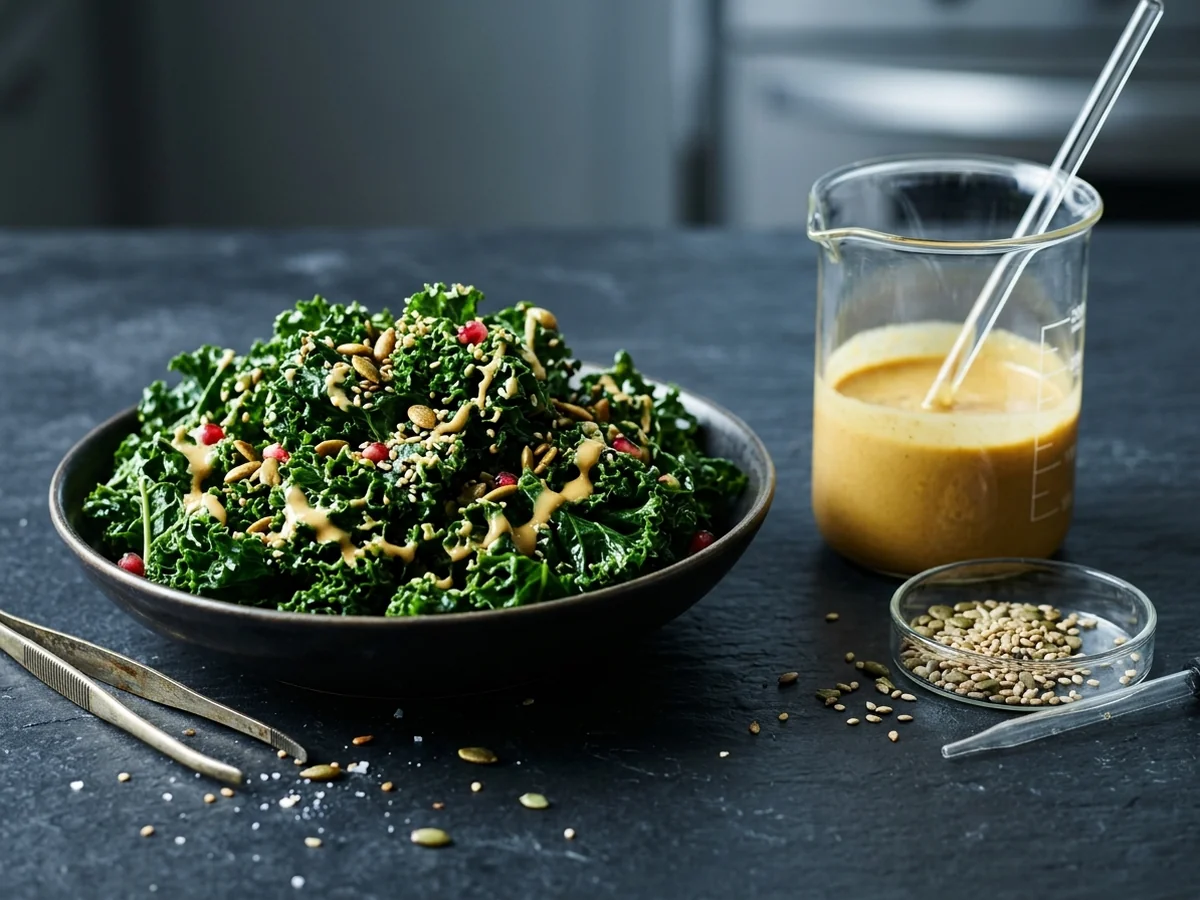
Massaging kale is a technique rooted in the physical breakdown of plant cell walls. As a member of the Brassica oleracea species, which includes other hearty vegetables like broccoli and cabbage, kale possesses a naturally rigid, fibrous structure. According to the University of Illinois Extension, massaging kale with oil or an acidic dressing helps break down these tough fibrous cell walls. This mechanical intervention is essential because raw, untreated kale leaves are often too stiff and leathery to be palatable in a fresh salad.
The process of how to massage kale for salad involves applying consistent physical pressure to the leaves. When you squeeze and rub the greens, the cellular structure begins to collapse. This transformation changes the texture from tough and rigid to tender and soft. Beyond improving the mouthfeel, this method makes the leaves more manageable to eat and easier to digest. A common observation during this preparation is that massaging kale reduces the overall volume of the leaves significantly, allowing you to fit a larger nutritional portion into a single bowl.
To perform this technique correctly, you must first remove the central stem of the leaves. North Carolina State University Extension notes that removing the central stem is essential for reducing toughness, as this part of the plant contains the most fibrous material and does not soften through massaging. Once the stems are removed and discarded, add your oil or dressing, then use your hands to firmly massage the leaves until they turn a darker, more vibrant shade of green.
When incorporating a dressing, such as a maple tahini blend, be mindful of the ingredients. Tahini, which is a paste made from toasted, ground hulled sesame seeds, is a common base for these dressings. If you are adding an acid like lemon juice to your tahini, you may notice the mixture seize or thicken temporarily before it smooths out into a creamy consistency. It is also important to remember that the Food and Drug Administration classifies sesame seeds as a major food allergen in the United States, so always verify labels if you are serving this dish to guests.
A common mistake is over-massaging the leaves, which can lead to a mushy or watery texture if the kale is left to sit for too long. While some believe massaged kale keeps for days, it is best to prepare it close to serving time to maintain the desired crunch and structural integrity of the greens. Because kale is often cited as a rich source of Vitamin K and Vitamin C, using this technique effectively ensures you can enjoy the density of these nutrients in a comfortable, salad-friendly format.
Choosing Your Kale Variety
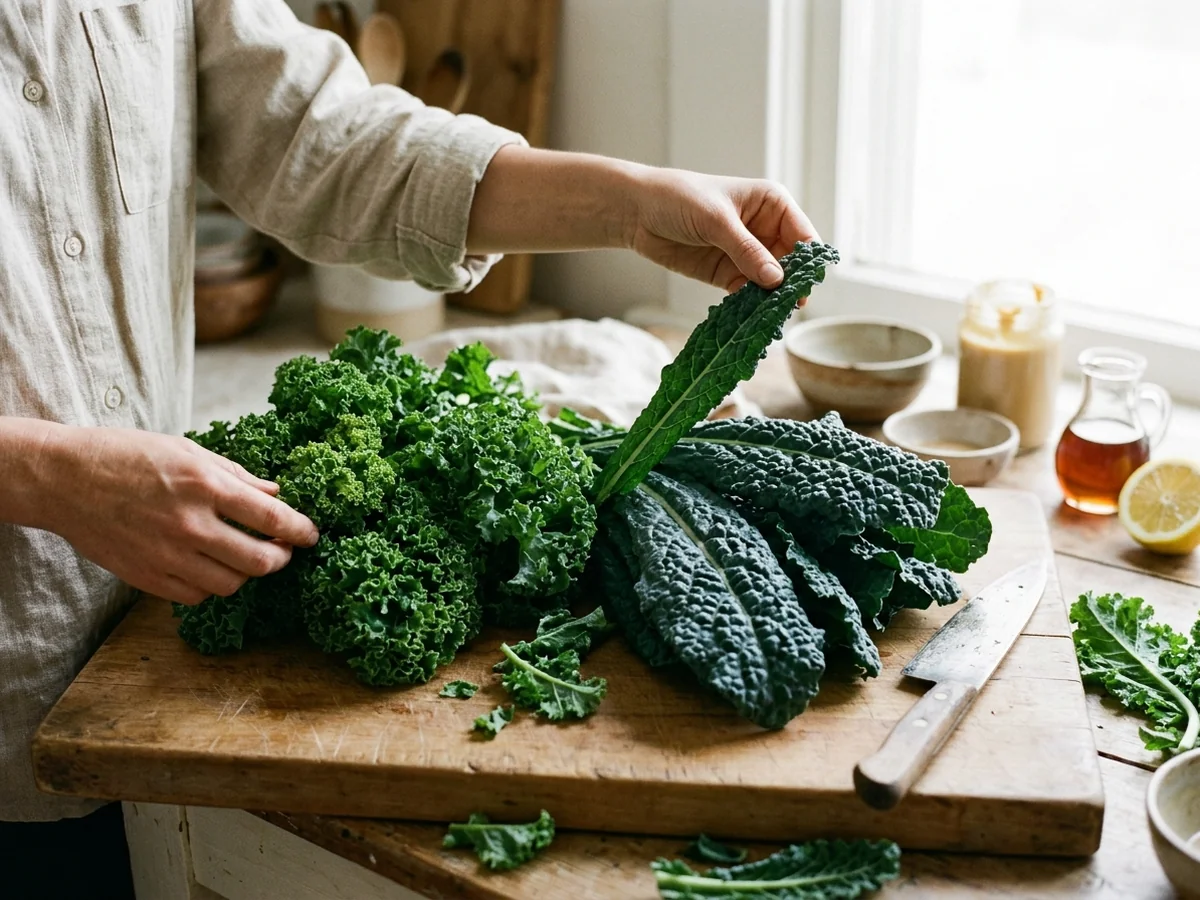
The best kale for salads depends on your preference for texture, as both curly and Lacinato varieties behave differently under pressure. Curly kale features ruffled, dense leaves that hold onto dressings well but can feel quite fibrous if not prepared correctly. Lacinato kale, often called dinosaur or Tuscan kale, has a flatter and more tender leaf structure that becomes silky and soft after brief manipulation.
As a member of the Brassica oleracea species, which includes broccoli and cabbage, kale naturally possesses a firm structure that benefits from specific preparation techniques to improve both texture and digestibility. Massaging kale with oil or an acidic dressing helps break down tough fibrous cell walls, a process that typically reduces the overall volume of the leaves and transforms them into a tender base.
Essential Preparation Steps
Proper preparation is the foundation of a successful dish. You must follow these essential steps to ensure the finished meal is enjoyable:
- Removing the central stem of kale leaves is essential for reducing toughness, as the ribs are significantly more fibrous than the leaf blades.
- Thoroughly wash your greens in cool running water to remove any grit or soil that often clings to the curled edges of the leaves.
- Dry the leaves completely using a salad spinner or clean kitchen towels, as excess water prevents the dressing from coating the kale effectively.
- Tear the cleaned leaves into bite-sized pieces after removing the stems to make the final salad easier to serve and consume.
Incorporating Tahini Dressing
A massaged kale salad with maple tahini dressing provides a balance of earthy and sweet notes. Tahini is commonly prepared as a paste made from toasted, ground hulled sesame seeds. When preparing this dressing, keep in mind that sesame seeds are classified as a major food allergen in the United States. If you add an acid like lemon juice to your tahini, the mixture may seize or thicken temporarily before smoothing out as you whisk it. If the dressing becomes too thick, you can gradually thin it with small amounts of warm water until you reach your desired consistency.
Kale is often considered a rich source of Vitamin K and Vitamin C, and pairing it with a nutrient-dense fat like tahini helps round out the nutritional profile of your meal. While some myths suggest massaged kale can stay fresh for days, the texture is best when consumed shortly after preparation. For the highest quality, store your kale and dressing separately, or consume the salad within a few hours to maintain the optimal crisp-yet-tender mouthfeel.
Maple Tahini Dressing Basics
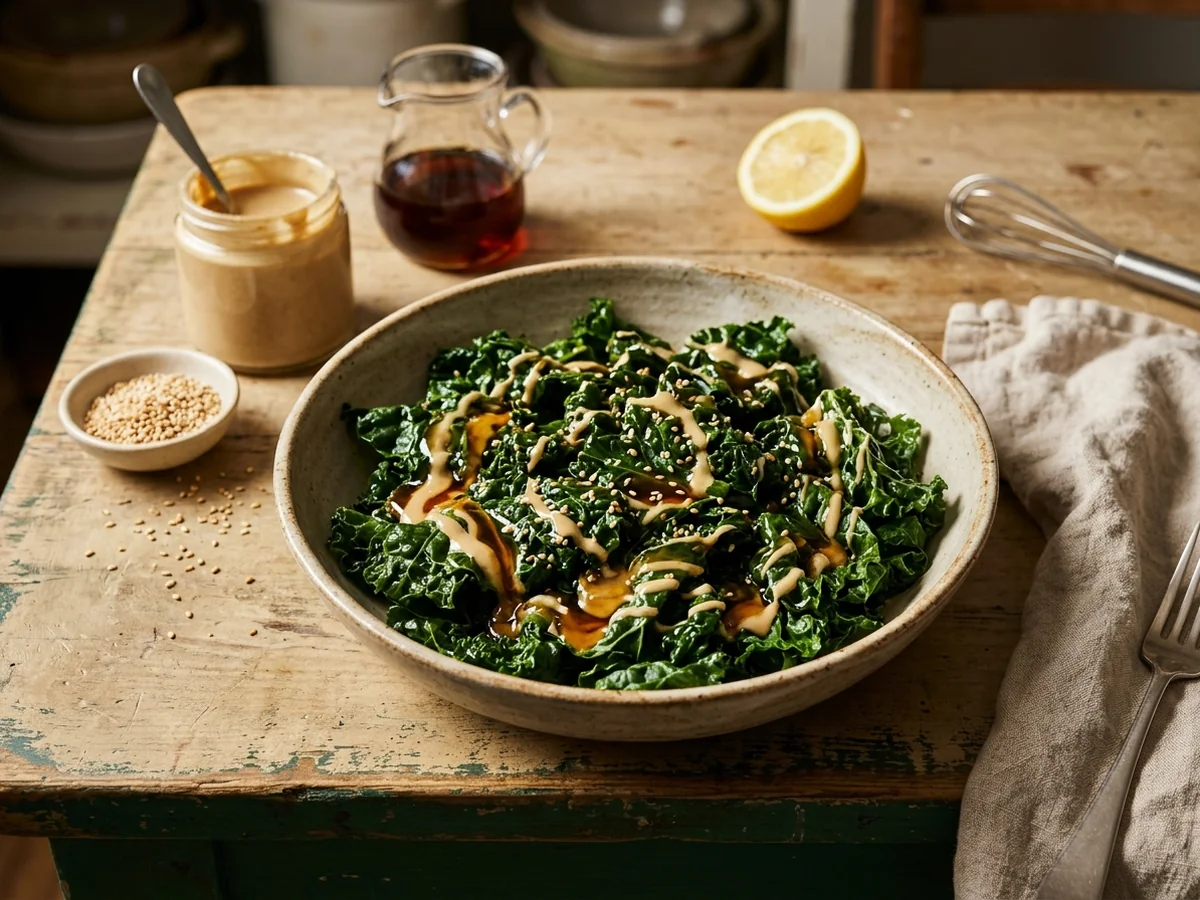
Maple tahini dressing balances the nutty, toasted notes of sesame paste with the sweetness of maple syrup. Tahini is commonly understood as a smooth paste made from toasted, ground hulled sesame seeds, though raw varieties are also available. Because sesame seeds are classified as a major food allergen in the United States, verifying ingredients is essential when preparing meals for others.
When assembling your tahini salad dressing ingredients, lemon juice is frequently added to provide an acidic contrast to the rich sesame flavor. This acidity serves a functional purpose: adding an acid to tahini can cause it to seize temporarily before it smooths out. This reaction occurs as the liquid interacts with the proteins and fats in the paste. To maintain a silky consistency, whisk the tahini and maple syrup until smooth, then incorporate lemon juice in gradual increments. If the mixture becomes too thick, whisk in a teaspoon of warm water at a time until you reach the desired consistency.
Preparing Kale for Dressing
A massaged kale salad with maple tahini dressing relies on proper leaf preparation to ensure the greens are palatable. Kale belongs to the Brassica oleracea species, a group that includes broccoli and cabbage. To achieve the best texture, removing the central stem of kale leaves is essential for reducing toughness. Massaging kale with oil or an acidic dressing helps break down tough fibrous cell walls, a technique that significantly reduces the overall volume of the leaves. This process transforms the texture, making the greens tender enough to absorb the maple tahini dressing evenly.
Nutritional Context
Kale is widely recognized as a rich source of Vitamin K and Vitamin C. When paired with tahini, which provides a source of plant-based fats, the salad becomes a nutrient-dense component of a meal.
While many home cooks wonder about storage, it is important to note that massaged kale does not necessarily remain optimal for long periods. Preparing the greens shortly before serving maintains the best structural integrity of the leaves. If you are looking for a complete meal, adding proteins such as chickpeas or toasted nuts can complement the earthy profile of the dressing and the fibrous nature of the kale. By understanding how these components interact, you can easily adjust the thickness of your dressing to suit your preferences for different varieties of greens, such as Lacinato or curly kale.
How to Massage Kale
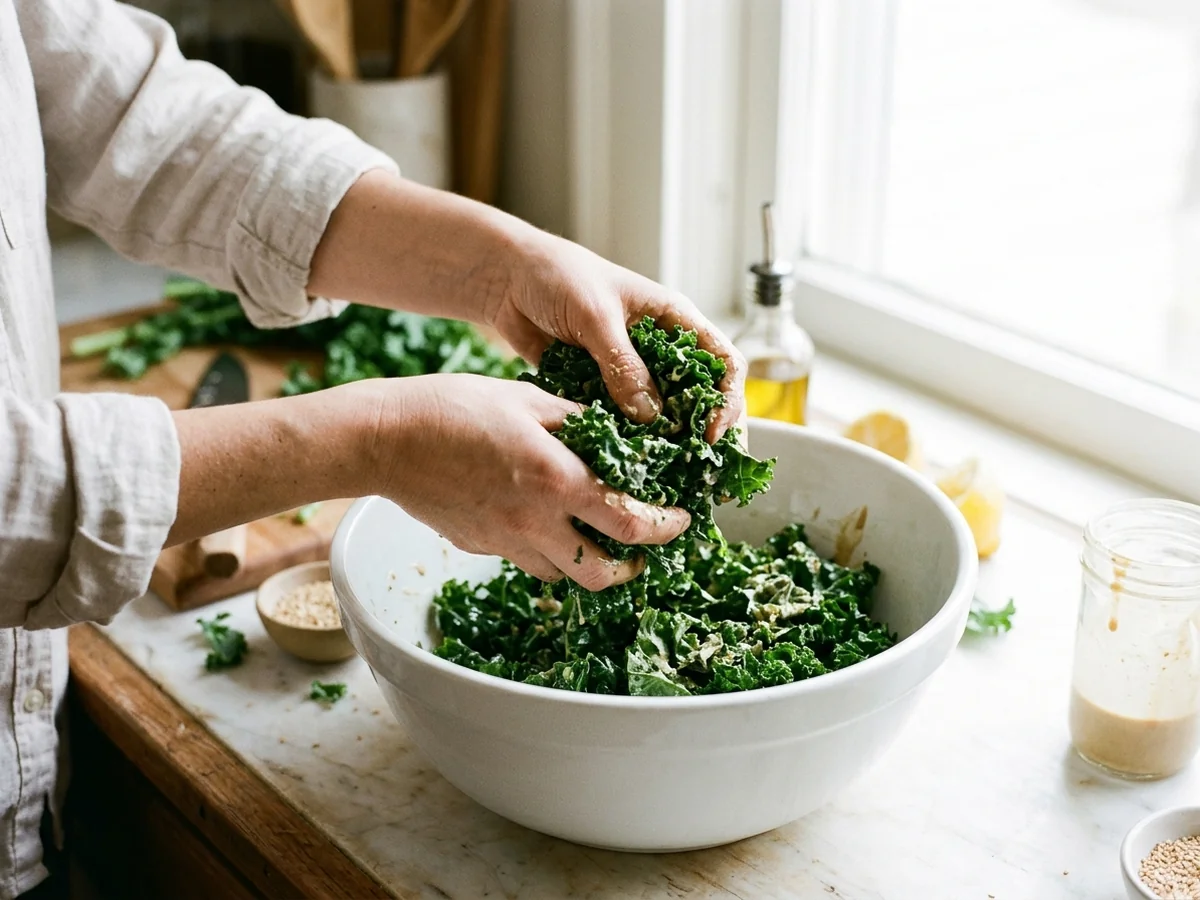
You massage kale to break down its tough, fibrous cell walls, which transforms the leaves from rigid and bitter into tender, flavorful greens. According to the University of Illinois Extension, massaging kale with oil or an acidic dressing helps break down tough fibrous cell walls. This mechanical process is essential for creating a pleasant texture in raw salads, as it significantly reduces the volume of the greens while softening their structure.
Follow these steps to properly prepare your greens for a maple tahini dressing:
- Begin by washing the kale thoroughly and drying it completely, as excess water prevents the dressing from coating the leaves effectively.
- Remove the central stem of kale leaves. North Carolina State University extension notes that removing the central stem of kale leaves is essential for reducing toughness, as this part does not soften well during the massaging process.
- Tear the leaves into bite-sized pieces and place them in a large mixing bowl.
- Drizzle a small amount of your prepared dressing over the leaves, starting with a light coating to avoid saturating them too quickly.
- Use clean hands to firmly squeeze and rub the leaves against the sides of the bowl, ensuring every piece of kale is evenly coated with the dressing.
- Continue working the dressing into the kale for several minutes until the vibrant green color deepens and the leaves lose their stiff, upright appearance.
You will know the kale is ready when the texture feels visibly softer and more pliable, similar to cooked spinach. The leaves should appear slightly wilted and significantly darker than they were in their raw state. If you find the leaves are still too tough after a few minutes of work, add a tiny bit more dressing and continue to massage until you reach your desired tenderness.
It is common for the overall volume of the leaves to shrink quite a bit during this step, so do not be alarmed if your large pile of greens appears much smaller by the time you finish. Because sesame seeds are classified as a major food allergen in the United States, always keep this in mind if you are preparing this for guests with dietary restrictions. Once the leaves have reached that soft, uniform texture, they are perfectly prepared to absorb the flavors of your dressing.
Managing Salad Storage
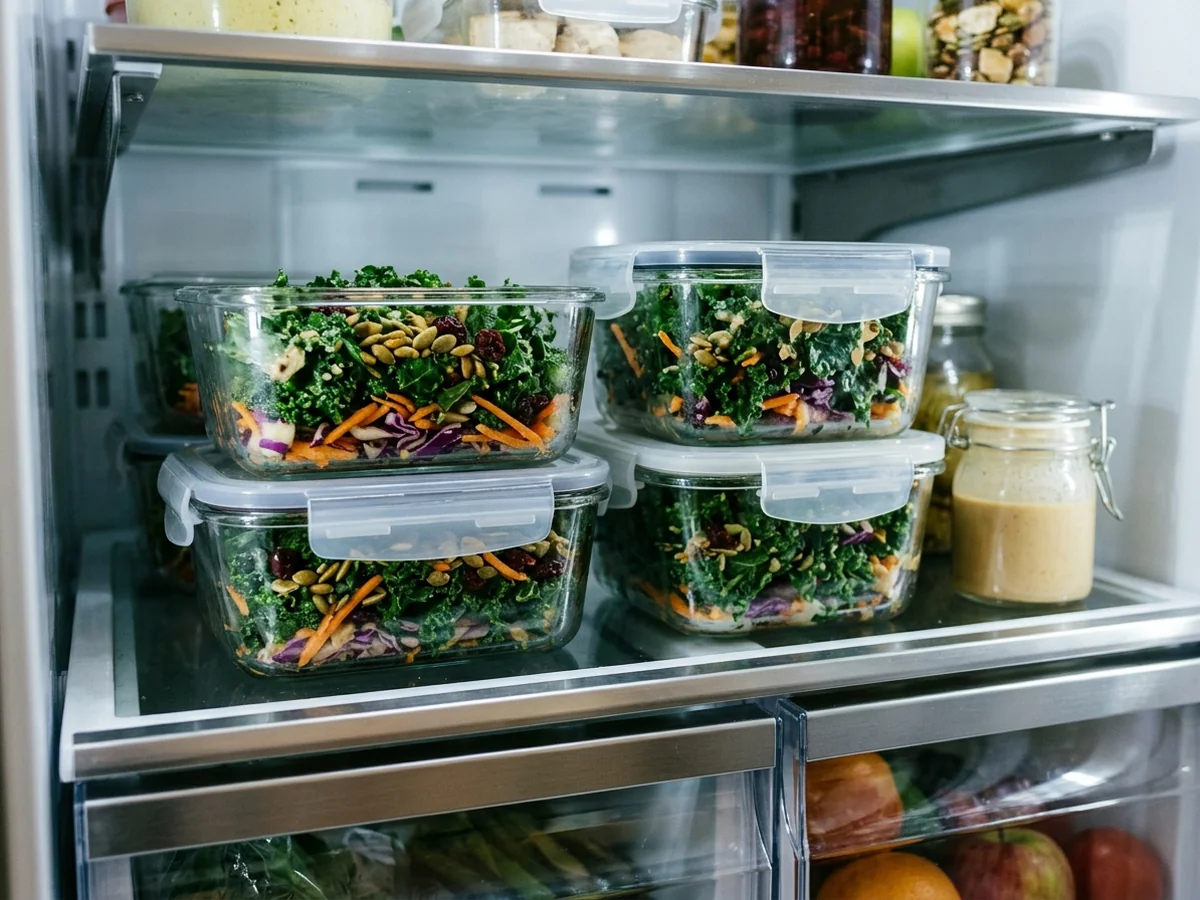
Keeping a massaged kale salad fresh requires careful attention to how you combine and store components. Because kale belongs to the Brassica oleracea species, which includes broccoli and cabbage, it possesses a hearty, fibrous structure. While this makes it more durable than delicate lettuces, the integrity of the leaves depends on proper preparation and storage timing.
The Importance of Preparation
Before storage, ensure your leaves are properly prepped. Removing the central stem of kale leaves is essential for reducing toughness, as these stems remain fibrous even after massaging. Massaging kale with oil or an acidic dressing helps break down tough fibrous cell walls, which makes the leaves tender and more palatable. This process also significantly reduces the overall volume of the leaves, making them easier to manage in storage containers.
If you prefer to prep your meals in advance, keep your greens and dressing apart until just before serving. While massaging kale improves its texture, leaving dressing on the leaves for an extended period causes the acid and salt content to continue breaking down the plant structure, which can lead to a soggy result. If you have already combined the ingredients, try to consume the bowl within a day to enjoy the best possible consistency.
Texture Management and Toppings
To keep your salad interesting, store crunchy toppings separately and add them at the last moment. This prevents them from absorbing moisture from the dressing and losing their texture. Keep the following tips in mind for maintaining quality:
- Toasted nuts or seeds maintain their crunch when kept in a dry pantry container rather than in the moist environment of the refrigerator.
- Dried fruits can absorb moisture from the dressing, so keep them with your toppings to prevent them from becoming overly soft.
- Freshly sliced vegetables, such as radishes or cucumbers, release water over time and are best added immediately before eating.
Maintaining Dressing Consistency
When using a dressing made with tahini, typically described as a paste created from toasted, ground hulled sesame seeds, you may notice it thickens when refrigerated. If your dressing reaches a rigid consistency, stir in a small amount of warm water or additional lemon juice until it returns to a pourable state. Note that adding an acid like lemon juice to tahini can cause it to seize temporarily before smoothing out, so continue stirring until the texture becomes uniform. As a reminder, sesame seeds are classified as a major food allergen in the United States, so ensure any guests are aware of the ingredients in your sauce.
Allergy-Friendly Ingredient Substitutions
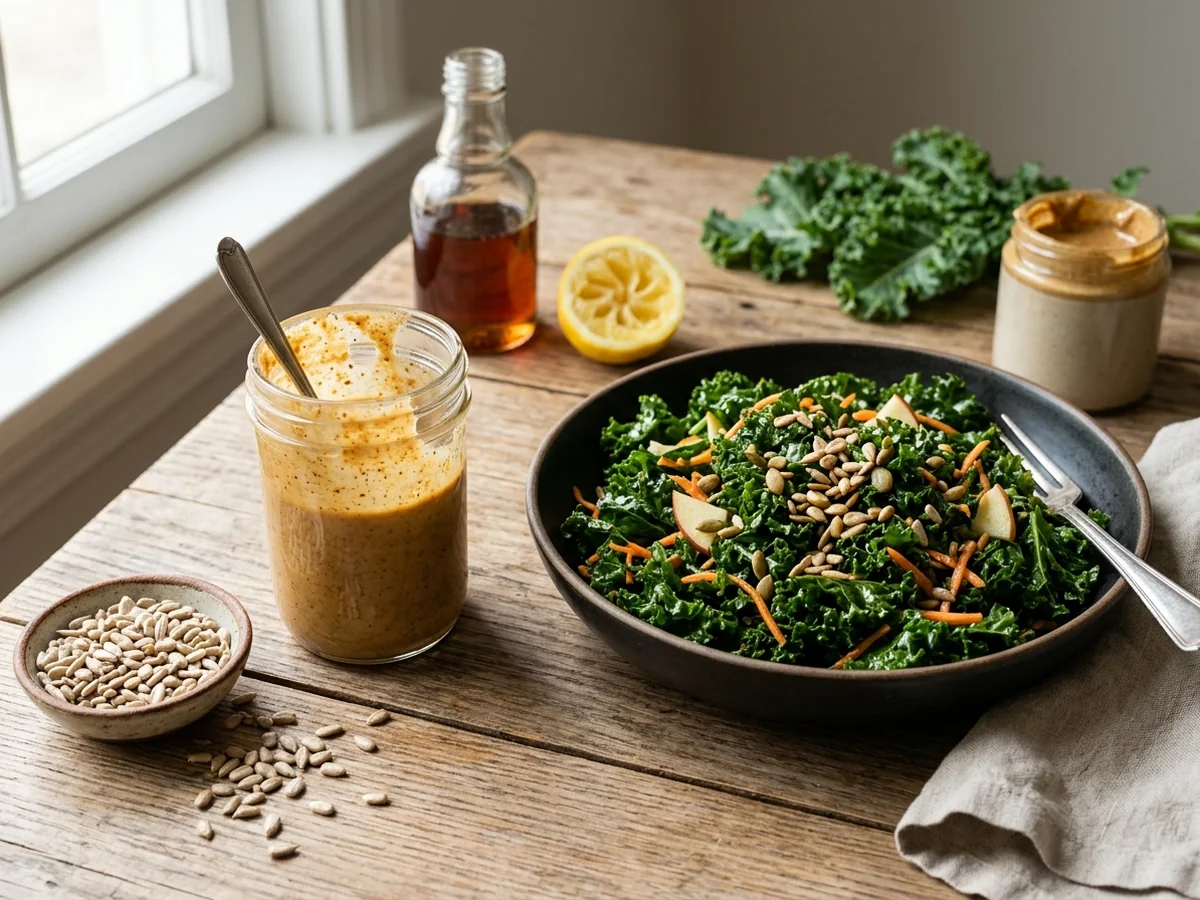
You can easily adapt your leafy green bowl to be allergy-friendly by replacing sesame-based components with sunflower butter or pumpkin seed butter. Since the Food and Drug Administration classifies sesame as a major food allergen in the United States, clear communication is essential whenever you serve dishes containing tahini to guests.
Transparency is key to keeping everyone safe. If you serve a prepared meal to others, always list all ingredients used in the dressing explicitly. Because tahini is typically made from toasted, ground hulled sesame seeds, it is a significant risk for those with specific sensitivities. By labeling your dish clearly or providing a list of components, you ensure that anyone dining at your table can make an informed choice about what they consume.
Beyond allergen considerations, understanding the nutritional profile of your base greens helps in creating a well-rounded dish. Kale is widely recognized as a rich source of Vitamin K and Vitamin C. These nutrients contribute to the value of your meal, making it a popular choice for those looking to include more leafy greens in their diet. When preparing your greens, remember that removing the central stem is essential for reducing toughness, which helps improve the texture of the finished salad.
If you need to swap out sesame paste, consider these common alternatives to maintain the desired creamy consistency in your dressing:
- Sunflower seed butter, which offers a similar texture and a slightly nutty flavor profile.
- Pumpkin seed butter, providing a vibrant color and mild, earthy taste.
- Creamy almond or cashew butter, which works well if tree nut allergies are not a concern.
Massaging your greens with oil or an acidic dressing helps break down tough fibrous cell walls, regardless of the specific dressing base you choose. This process significantly reduces the overall volume of the leaves, making them easier to digest and more pleasant to eat. When working with acidic ingredients like lemon juice, note that it is common for tahini or seed-based pastes to seize temporarily before smoothing out as you whisk in the other components of your dressing.
FAQ
Why is it necessary to massage kale for a salad?
Massaging kale with oil or an acidic dressing helps break down tough fibrous cell walls, which makes the leaves significantly more tender and palatable. This technique also reduces the overall volume of the leaves, making the salad easier to eat and digest.
Do I need to remove the stems from the kale?
Removing the central stem of kale leaves is essential for reducing toughness throughout your salad. The stems are much more fibrous than the leaves and do not soften effectively during the massaging process.
Is tahini safe for everyone to eat?
Sesame seeds are classified as a major food allergen in the United States, so you should avoid tahini if you or your guests have a known sesame allergy. Always check labels to ensure ingredients meet safety requirements set by the Food and Drug Administration.
What should I do if my tahini dressing gets too thick?
It is common for tahini dressings to thicken when you add an acid like lemon juice, as the mixture may seize temporarily before smoothing out. Simply whisk in a small amount of warm water, one teaspoon at a time, until you reach your desired consistency.
What are the nutritional benefits of this salad?
Kale is a common source of Vitamin K and Vitamin C, providing a nutrient-dense base for your meal. As a member of the Brassica oleracea species, which also includes broccoli and cabbage, it provides a hearty foundation when paired with the healthy fats found in tahini.
Conclusion
The final step in preparing this dish is deciding whether to serve it immediately or allow the flavors to meld. If you prefer a more tender texture, let the dressed leaves sit for fifteen minutes before serving to soften the fibers further.
You can now confidently assemble your massaged kale salad with maple tahini dressing as a nutrient-dense side or a full meal. Remember that because sesame seeds are classified as a major food allergen by the Food and Drug Administration, you should verify all ingredients if serving guests with dietary restrictions.
Sources: extension.illinois.edu, content.ces.ncsu.edu, fda.gov, gardeningsolutions.ifas.ufl.edu
You might also like: Blueberry Lemon Overnight Oats with chia