winter pasta salad with roasted vegetables
Introduction
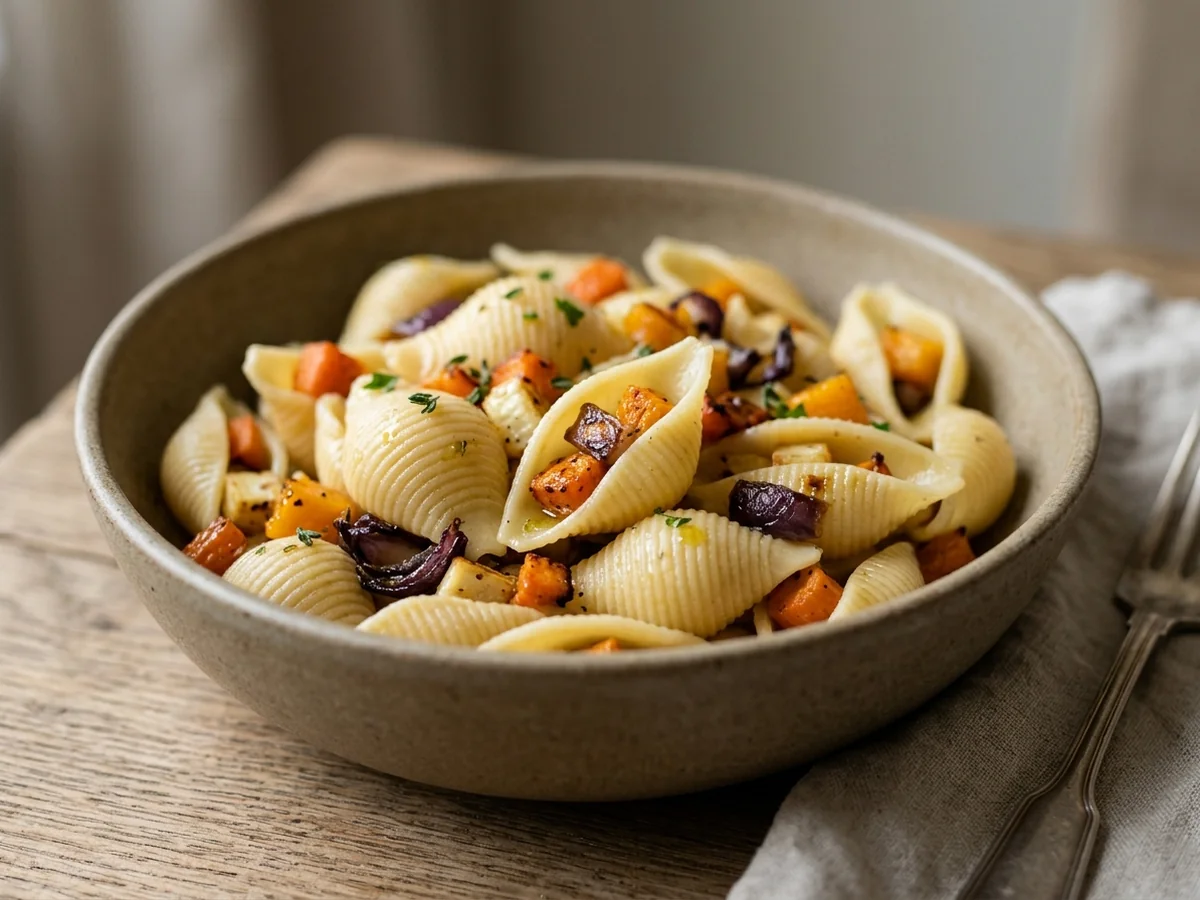
A winter pasta salad with roasted vegetables combines warm, caramelized root produce with tender pasta for a hearty seasonal dish. Preparing a winter pasta salad with roasted vegetables allows you to enjoy fresh, vibrant flavors even when the weather turns cold.
This guide covers how to select the best seasonal produce and master culinary roasting techniques to create a balanced meal. You will learn about effective ingredient substitutions, such as using butternut squash instead of sweet potatoes, and how to maintain the perfect texture for your pasta. We also explore ways to boost the nutritional profile of your salad by incorporating probiotics into your dressings. Whether you are looking for a reliable lunch option or a versatile side dish, this information provides the foundational skills needed to build a delicious and healthy winter meal.
Best Winter Roasted Vegetables
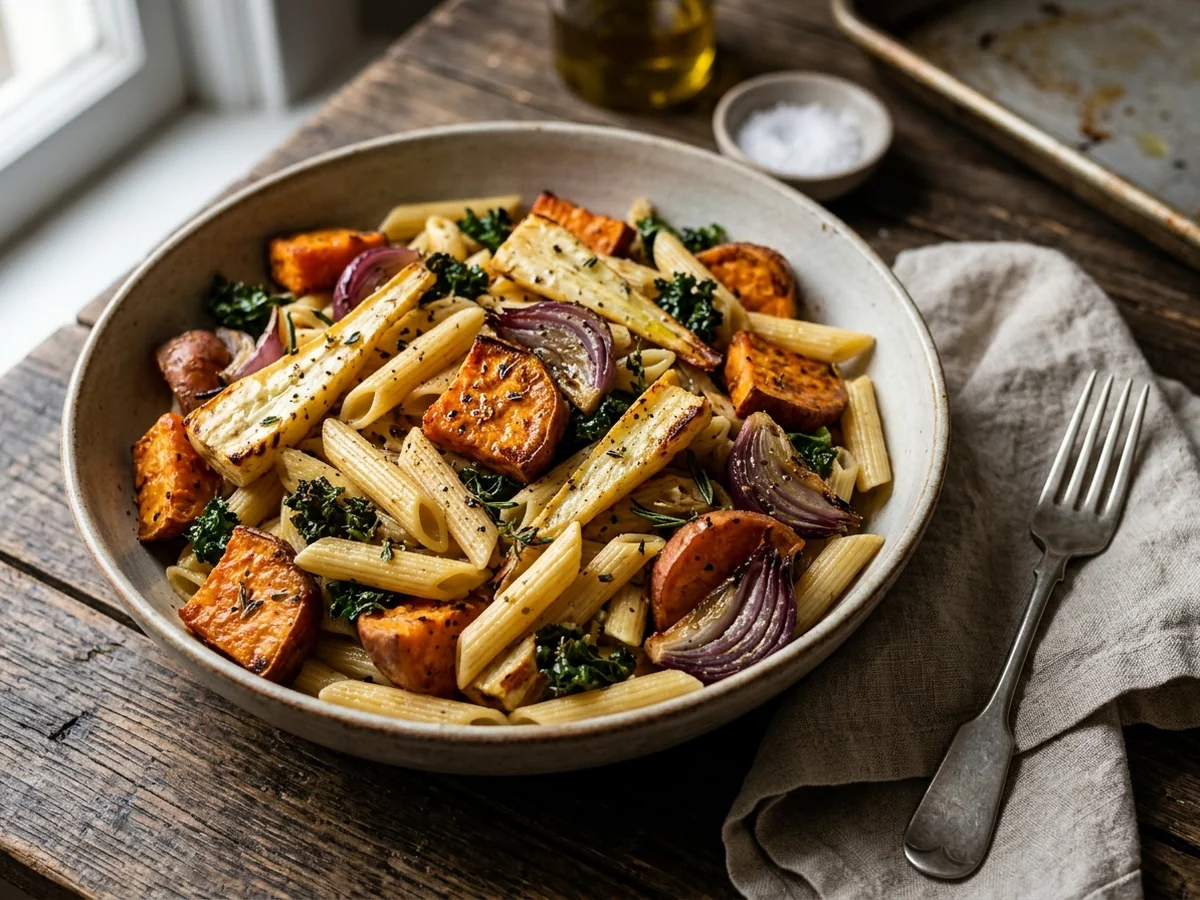
The best choices for a hearty, nutrient-dense bowl are root vegetables like sweet potatoes and parsnips, which offer a satisfying density during the colder months. These ingredients provide a reliable base that holds up well when tossed with al dente pasta, ensuring the dish remains substantial rather than watery.
While root vegetables are traditional staples, you can easily adapt your recipe by using Hokkaido or butternut squash as a direct substitute for sweet potatoes. This versatility allows you to balance the earthy sweetness of roots with the slightly creamier texture of winter squash.
Incorporating leafy greens adds a different dimension to the dish. Common culinary practice suggests that roasting kale makes the leaves tender and provides a quick preparation method compared to steaming or boiling. For a slightly different texture, you can use Tuscan kale as a direct substitute for regular curly kale in these roasted vegetable combinations.
To maximize the flavor profile, consider these additions:
- Root vegetables like carrots and parsnips for a caramelized, earthy sweetness.
- Butternut squash or Hokkaido squash for a smooth, tender contrast to firm pasta.
- Roasted kale or Tuscan kale to introduce crisp, savory edges to your salad.
- Fresh herbs like chives or basil to add vibrant flavor depth to the finished dish.
Maintaining the right balance between the warm, roasted components and the pasta is essential for a high-quality meal. Cooking your pasta until it is al dente ensures it maintains a firm texture that does not become mushy when combined with these heavier, fiber-rich vegetables. This structure keeps the dish enjoyable whether served warm or at room temperature.
When assembling your bowl, think about how these ingredients complement one another. The natural sugars released during the roasting process create a rich foundation that pairs perfectly with tangy dressings. Using ingredients like Greek yogurt or buttermilk in your dressing, which are common sources of probiotics, can further enhance the nutritional value of your meal while adding a smooth, creamy finish that coats the roasted produce effectively.
Top Winter Roasted Vegetables
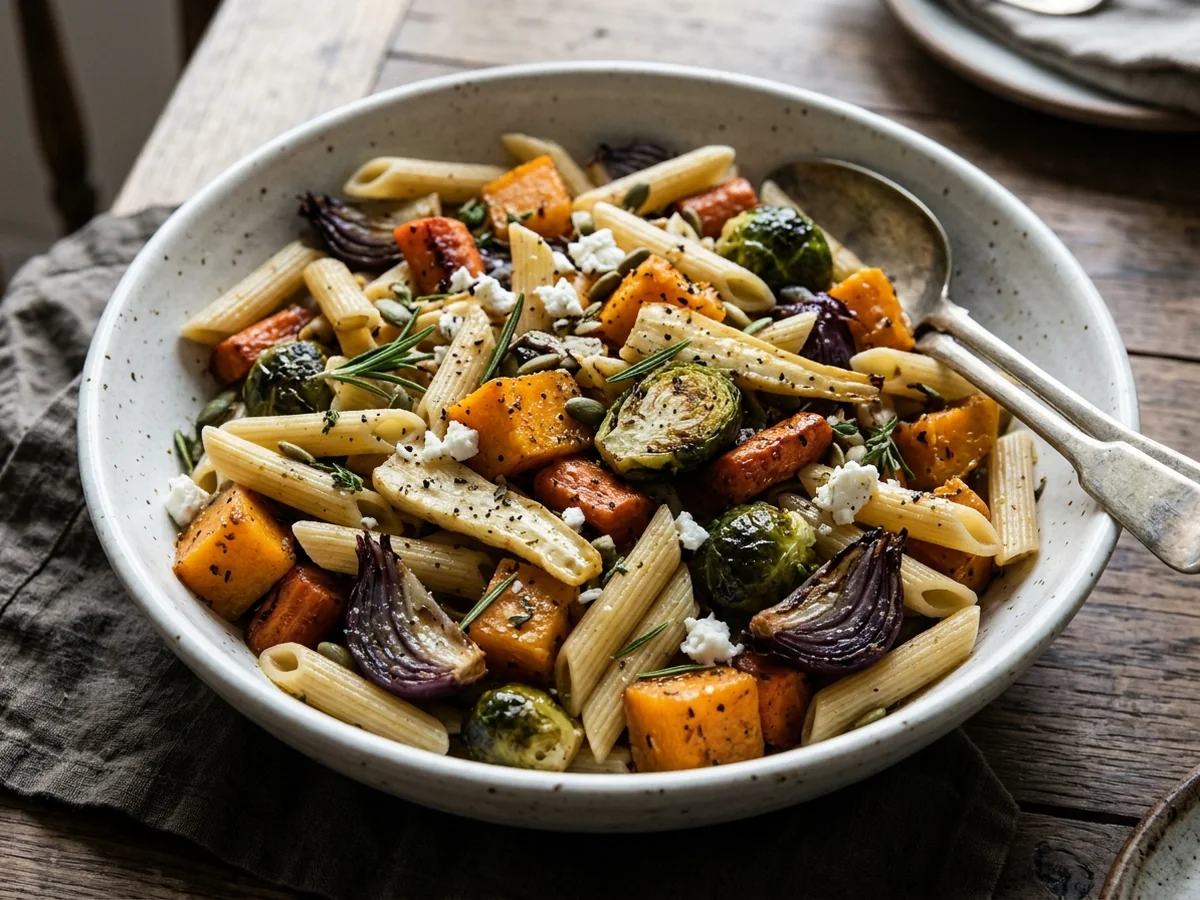
Creating a successful winter pasta salad with roasted vegetables requires selecting produce that retains its structure after being cooked and chilled. Root vegetables are the gold standard for these dishes because they offer a dense, satisfying texture and a natural sweetness that balances savory vinaigrettes. Common choices for a hearty roasted root vegetable pasta salad include sweet potatoes and parsnips, both of which caramelize beautifully in the oven.
When you need to adjust your ingredient list based on availability, you can rely on verified botanical substitutions. According to the University of Washington Botanic Gardens, Hokkaido or butternut squash serve as effective substitutes for sweet potatoes in roasted vegetable recipes. These squashes provide a similar creaminess and density, ensuring the integrity of your meal remains consistent regardless of the specific root vegetables on hand.
Incorporating greens adds essential color and nutritional depth to a pasta salad with roasted squash and kale. While curly kale is a standard option, Tuscan kale is often used as a direct substitute because its robust leaves hold up well to both high heat and dressing. For those looking to streamline their kitchen routine, roasting kale is a common practice that makes the leaves tender and provides a faster preparation method compared to steaming or boiling.
To ensure your dish reaches its full potential, consider these practical techniques and common pitfalls:
- Uniformity matters: Cut root vegetables into consistent, bite-sized cubes. If you mix fast-cooking vegetables like carrots with slower-roasting squash, you may end up with uneven textures. Consider adding softer vegetables to the baking sheet during the final 10 minutes of roasting.
- Texture control: To ensure your salad remains satisfying, pasta should be cooked until al dente to maintain texture in a salad format, as softer pasta can become mushy when tossed with roasted produce.
- Flavor elevation: While the roasted vegetables provide a base, fresh herbs like chives or basil can be used to add flavor depth to winter pasta salads, cutting through the richness of the root vegetables.
- Dressing creativity: Beyond standard vinaigrettes, common culinary guidance suggests incorporating buttermilk or Greek yogurt into your dressing. These ingredients are sources of probiotics and add a creamy, tangy element that pairs well with the earthy sweetness of roasted produce.
- Temperature safety: A common mistake is adding dressing to hot pasta and vegetables. Always follow food safety cooling procedures by cooling your pasta and roasted vegetables to room temperature before combining them with dressings or dairy-based components to prevent bacterial growth and wilting.
By balancing these textures and flavors, you can transform simple winter produce into a sophisticated meal. Whether you are prepping for a quick lunch or a dinner side, focusing on these preparation steps ensures your ingredients stay firm, flavorful, and safe to enjoy.
Perfectly Roasted Winter Vegetables
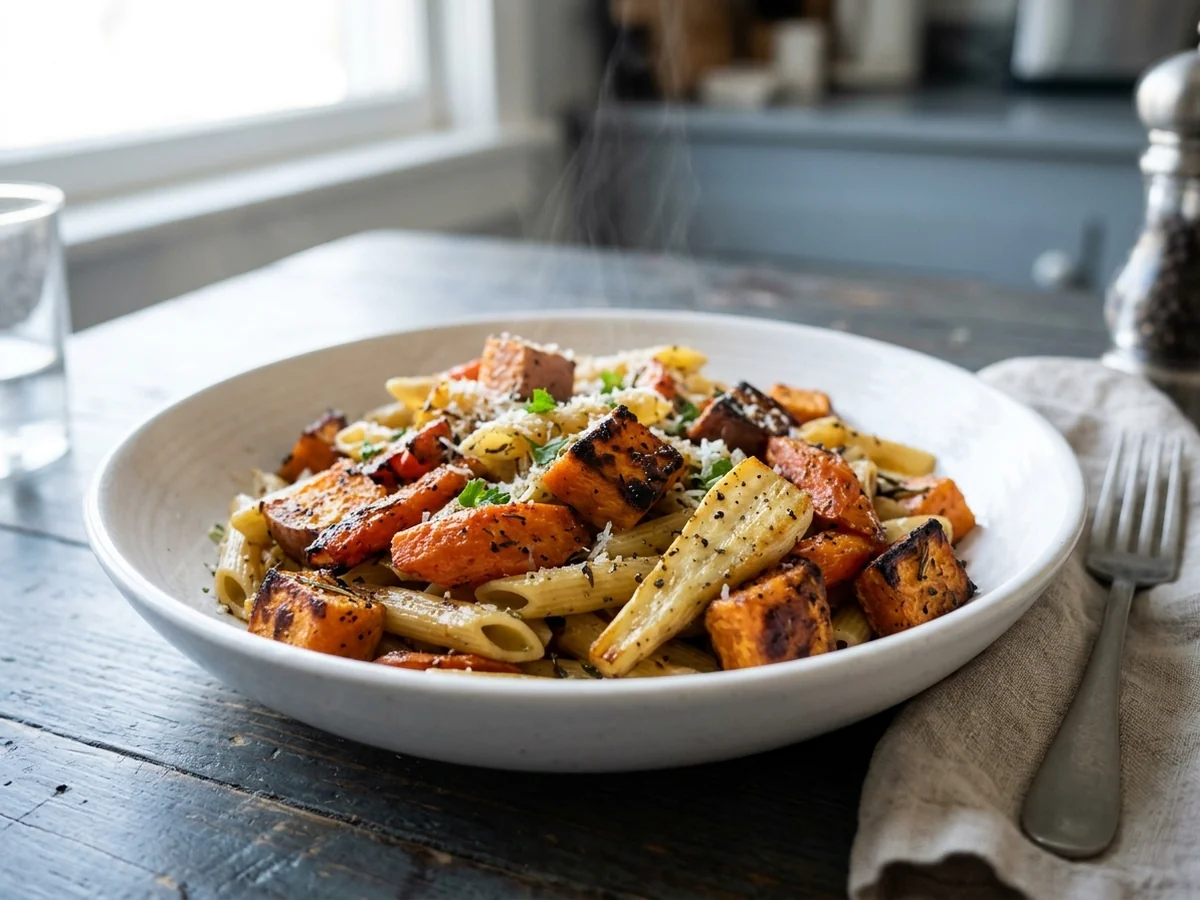
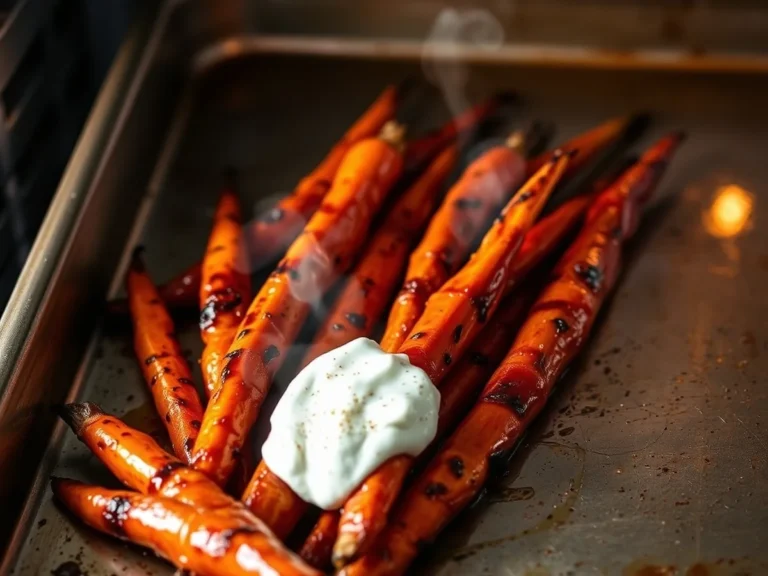
To achieve the best results for a roasted root vegetable pasta salad, you must stage your oven time based on the density of each ingredient. Root vegetables like sweet potatoes, carrots, and parsnips are common ingredients used in winter-themed pasta salads, but they require significantly more time to caramelize than delicate greens. Hokkaido or butternut squash can be used as direct substitutes for sweet potatoes in roasted vegetable recipes.
Mastering Roasting Times and Techniques
Start by cutting all items into uniform pieces to ensure even cooking across diverse vegetable shapes. If you crowd your baking sheet, vegetables will steam rather than roast, leading to mushy textures that do not hold up well in a salad. Arrange denser items in a single layer, leaving space between them so heat can circulate effectively around every surface. Heavier tubers typically require twenty to thirty minutes of roasting before they reach the desired golden brown, while softer squashes may cook slightly faster.
By monitoring these distinct cooking windows, you ensure the root vegetables achieve a perfect texture without burning the more delicate additions.
Incorporating Greens and Fresh Flavors
Common guidance suggests that kale, including Tuscan kale, is an excellent addition to these dishes because roasting makes the leaves tender and provides a quicker preparation method compared to steaming or boiling. Tuscan kale can be used as a common substitute for regular curly kale in roasted vegetable salads. To incorporate this successfully, wait until the root vegetables are halfway through their roasting process before adding the greens to the tray. Toss the kale with a light coating of oil and salt to encourage crisp edges, then add it to the oven for the final five to ten minutes of the cycle.
Cooling and Assembly for Optimal Texture
Once removed from the heat, allow your vegetables to cool slightly before combining them with your base. This step is vital for food safety and texture management. If you add roasted vegetables to warm pasta, the heat can cause the pasta to soften further, losing that essential bite. Pasta should be cooked until al dente to maintain structure in a salad format, ensuring the dish remains satisfying rather than mushy.
Once the components reach room temperature, you can introduce fresh herbs like chives or basil to add flavor depth to your winter pasta salad. For a protein-forward twist, consider dressing your salad with a mixture incorporating buttermilk or Greek yogurt, which are common sources of probiotics that can be added to dressings for creaminess and nutritional density.
Choosing the Best Pasta Shapes
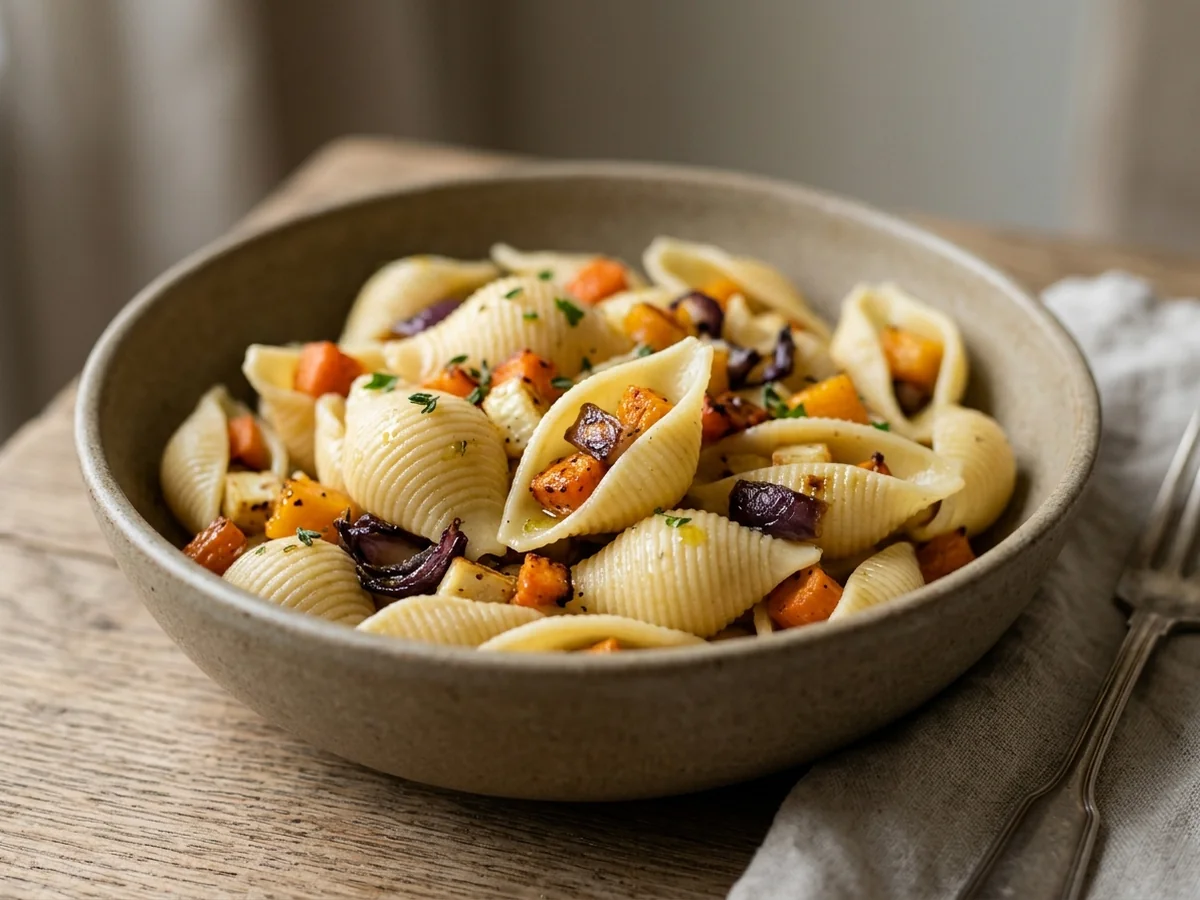
When assembling a winter pasta salad with roasted vegetables, the structural integrity of your pasta is as important as the produce itself. The best pasta shapes for roasted vegetables are those with ridges, hollow centers, or deep curves, as these features capture small pieces of roasted root vegetables and droplets of dressing. By matching the scale of your pasta to your diced ingredients, you ensure that every forkful delivers a balanced bite of texture and flavor.
Prioritizing Texture and Surface Area
Short, sturdy shapes like fusilli, penne, or farfalle are ideal for this application. Their surface area allows them to hold onto heavier roasted root vegetables, such as sweet potatoes or parsnips, which are common ingredients in these dishes. Hokkaido or butternut squash can be used as direct substitutes for sweet potatoes in these recipes, providing a similar density that pairs well with these shapes.
To maintain the quality of your dish, always cook your pasta until al dente. According to the St. Louis County Department of Public Health, pasta should be cooked until al dente to maintain texture in a salad format, which prevents the noodles from becoming mushy or breaking down when tossed with roasted vegetables.
Achieving Uniformity in Every Bite
Consistency is vital for a high-quality roasted root vegetable pasta salad. Aim to dice your roasted vegetables into pieces that are roughly the same size as the pasta shapes you have chosen. This uniformity creates a cohesive eating experience where the pasta and vegetables intermingle properly, rather than separating during service.
When preparing a pasta salad with roasted squash and kale, keep in mind that roasting kale is a common way to make the leaves tender and provides a quick preparation method compared to steaming or boiling. Tuscan kale is often used as a direct substitute for regular curly kale in these roasted vegetable salads for a slightly different texture.
Best Practices for Assembly
- Select ridged shapes like rigatoni or orecchiette, which are specifically designed to trap smaller roasted bits within their cavities.
- Avoid overly long or delicate strands, such as spaghetti or angel hair, as these tend to tangle and make it difficult to distribute your roasted vegetables evenly throughout the serving bowl.
- Ensure the pasta is drained well before combining it with your dressing to prevent a watered-down consistency.
- Finish your dish with fresh herbs like chives or basil to add flavor depth, as recommended by North Dakota State University.
Best Winter Pasta Dressings
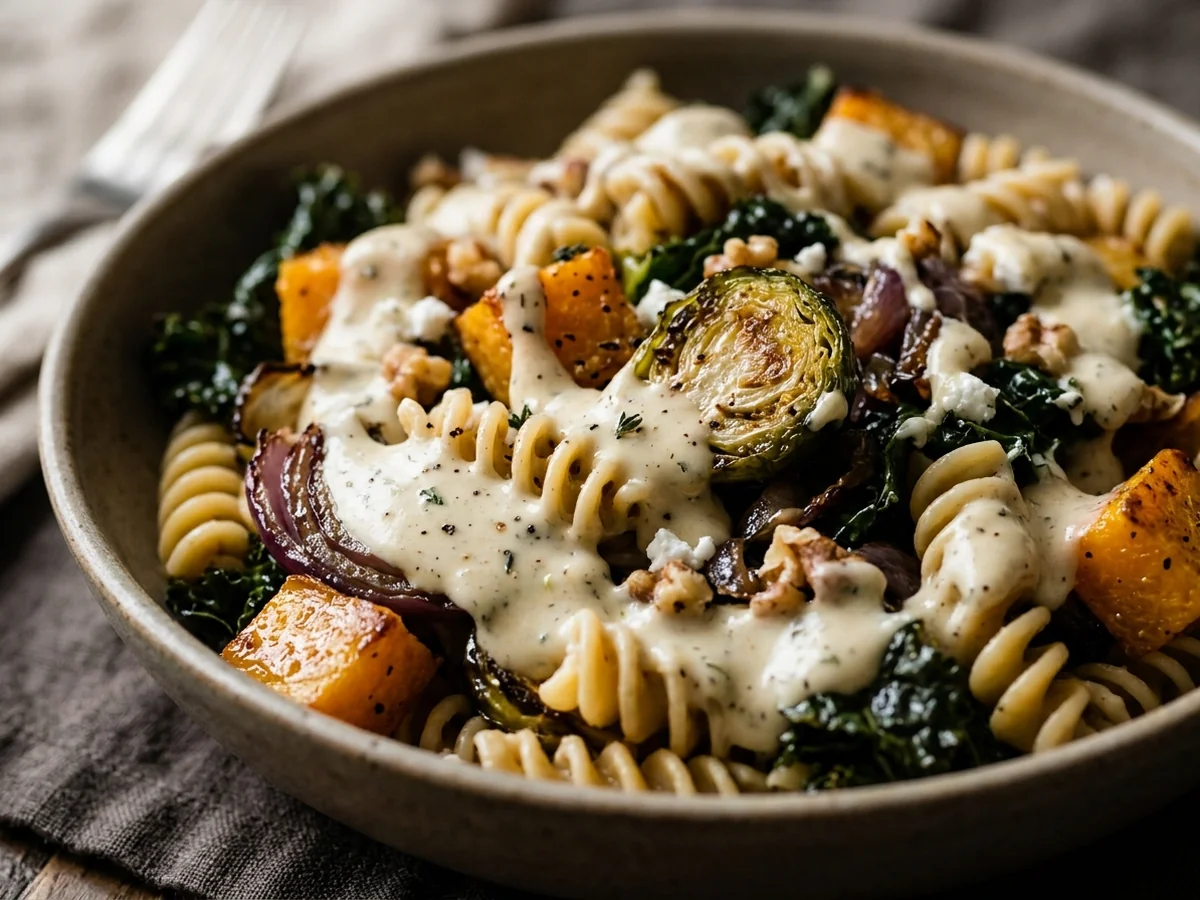
Effective winter pasta salad with roasted vegetables requires a dressing that balances the density of seasonal produce with enough acidity to brighten the overall bowl. Because root vegetables like parsnips and sweet potatoes are common ingredients in these dishes, a dressing must provide contrast to keep the bowl from feeling heavy. It is common guidance to use buttermilk and Greek yogurt as sources of probiotics, which add a silky texture to your dressing without the need for heavy mayo.
Balancing Creamy and Acidic Elements
To prevent a dressing from masking the flavor of roasted vegetables, prioritize a balance between fats and acids. If you are using a base like Greek yogurt, whisk in a splash of balsamic vinaigrette. The sharpness of the vinegar cuts through the creaminess, ensuring the dressing complements rather than overwhelms. When working with roasted squash or parsnips, start with a smaller amount of fresh herbs like chives or basil. As noted by the NDSU Agriculture Extension, these herbs add significant flavor depth, but their intensity can change depending on freshness. Always add them just before serving to maintain their vibrant color and aromatic qualities.
Techniques for Texture and Integration
Creating a successful pasta salad featuring roasted seasonal produce depends on the state of your components. First, ensure your pasta is cooked until al dente to maintain a firm texture in a salad format, as directed by the St. Louis County Department of Public Health. If you find your dressing becomes too thick after tossing it with warm vegetables, adjust the consistency with a tablespoon of reserved pasta water. This simple step helps the sauce coat the pasta shapes effectively.
When selecting your base vegetables, Hokkaido or butternut squash can be used as direct substitutes for sweet potatoes in roasted vegetable recipes. If you are incorporating greens, it is common guidance that Tuscan kale can be used as a direct substitute for regular curly kale. Similarly, it is typical practice to roast kale alongside root vegetables to make the leaves tender, which provides a quicker preparation method compared to steaming or boiling.
By treating these ingredients as a cohesive unit, you can easily experiment with different winter vegetable salad dressing ideas. Remember to prioritize consistent sizing when chopping your vegetables to ensure even roasting times across different varieties, which prevents some pieces from becoming mushy while others remain undercooked.
Safe Cooling and Storage
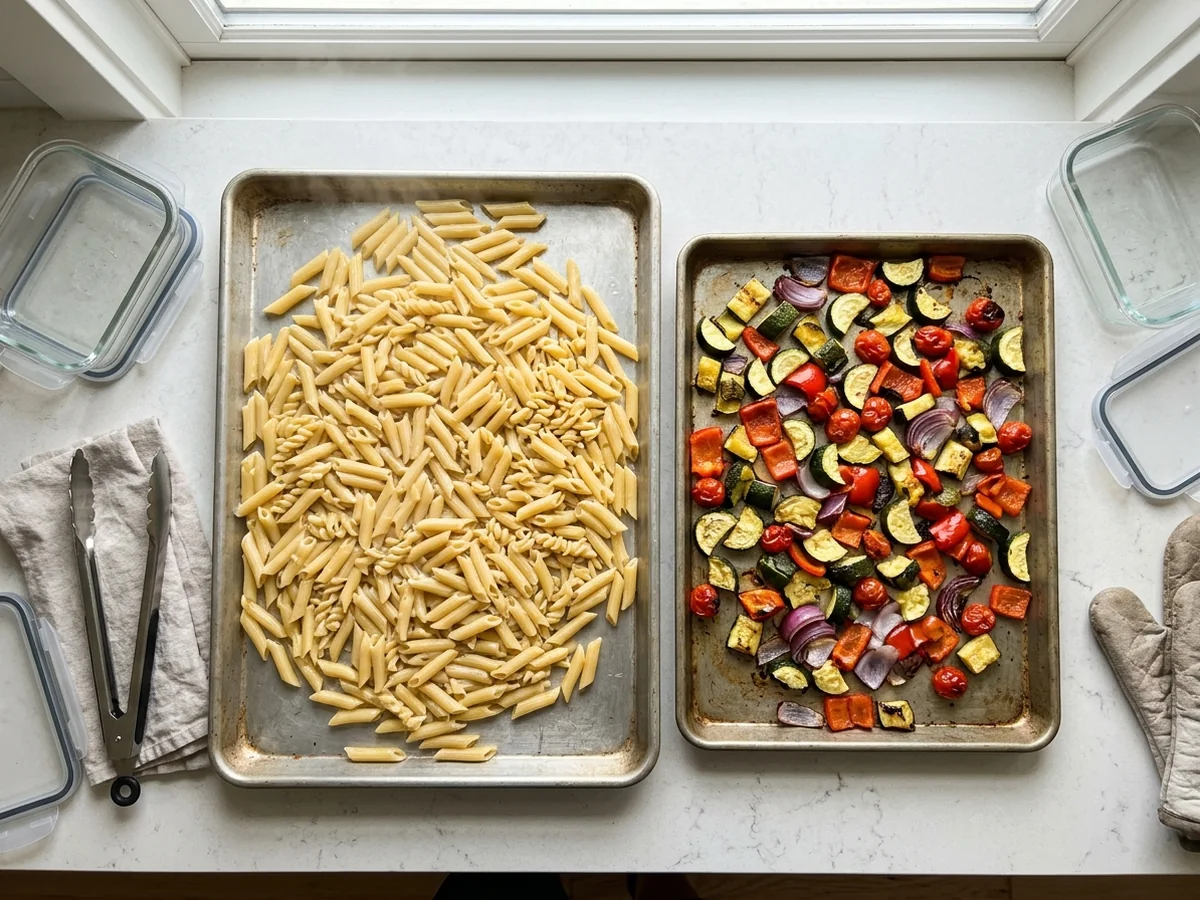
You can maintain food safety and ingredient quality by cooling your pasta completely before adding any dressing. Rapidly cooling cooked noodles prevents the temperature from lingering in the danger zone where bacteria grow. Spread the hot pasta onto a flat baking sheet in a single layer to speed up the process, rather than leaving it in a deep colander.
Maintaining the integrity of roasted produce requires careful temperature management during storage. Once your root vegetables and greens have finished roasting, let them reach room temperature before placing them into a container with the noodles. If you store them while still warm, the residual steam will soften the vegetables and make the pasta gummy, ruining the contrast in textures.
Managing the consistency of your meal prep requires a strategic approach to assembly. Follow these guidelines to keep your dish fresh and appealing for several days:
- Keep the dressing separate from the other components until you are ready to serve to prevent the noodles from absorbing too much liquid and becoming mushy.
- Store your roasted root vegetables, such as parsnips or sweet potatoes, in a breathable container to prevent condensation from turning them soft.
- Use airtight containers to minimize air exposure, which helps preserve the vibrant flavor of fresh herbs like chives or basil.
- Remember that Hokkaido or butternut squash can be used as reliable substitutes for sweet potatoes if you want to experiment with different seasonal flavors while maintaining a firm texture.
Cooking your noodles until al dente is essential for long-term storage success. Pasta that is slightly firm to the bite holds its shape better when tossed with roasted ingredients and cooled. Soft, overcooked noodles tend to break apart and lose their structural integrity once they are refrigerated, regardless of how carefully you handle them.
If you plan to include delicate greens like Tuscan kale, add them to your storage container just before serving. While roasting makes these leaves tender, they can lose their appealing bite if left submerged in a vinaigrette for too long. By keeping the components distinct until the final moment, you ensure every portion remains as fresh as the day you prepared it.
Avoid Soggy Pasta Salad
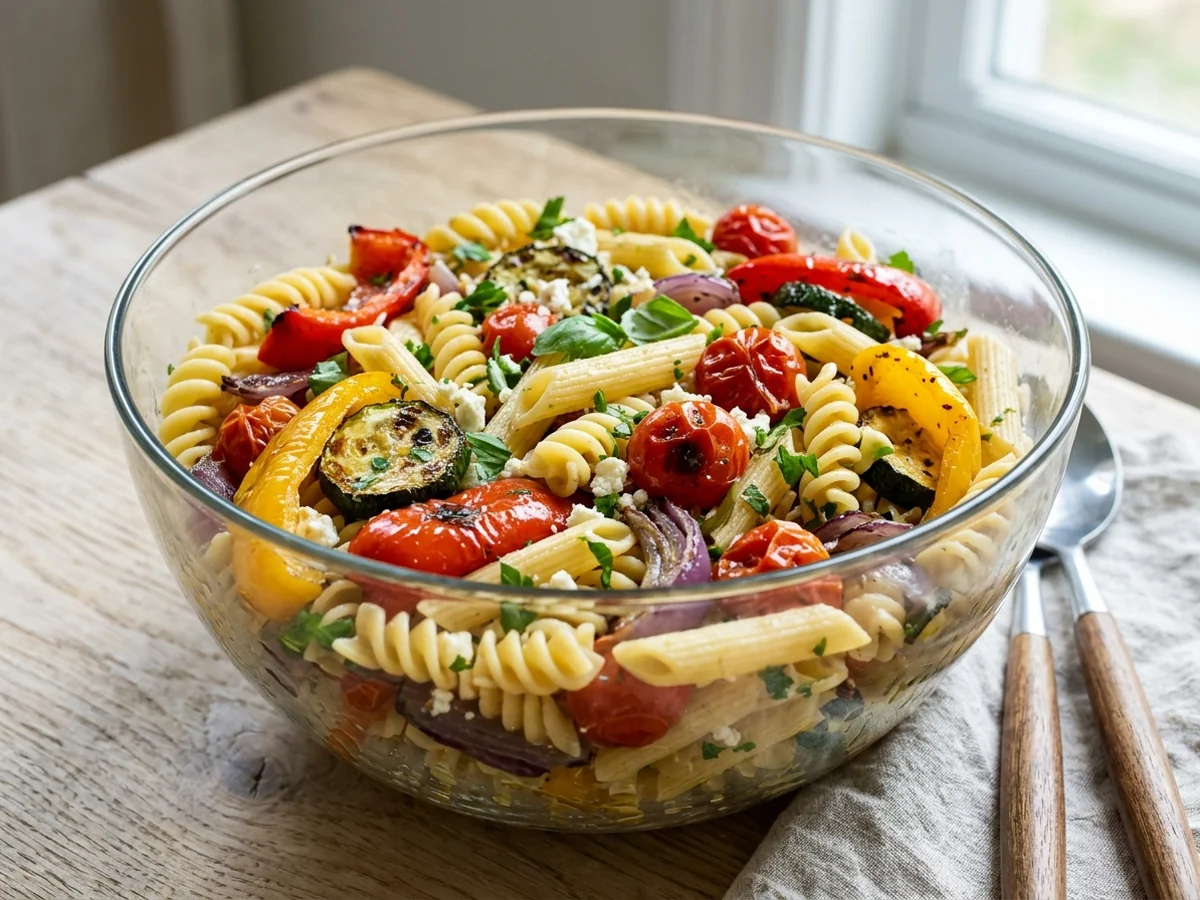
To ensure your winter pasta salad with roasted vegetables maintains a firm, satisfying bite, you must master the cooling and cooking stages. Combining hot ingredients with dressing or failing to manage moisture levels often results in a mushy texture. By focusing on temperature control and ingredient preparation, you can keep your pasta dish featuring roasted winter produce fresh and appetizing for several days.
Mastering Pasta and Vegetable Texture
The foundation of any successful salad is the pasta itself. According to the St. Louis County Department of Public Health, pasta should be cooked until al dente to maintain texture in a salad format. When pasta is boiled past this point, it absorbs liquid too quickly, leading to a soft, unappealing texture. After draining, a quick rinse under cold water stops the cooking process immediately, which is an essential step if you are preparing the dish for later consumption.
For your roasted components, consistency is key. Root vegetables like carrots or parsnips require careful monitoring to avoid breaking down into a paste. If you prefer to experiment with seasonal flavors, Hokkaido or butternut squash can be used as substitutes for sweet potatoes in roasted vegetable recipes. To ensure even cooking, roast vegetables until they are just tender and caramelized. While Tuscan kale is a popular addition, it is typically roasted briefly to ensure the leaves remain intact rather than wilting into mush. Tuscan kale can be used as a direct substitute for regular curly kale in these preparations.
Safety and Flavor Depth
When preparing easy winter pasta salad recipes, food safety and flavor balance go hand in hand. Always allow both the pasta and the roasted items to reach room temperature before combining them with your dressing. This prevents the pasta from soaking up the sauce prematurely. Furthermore, cooling your ingredients thoroughly before storage is a critical food safety cooling procedure to prevent bacterial growth.
To elevate the dish, consider your choice of dressing. Buttermilk and Greek yogurt are sources of probiotics that can be incorporated into salad dressings for added nutritional density. For seasoning, use fresh herbs like chives or basil to add flavor depth to winter pasta salads, as recommended by North Dakota State University. Combining these techniques allows you to create a versatile meal that retains the individual character of every ingredient, ensuring your meal prep containers remain fresh and flavorful throughout the week.
FAQ
How can I adapt a pasta salad recipe for winter ingredients?
You can transition a traditional pasta salad into a seasonal dish by incorporating hearty root vegetables like sweet potatoes or parsnips. According to research from the University of Washington Botanic Gardens, you may also use Hokkaido or butternut squash as a direct substitute for sweet potatoes in these recipes.
What vegetables work well in a winter pasta salad?
Root vegetables are a popular choice for winter-themed pasta salads due to their robust texture and ability to hold up during roasting. It is common practice to include leafy greens like curly kale or Tuscan kale, which can be used as a direct substitute, to add color and nutritional density to the dish.
Why are pasta salads considered healthy?
Pasta salads can be a healthy meal option when you incorporate a variety of nutrient-dense vegetables and protein-rich ingredients. Common guidance suggests that using bases like Greek yogurt or buttermilk in your dressing can provide a boost of probiotics, while fresh herbs like chives or basil add flavor depth without extra calories.
How do I ensure the best texture for my winter pasta salad?
The key to a high-quality salad is cooking your pasta until it is al dente, as confirmed by St. Louis County public health guidance, to ensure it maintains a firm bite. Additionally, roasting your kale alongside root vegetables is a common technique used to make the leaves tender and crisp rather than soft or wilted.
Are there specific tips for prepping these salads?
When preparing your vegetables, keep in mind that different varieties require varying roast times to achieve consistent browning. Always prioritize food safety by allowing your cooked pasta and roasted vegetables to reach room temperature before combining them with dressings or storing them in the refrigerator.
Conclusion
The final step is to combine your components while the pasta and vegetables are at the correct temperatures to ensure the best flavor absorption. As noted by the St. Louis County Department of Public Health, you should always cook your pasta until al dente to maintain a firm texture that stands up to hearty produce. Once everything is roasted and cooled, toss your ingredients gently with a creamy dressing or balsamic vinaigrette to finish your roasted root vegetable pasta salad.
If you want to experiment further, try swapping sweet potatoes for Hokkaido or butternut squash, a substitution supported by the University of Washington Botanic Gardens. You can also incorporate fresh herbs like chives or basil, which the North Dakota State University Extension notes are excellent for adding flavor depth. Grab your favorite roasting pan and your choice of seasonal produce to get started on this versatile meal today.
Sources: botanicgardens.uw.edu, stlouiscountymo.gov, ndsu.edu
You might also like: Blueberry Lemon Overnight Oats with chia