easy coconut curry shakshuka
Introduction
Making a flavorful coconut curry shakshuka transforms the classic egg dish by swapping traditional tomatoes for a rich green sauce made with coconut milk and aromatic spices. This variation brings a fresh twist to your kitchen using simple ingredients and straightforward techniques.
You will find a complete guide covering essential ingredients, step-by-step cooking instructions for your cast iron skillet, and helpful tips for poaching eggs to perfection. The following sections break down every step needed to master this fusion meal at home.
Understanding the Fusion of Shakshuka and Coconut Curry

This culinary fusion brings together traditional Middle Eastern skillet eggs and the aromatic spice profiles of South Asian cooking. It bridges two distinct culinary traditions by anchoring protein rich eggs in a savory sauce instead of standard ingredients. Home cooks looking to elevate their morning or evening routine often turn to an easy coconut curry shakshuka for a vibrant, satisfying meal.
Swapping a standard tomato base for a creamy sauce completely alters the profile of the meal. Instead of acidity from nightshades, home cooks get a velvety texture built from rich coconut milk, fresh herbs, and warm spices like turmeric. This pairing transforms familiar skillet eggs into a complex dish that feels entirely new yet deeply comforting.
The method relies on simmering flavorful ingredients in a cast iron skillet until they reduce. Green vegetables like spinach and kale frequently replace tomatoes, creating an earthy, nutrient dense foundation for the eggs. When preparing indian coconut curry shakshuka, common guidance suggests that spinach and kale should be blanched in boiling salted water for one to two minutes until bright green and tender before joining the sauce.
Building the flavor profile requires attention to technique. A typical preparation involves blooming aromatics and spices in oil over medium heat. According to standard culinary practice, coriander seeds should be cooked in oil over medium heat for two to three minutes until fragrant, which releases their essential oils directly into the pan. Leafy greens are then introduced and cooked down. Once the sauce achieves the right consistency, gentle indentations are formed in the greens to hold the eggs as they cook until the whites turn opaque.
Understanding the why behind these steps prevents common kitchen mistakes. Rushing the spice blooming process can leave spices tasting raw, while overcrowding the skillet with raw greens releases excess moisture that waters down the rich coconut milk. Taking the time to properly reduce the greens and spices ensures that every bite of your coconut curry eggs carries deep, balanced flavor.
Essential Coconut Curry Shakshuka Ingredients
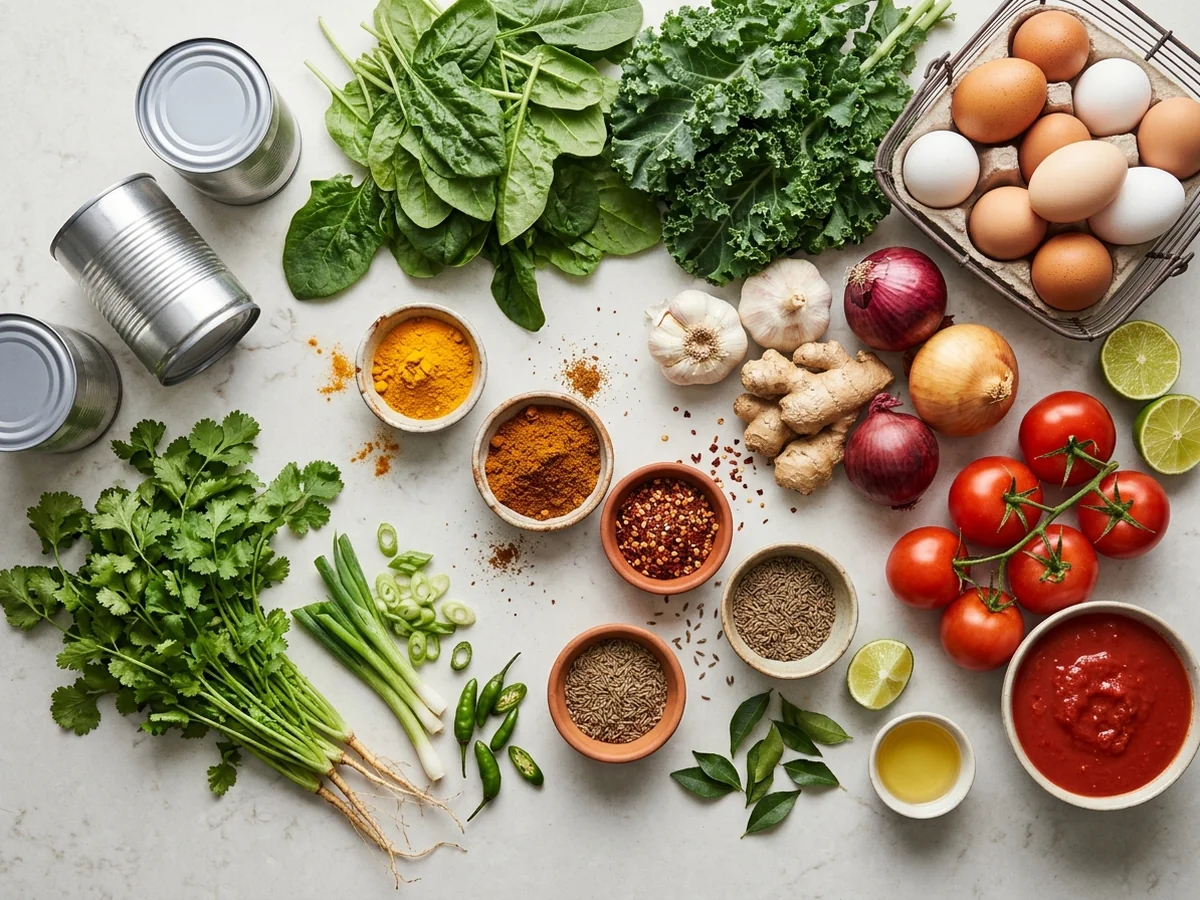
Crafting a flavorful green curry fusion dish relies on swapping the traditional tomato base for a vibrant blend of green vegetables, rich coconut milk, and aromatic spices. Building layers of complex flavor starts with balancing creamy elements against earthy seasonings and fresh herbs.
- Rich coconut milk creates the creamy sauce base that replaces traditional tomato broths and provides a smooth texture.
- Fresh spinach and kale provide a nutrient-dense, vibrant green foundation instead of standard nightshades.
- Warm spices like curry powder and turmeric infuse the sauce with aromatic depth and a golden hue.
- Eggs poach gently right in the simmering green sauce until the whites are fully set.
- Fresh cilantro and basil add a bright herbal finish to balance the rich sauce.
- Coriander seeds are often cooked in oil over medium heat for two to three minutes until fragrant to help build the foundational flavor profile.
Proper preparation of your produce ensures the best texture for this coconut curry shakshuka. Spinach and kale typically perform best when cooked in boiling salted water for one to two minutes until tender and bright green before transferring them to your skillet. A heavy skillet, such as a well-seasoned cast iron skillet, helps maintain even heat distribution as you simmer your coconut curry eggs.
A common mistake when assembling this dish involves adding raw greens directly to the coconut milk without blanching first, which releases excess water and dilutes the sauce. Taking the time to toast your spices and properly prepare your greens guarantees a rich, well-balanced meal. You can easily adapt this easy coconut curry shakshuka to fit your personal preferences by adjusting the spice levels or incorporating extra garden herbs.
Building Flavor with Spices and Aromatics

Creating a rich flavor base for an easy coconut curry shakshuka begins by handling dry spices in hot oil to release their essential oils. Common culinary guidance suggests cooking coriander seeds in oil over medium heat for 2 to 3 minutes until fragrant. This short cooking window allows the gentle heat to unlock the aromatic compounds trapped inside each seed before any liquid is added to the pan. For home cooks preparing a vibrant indian coconut curry shakshuka, mastering this foundational step transforms simple pantry ingredients into a deeply savory meal.
Blooming Spices in the Skillet
Curry powder benefits from a similar gentle heat treatment in the cast iron skillet. Toasting the spice blend directly in the fat removes any raw edge and deepens the overall flavor profile of your red curry shakshuka. Careful attention prevents the spices from burning while they infuse the oil with rich aromas. If the pan becomes too dry or hot, lowering the temperature immediately protects the delicate spice particles from scorching. When working with turmeric and other ground spices, constant stirring ensures even heat distribution.
Softening Aromatics for Savory Depth
Cooking aromatics over moderate heat until fragrant lays the groundwork for savory depth in the dish. Standard culinary practice involves stirring onions, garlic, and ginger steadily until they soften and turn translucent. Keeping the heat at a medium setting ensures the vegetables release their natural moisture without browning too quickly, which would otherwise introduce a bitter taste to the sauce. This gentle sweating technique creates a sweet and mellow base that balances the richness of coconut milk.
Common Mistakes to Avoid
Home cooks often encounter common mistakes such as rushing the cooking time or using high heat right away when developing a coconut curry eggs recipe. High heat burns the ground spices instantly, ruining the entire flavor base. Taking a few extra minutes to sweat the aromatics and bloom the spices in oil guarantees a smooth, aromatic foundation that complements creamy coconut milk and fresh cilantro without any harshness.
Adding Spinach and Kale Base
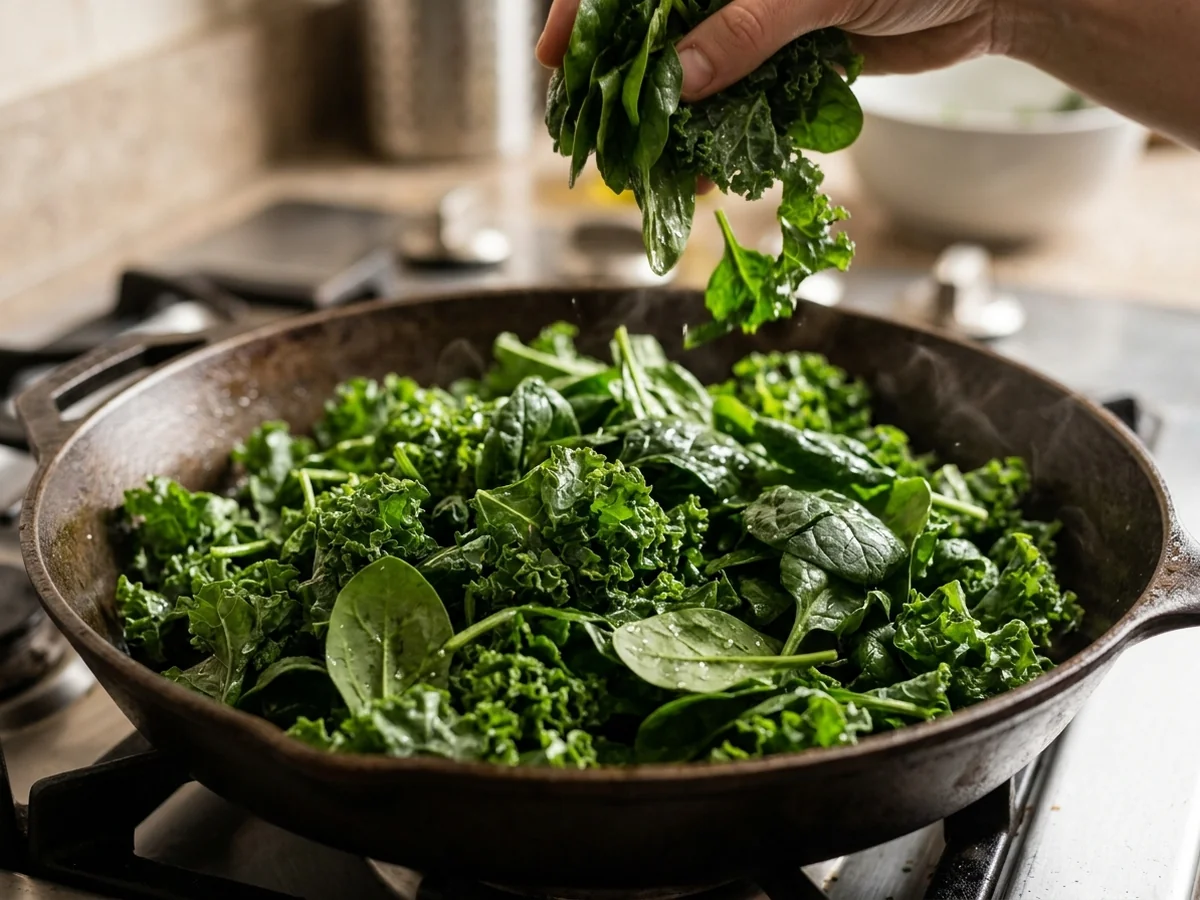
Preparing leafy greens for the skillet starts with washing and thoroughly drying your spinach and kale to remove excess moisture. Removing any tough stems from the kale leaves before chopping them into bite-sized pieces ensures a better texture. Keeping the greens uniform helps them cook evenly once they hit the hot pan and meld with your rich coconut milk base and aromatic curry powder.
Prepping and Cooking the Greens
Common culinary guidance suggests that spinach and kale should be cooked in boiling salted water for 1 to 2 minutes until bright green and tender. Alternatively, home cooks can transfer the prepared greens directly into a heated cast iron skillet containing a simmering sauce. This quick exposure to heat softens the fibrous structure without dulling the vibrant color or losing essential nutrients.
Stir the greens gently into the sauce until they wilt down into a nutritious bed for your red curry shakshuka. Make sure the vegetables are evenly distributed across the bottom of the pan to create a stable foundation that absorbs surrounding spices. This practical technique builds a flavorful, nutrient-dense base before you introduce the spiced protein elements, setting the stage for a satisfying meal.
Avoiding Excess Moisture
A common mistake when working with leafy greens is overcrowding the pan or failing to dry them properly, which releases excess water and dilutes the sauce. Take time to chop the kale uniformly and let excess moisture evaporate during the initial sauté. Proper preparation guarantees that your flavorful coconut curry dish retains its bold flavor and thick, comforting consistency without becoming watery.
Serving Suggestions and Fusion Flavors
Replacing traditional tomatoes with green vegetables offers a fresh spin on the classic breakfast or dinner dish. Once your base is simmering with coconut milk and turmeric, you can easily fold in fresh cilantro or pair the final meal with an herb salad topping. This approach appeals to food enthusiasts looking for creative ways to enjoy high-protein meals with bold southeast asian or indian curry flavors.
Simmering the Coconut Milk and Herb Sauce
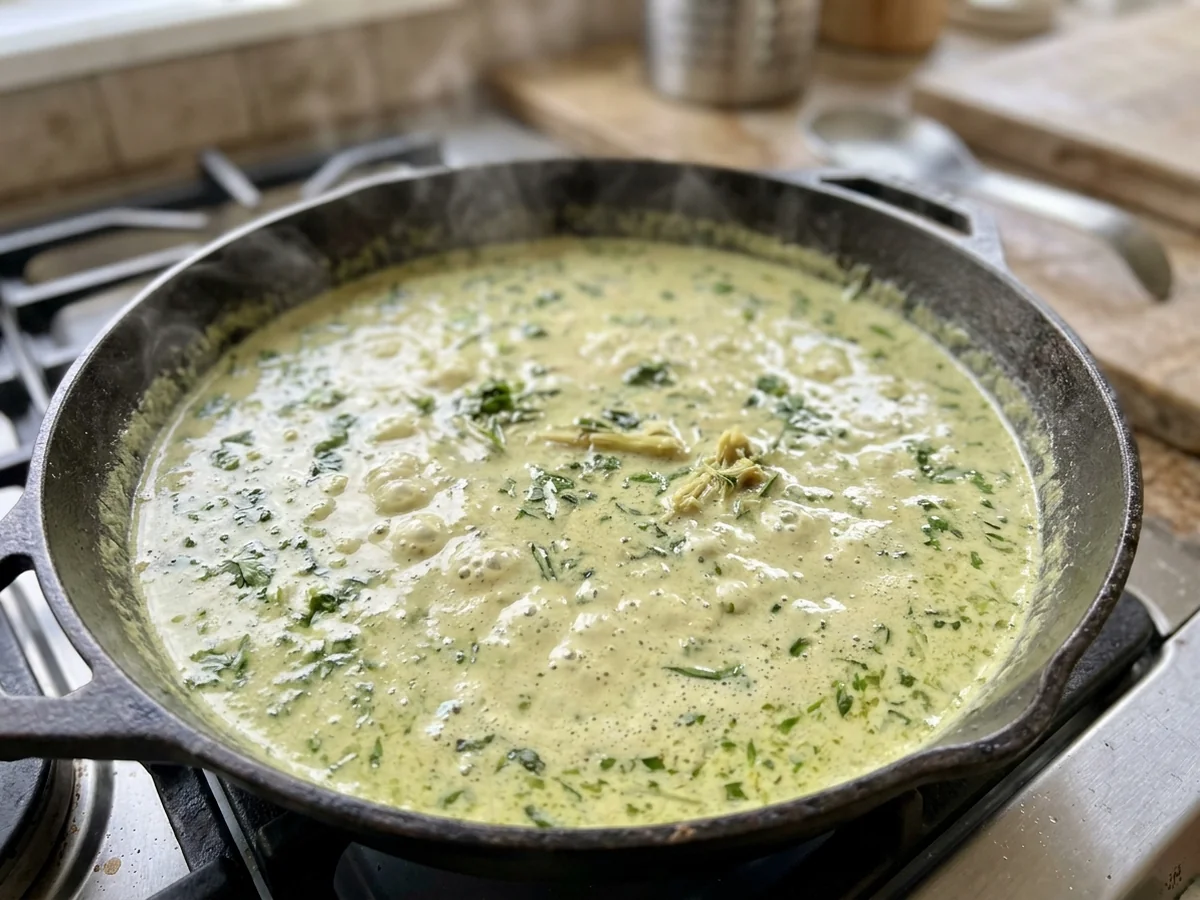
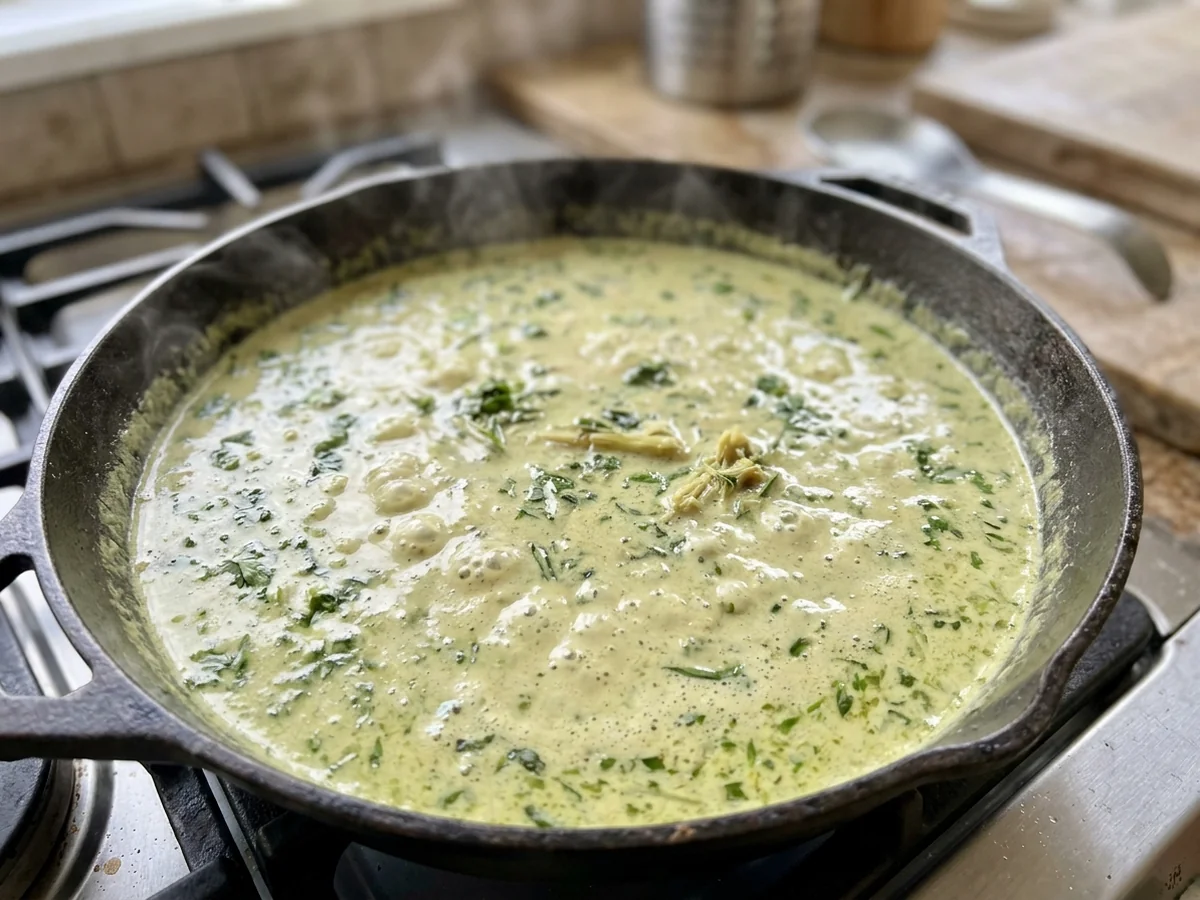
Simmering coconut milk with lemongrass, cilantro, and basil creates a rich green sauce that forms the flavorful base of a coconut curry shakshuka. This fragrant liquid brings together fresh herbaceous notes and creamy richness before any proteins join the pan. While traditional recipes rely on a heavy tomato base, this fusion approach relies on aromatic plant milks and fresh herbs to build flavor for home cooks looking for creative breakfast or dinner ideas.
Building the Aromatic Liquid
Pour the coconut milk into a cast iron skillet and stir in the fresh lemongrass, cilantro, and basil. Keep the heat at a gentle level to prevent scorching the dairy alternative while encouraging the aromatics to release their natural oils into the liquid. As common culinary practice shows with similar spice blends, applying moderate heat helps unlock deeper layers of flavor.
Infusing and Thickening the Base
Allow the mixture to simmer steadily for a few minutes. This crucial waiting period lets the distinct herbal notes meld completely with the creamy base. Common mistakes at this stage include using high heat, which can cause coconut milk to separate, or rushing the simmer time before the herbs infuse properly. For those incorporating other aromatic elements, similar spice preparations such as cooking coriander seeds in oil over medium heat for two to three minutes until fragrant help establish a strong flavor foundation.
Once the sauce thickens slightly and the aromas fill your kitchen, the base is ready for your chosen ingredients. Keeping the heat controlled ensures the sauce maintains a smooth consistency while absorbing every drop of flavor from the fresh herbs and spices like turmeric and curry powder. This preparation sets the stage for adding green vegetables and poaching eggs into the fragrant pan.
Mastering the Art of Cooking Eggs in a Skillet

Poaching eggs directly within a simmering green vegetable mixture requires precise temperature control and the right cookware. Using a sturdy cast iron skillet helps maintain even heat distribution across the base and sides. This steady warmth prevents hot spots that might scorch the delicate sauce or cook the eggs unevenly. When preparing this coconut curry shakshuka, proper pan management ensures the base ingredients reach the correct consistency before the protein is added.
Building Flavor Foundations
Creating a rich sauce for this dish relies heavily on proper spice management and vegetable preparation. Common kitchen guidance suggests that leafy greens like spinach and kale should be cooked in boiling salted water for 1 to 2 minutes until bright green and tender before combining them with aromatic spices like turmeric, curry powder, and rich coconut milk. Similarly, cooking whole spices such as coriander seeds in oil over medium heat for 2 to 3 minutes until fragrant helps build the foundational depth of the meal.
A frequent mistake home cooks make is rushing this spice-blooming phase or keeping the heat too high. Excess heat can easily burn the aromatics and impart a bitter flavor to the coconut curry shakshuka. Keeping the temperature at a moderate level allows the fats to absorb the complex flavors without scorching.
Executing the Poach
Once the sauce reaches the ideal thickness, preparing the pan for the protein involves careful shaping. Begin by creating small wells in the simmering greens using the back of a spoon. Gently crack each egg directly into its own indentation to keep them separated as they set.
Maintaining a gentle simmer ensures the proteins set properly without overcooking the yolks. Covering the pan for the final minutes traps steam to help set the whites. As the dish cooks, watch closely for the whites to turn opaque while the yolks remain soft and runny. Maintaining a low, steady flame during this final stage prevents the bottom from overcooking while allowing the gentle heat to permeate the top of the dish.
Adding Finishing Touches and Fresh Herb Salads

Balancing rich curry sauces requires vibrant toppings that cut through the creamy coconut milk and savory spices. A well-designed garnish transforms a simple cast iron skillet into a striking meal. When preparing this fusion dish, the final presentation matters just as much as the simmering base.
Balancing Richness With Acidity
Top the finished dish with a bright chile-lime herb salad for contrast. This raw element adds a sharp, acidic punch that balances the richness of the curry and cuts through the density of the coconut milk. Home cooks often overlook this raw component, but the acidity is essential for tying together the bolder flavors of this spiced breakfast or dinner meal. Garnish with fresh cilantro and turmeric infused drizzles to elevate the visual presentation. These final details enhance the aromatic profile of your flavorful, one-pan creation right before serving.
Common Plating Mistakes to Avoid
To get the best results when plating this skillet meal, avoid common errors that compromise texture and flavor:
- Skipping the acid: Failing to add fresh lime or vinegar leaves the dish feeling heavy and one-dimensional.
- Overloading the skillet: Piling too many heavy toppings on top of the poached protein obscures the delicate textures underneath.
- Adding garnishes too early: Stirring fresh herbs into boiling sauce turns them brown and limp, so always add raw salads at the table.
As part of preparing your meal, typical kitchen practice involves cooking your coriander seeds in oil over medium heat for two to three minutes until fragrant, and boiling spinach and kale in salted water for one to two minutes until bright green and tender before combining them in the skillet. By balancing creamy fats with sharp citrus and fresh herbs, your meal achieves restaurant-quality depth at home.
Coconut Curry Shakshuka Nutrition and Diets

This flavorful fusion skillet provides a balanced nutritional profile rich in protein and healthy fats, while easily adapting to various dietary needs. Home cooks tracking their daily intake can expect a nutrient-dense meal featuring fresh greens, aromatic spices, and wholesome whole foods. Replacing traditional tomato bases with coconut milk and leafy greens creates a unique macro-friendly profile that supports high-protein meal planning without sacrificing culinary depth.
Understanding the nutritional mechanics of this dish helps home cooks tailor every meal to specific health goals. Using whole eggs provides a complete source of high-quality protein and essential amino acids, while full-fat coconut milk contributes sustained energy through medium-chain triglycerides. Incorporating nutrient-dense vegetables like spinach and kale introduces vital micronutrients, iron, and dietary fiber.
When preparing your ingredients, common culinary guidance suggests that spinach and kale should be cooked in boiling salted water for 1 to 2 minutes until bright green and tender, preserving their vibrant color and texture before they meet the sauce. Similarly, working with whole spices often involves cooking coriander seeds in oil over medium heat for 2 to 3 minutes until fragrant, which releases their essential oils and builds a robust flavor foundation.
| Dietary Preference | Primary Ingredient Adjustment | Nutritional Focus |
|---|---|---|
| Standard Vegetarian | Whole eggs and dairy-free coconut milk | High protein and healthy fats |
| Vegan Variation | Firm tofu cubes or chickpeas instead of eggs | Plant-based protein and fiber |
| Paleo and Whole30 | Eggs, coconut milk, and green vegetables | Grain-free and dairy-free minerals |
Practical Steps for Dietary Adaptations
Adapting this recipe to match specific nutritional requirements is straightforward when you understand key ingredient swaps. Making this dish fit a vegan lifestyle is easy by swapping traditional eggs for plant-based proteins like chickpeas or cubed firm tofu. Full-fat canned coconut milk naturally provides a rich and creamy texture without requiring any dairy products. Adjusting the spice blend with extra turmeric and curry powder ensures the bold flavor remains fully intact across all dietary variations.
Common Mistakes to Avoid
Home cooks frequently encounter a few pitfalls when balancing the flavors and textures of a coconut-based skillet meal. Adding delicate greens too late in the process can leave them tough, while overcooking them strips away their vibrant appearance. Another common error involves rushing the spice-blooming phase, which prevents the curry powder and aromatics from fully infusing the oil. Taking time to properly temper the spices ensures a harmonious flavor profile from the first bite to the last.
Frequently Asked Questions
How do you make a green curry version of this dish?
You can craft a vibrant green meal by simmering nutrient-dense greens like spinach and kale in rich coconut milk and aromatic spices. A common technique involves boiling the greens in salted water for 1 to 2 minutes until bright green and tender before blending them with coconut milk, cilantro, basil, and curry powder. Finish the preparation by creating small indentations in the bubbling sauce to hold the eggs, cooking them until the whites turn opaque.
What vegetables can replace tomatoes in these egg skillets?
Leafy greens such as spinach and kale provide a fresh, earthy base that easily replaces traditional tomatoes in a fusion skillet meal. Hearty vegetables like bell peppers, zucchini, or even puréed winter squash also add great texture and body to alternative breakfast skillets. These non-tomato bases absorb rich spices and creamy coconut milk just as effectively as nightshades.
Is this dish spicy?
The heat level depends entirely on the type of curry paste or fresh chiles you incorporate into your sauce. You can easily adjust the spice by choosing mild curry powder or adding a dash of fresh chili flakes to suit your palate.
Can I make this recipe ahead of time?
You can prepare the spiced vegetable and coconut sauce in advance and store it in the refrigerator for a quick meal later. Simply reheat the sauce in a skillet, create small wells, and drop in fresh eggs right before serving.
What should I serve alongside this meal?
Warm flatbread, crusty sourdough, or a bright herb salad with lime juice make excellent accompaniments to soak up the flavorful sauce. These sides balance the richness of the coconut milk and round out the meal.
Conclusion
Deciding to switch up your usual breakfast routine with a vibrant skillet meal brings bold southeast asian flavors straight to your table. Gather your cast iron skillet, coconut milk, and fresh greens to get started on your own version of these curried eggs today. This flavorful fusion dish proves that stepping away from traditional tomatoes opens up exciting new culinary possibilities for any weeknight dinner or weekend brunch.
You might also like: Blueberry Lemon Overnight Oats with chia