
easy hasselback potatoes parmesan rosemary lemon garlic
Introduction
You can elevate standard oven roasted potato recipes by using the Hasselback technique to create hasselback potatoes with parmesan. This simple method transforms a basic vegetable into an impressive centerpiece, ensuring your hasselback potatoes with parmesan are both visually striking and delicious.
By making thin vertical slices that stop just before the base, you allow the heat to penetrate the potato for a perfectly crispy exterior while keeping the center tender. This guide focuses on a sophisticated flavor profile featuring the savory depth of Parmigiano-Reggiano, the aromatic earthiness of fresh rosemary, and a bright finish of lemon garlic. Whether you are hosting a dinner or looking for a special side dish, these aromatics meld during the roasting process to create a restaurant-quality result in your own kitchen.
Selecting the Best Potatoes for Hasselback Preparation
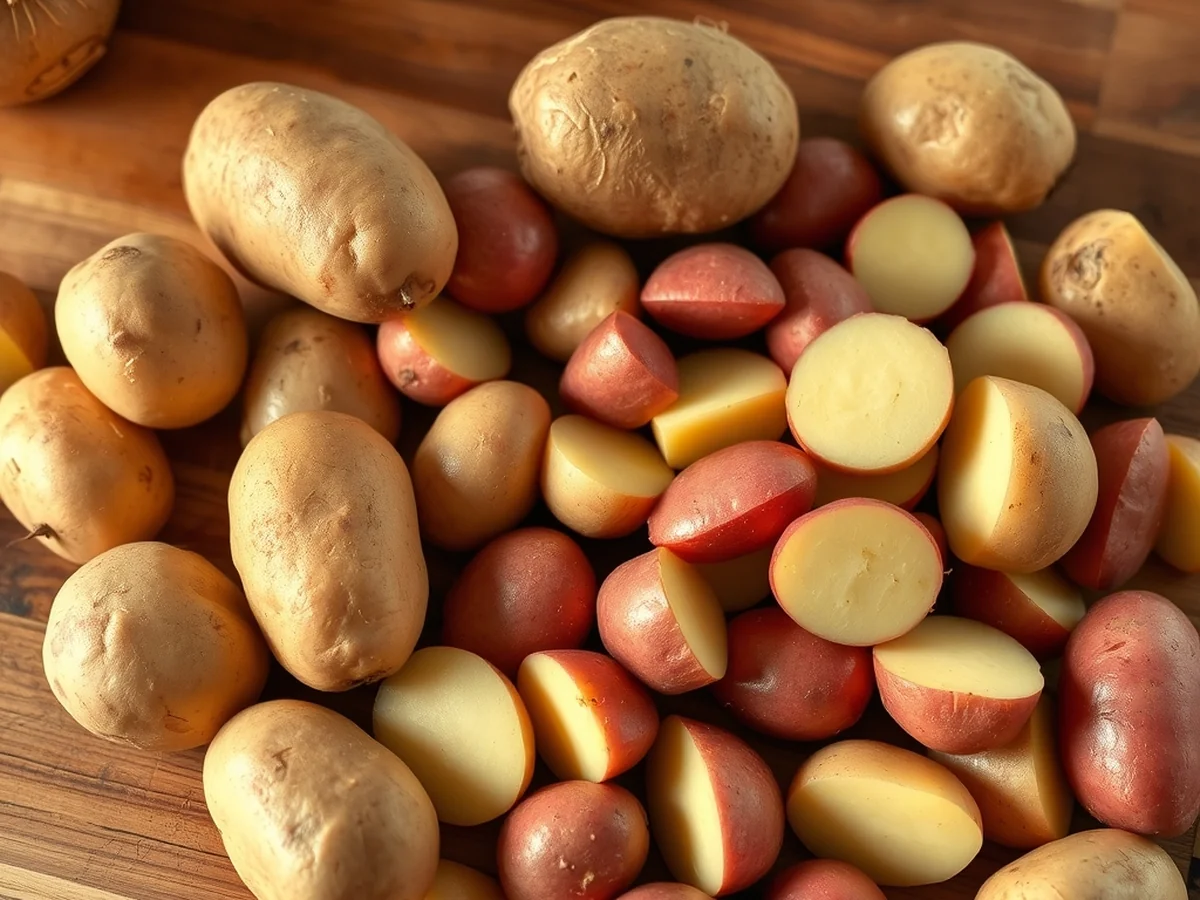
Yukon Gold or red potatoes are commonly considered suitable varieties for this dish due to their consistent starch content and firm texture. These types generally hold their shape well throughout the roasting process, ensuring that the thin, accordion-style slices remain distinct rather than collapsing into a soft heap. Their skins are also relatively thin, providing a satisfying crunch without needing to be peeled.
The size of your tubers significantly influences both cooking time and final texture. Choosing potatoes of a uniform size is essential for ensuring that every piece finishes roasting at the same rate. When you use tubers that vary wildly in thickness, smaller ones may overcook and become dry while larger ones remain undercooked in the center.
For optimal results, follow these guidelines when choosing the best potatoes for hasselback:
- Aim for medium-sized tubers that feel heavy for their weight.
- Look for potatoes with a smooth, unblemished surface to simplify the slicing process.
- Select potatoes that are roughly equal in length and diameter to ensure even heat distribution on your baking sheet.
Because the recommended oven temperature for roasting is 425 degrees Fahrenheit, potatoes that are too thick will take longer to become tender through the core. If you must use larger tubers, be prepared to extend the roasting time beyond the typical guidance of 30 to 35 minutes. Consistent sizing not only improves the presentation of the dish but also guarantees that your seasoning and fats coat every layer evenly for the best flavor.
The Precision Slicing Method
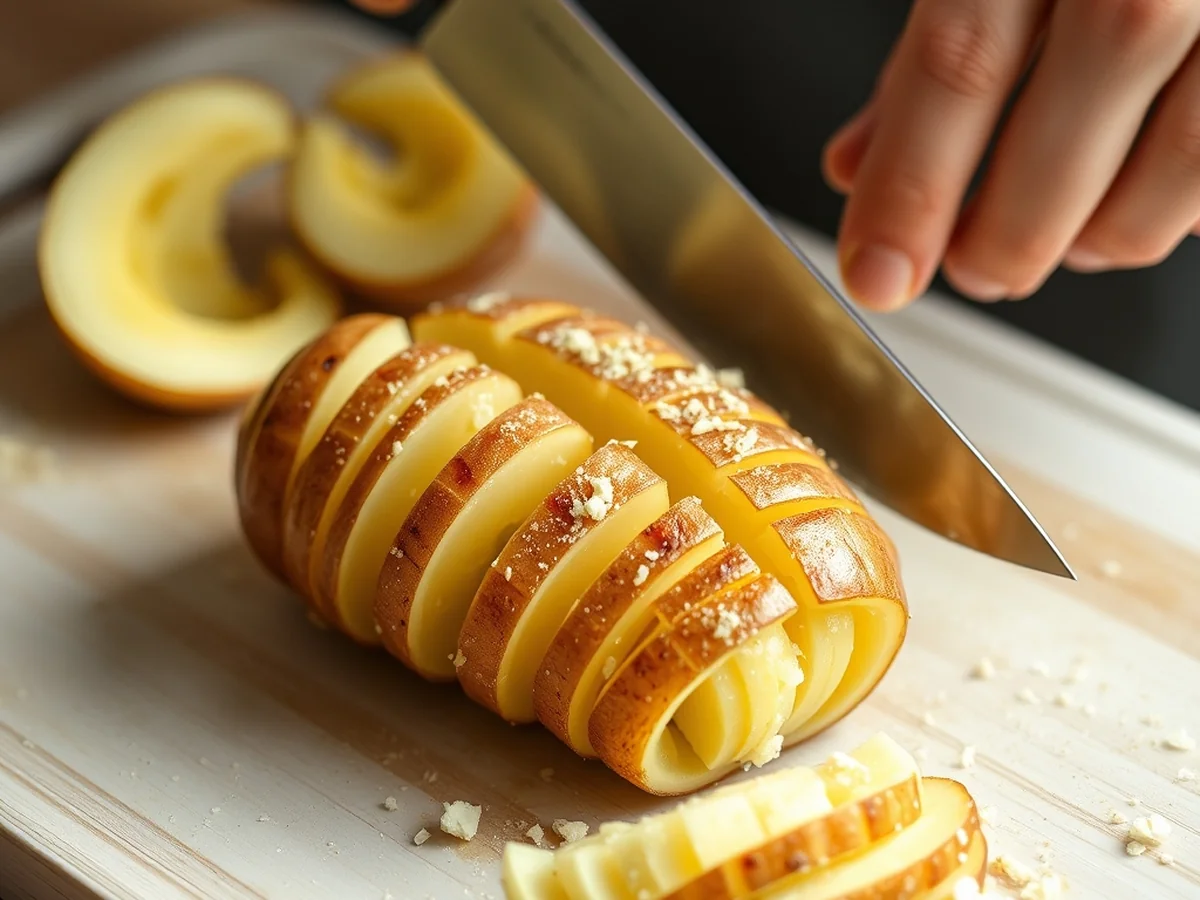
To achieve the signature accordion look of hasselback potatoes with parmesan, you must create uniform, deep cuts without severing the potato entirely. Using a physical guide is the most effective way to ensure your knife stops before reaching the bottom of the potato. Yukon Gold or red potatoes are often considered the best potatoes for hasselback preparation due to their size and texture.
When learning how to slice hasselback potatoes, the following steps will help you maintain control and consistency:
- Place a single potato between two wooden spoons or chopsticks on your cutting board.
- Hold the potato firmly in place so it does not roll while you work.
- Make vertical slices across the potato, letting your knife rest against the handles of the spoons or the chopsticks to prevent it from cutting through the base.
- Aim for consistent spacing of approximately 2 millimeters between each slice to promote even cooking and maximum surface area for crisping.
- Check that every slice reaches a similar depth to ensure the potato fans out properly once it starts roasting in the oven.
- Wipe your knife clean between cuts if the starch begins to accumulate, which helps maintain smooth, clean edges.
Maintaining this 2-millimeter gap is common guidance for home cooks because it balances the need for thin, crispy layers with the structural integrity of the potato. If the slices are too thick, the center will not cook through in the typical 30 to 35 minutes, while slices that are too thin may cause the potato to become fragile. The guides effectively act as a safety barrier, allowing you to focus on the rhythm of your knife work rather than worrying about accidentally slicing all the way through the base.
Once your potato is fully scored, you can gently rinse it under cold water to remove excess starch, which further encourages the edges to crisp up during the roasting process. Per the University of Tennessee, the recommended oven temperature for roasting Hasselback potatoes is 425 degrees Fahrenheit.
Achieving the Perfect Parmesan Herb Crust
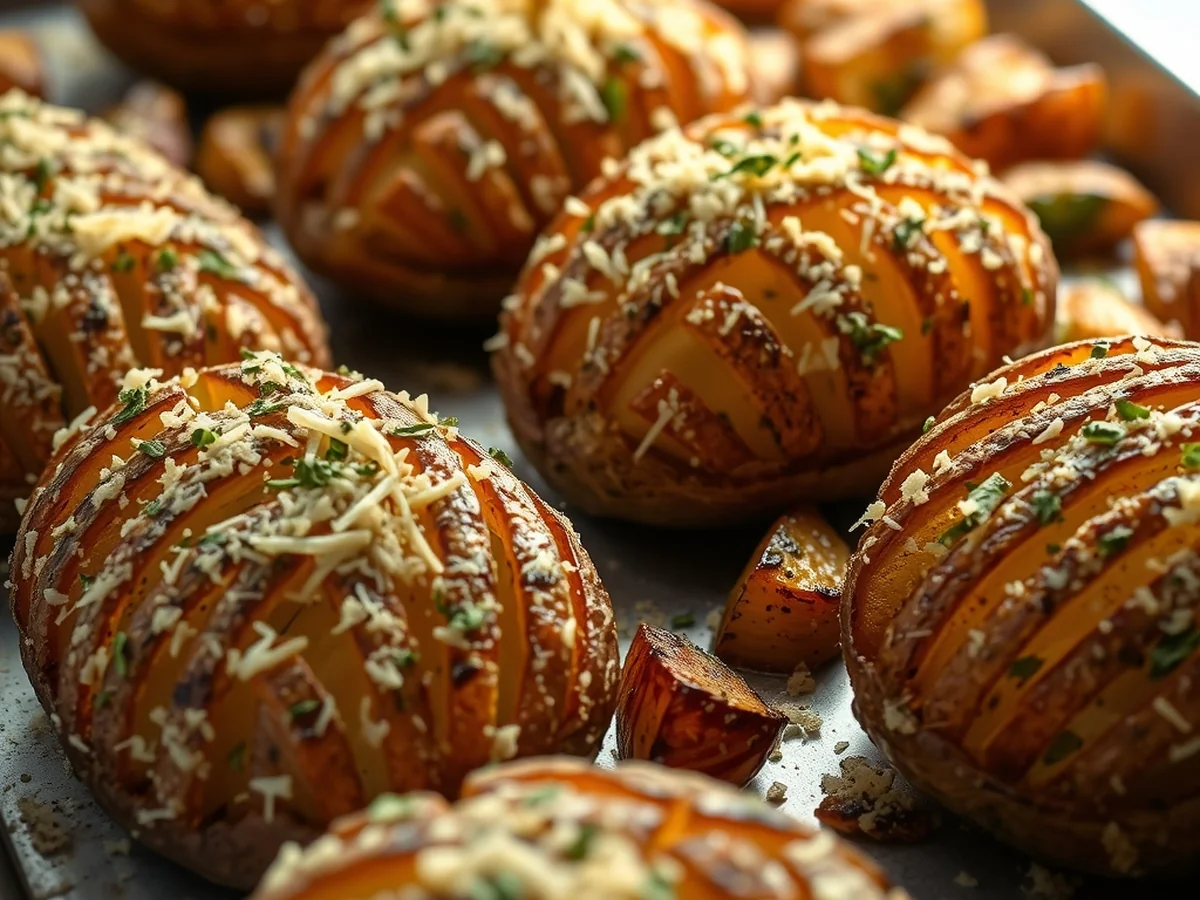
You can create a deeply savory and golden bottom on your roast by spreading a layer of cheese directly onto your baking sheet. This technique allows the base of the vegetable to caramelize and crisp up as it roasts, providing a crunchy, salty contrast to the tender interior.
To prepare your flavorful coating, combine melted unsalted butter with finely minced garlic and finely chopped fresh rosemary. This garlic herb butter for potatoes acts as the primary vehicle for infusing flavor into every crevice of your sliced vegetables. Using a pastry brush ensures that the mixture reaches deep between each layer, which is essential for uniform seasoning and browning.
When preparing the baking sheet, spread a generous, even layer of grated Parmigiano-Reggiano over the surface before placing the potatoes on top. As the fat from the butter drips down during the cooking process, it helps fry the cheese against the hot metal. This step transforms the bottom of the dish into a crispy parmesan potato side dish that serves as a perfect foundation for the herb-infused topping.
For the best results, keep these preparation tips in mind:
- Ensure the butter is fully melted but not boiling to maintain an even consistency for brushing.
- Distribute the garlic and rosemary evenly throughout the butter to prevent clumps of seasoning.
- Use a thin, consistent layer of cheese on the pan to ensure it browns at the same rate as the potatoes.
- Position the potatoes so their cut sides have maximum contact with the cheese-covered surface.
Following these steps helps you elevate the texture of your roast. By combining the rich, melted cheese crust with the aromatic herb butter, you achieve a complex flavor profile that makes this a standout addition to any meal.
Butter and Oil Tips

Combining olive oil and melted butter provides the best of both worlds for a crispy parmesan potato side dish. Olive oil has a higher smoke point, which helps the edges of the thinly sliced potatoes turn golden and crunchy in the heat. Meanwhile, butter adds a rich flavor and helps the cheese brown beautifully as it cooks.
Using only butter can sometimes lead to burning before the center of the potato is tender, as milk solids in the butter darken quickly at high temperatures. If you prefer the flavor of butter, try using clarified butter or ghee, which removes the milk solids and allows for longer, cleaner roasting. For the best texture, brush the mixture deep into the folds of the potatoes to ensure every layer gets coated.
Parboiling is often unnecessary for these roasted potatoes if you manage the oven temperature correctly. When you set your oven to 425 degrees Fahrenheit, as recommended by the University of Tennessee, the intense heat is sufficient to cook the slices through while simultaneously crisping the outer edges. Skipping the boiling step keeps the potato structure intact, which prevents the thin slices from breaking or turning mushy during the baking process.
To achieve successful results without pre-cooking, focus on the following details:
- Ensure the potato slices are uniform, with typical practice suggesting they are spaced approximately 2 millimeters apart.
- Use starchy or waxy varieties like Yukon Gold potatoes, which are commonly favored for this preparation.
- Place the potatoes directly onto a baking sheet, allowing the cheese to form a crust on the base of each slice.
- Aim for a roasting time of 30 to 35 minutes, though you should monitor the color to achieve your preferred level of golden brown.
By relying on the high-heat roasting method, you bypass the extra step of boiling and drying the potatoes. This keeps the preparation efficient and helps maintain the flavor of your seasonings, such as fresh rosemary and minced garlic. Maintaining this temperature throughout the roasting period is key to consistent crispiness without requiring additional moisture or pre-softening techniques.
Mastering Oven Temperature and Timing
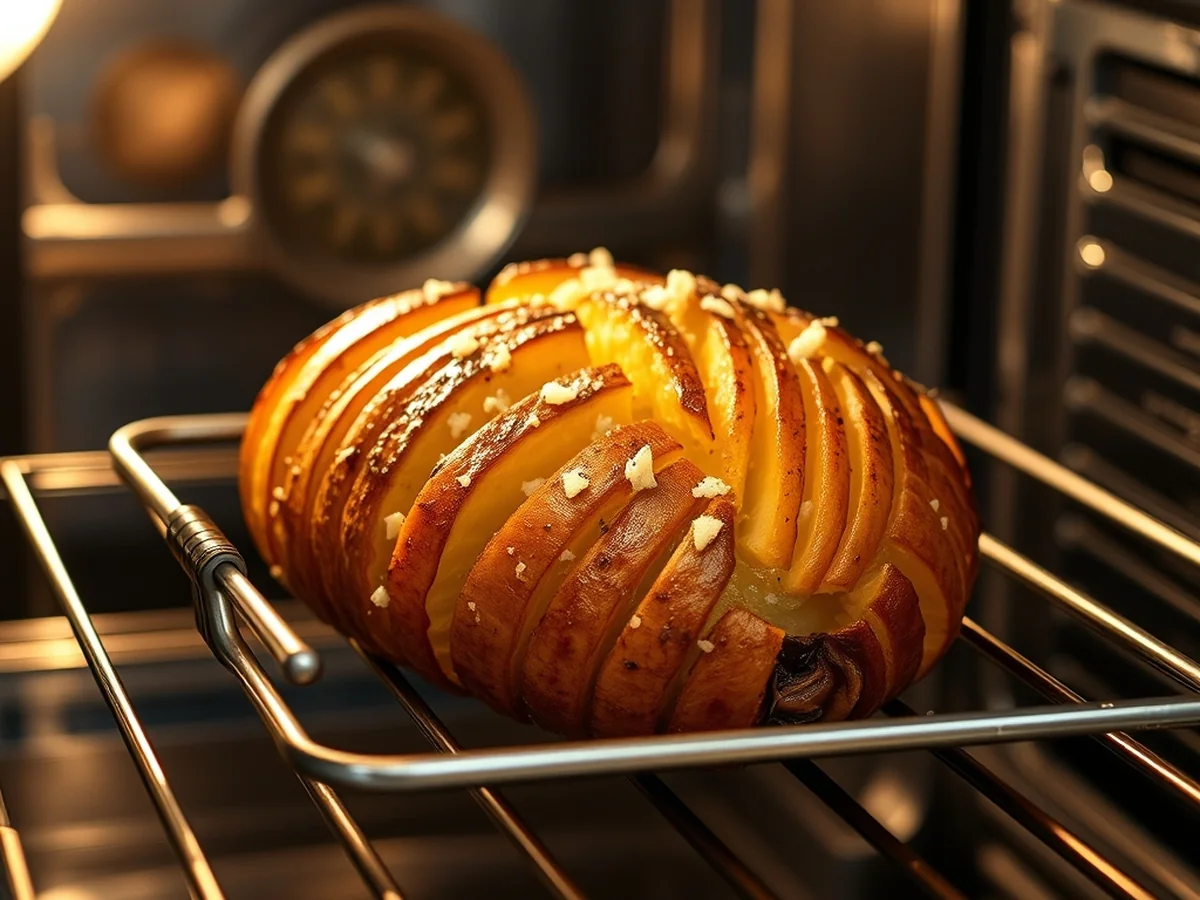
The recommended oven temperature for roasting these sliced potatoes is 425 degrees Fahrenheit. This high heat is essential for achieving a golden, crispy exterior while ensuring the inside remains tender and perfectly cooked.
| Factor | Typical Requirement |
|---|---|
| Oven Temperature | 425 degrees Fahrenheit |
| Roasting Time | 30 to 35 minutes |
| Slicing Spacing | Approximately 2 millimeters |
While the temperature remains consistent, keep in mind that total oven time often varies based on the size of your produce. Common guidance suggests a roasting window of 30 to 35 minutes, though larger specimens may require a few extra minutes to soften through the center. Monitoring your oven during the final stage of cooking is the best way to ensure your side dish reaches the desired level of crispness without burning the delicate herb and cheese coating.
When selecting your base, Yukon Gold or red potatoes are suitable varieties for this preparation. Their texture holds up well under high heat, allowing the thin, fanned slices to crisp individually. If you choose larger potatoes, you might find that the edges brown faster than the middle cooks. In these cases, reducing the heat slightly or covering the pan loosely with foil for the first portion of the cook time can help manage the internal texture.
Always ensure your slices are consistent to promote even cooking. Typical practice involves creating thin vertical cuts spaced approximately 2 millimeters apart. Using a wooden spoon or chopsticks as a guide on your cutting board helps prevent you from accidentally slicing all the way through the base. This technique creates the signature fanned look that allows the olive oil, butter, and seasonings to penetrate deep into every fold of the vegetable.
Proper preparation before the baking sheet hits the rack also plays a role in your timing. Ensuring the potatoes are thoroughly dried after washing prevents them from steaming in the oven rather than roasting. If you add toppings like finely grated cheese, remember that these additions can brown very quickly. You may choose to add your crust ingredients during the last ten minutes of the process if you prefer a lighter color or want to avoid any risk of charring the surface before the center is tender.
Serving Suggestions and Pesto Yogurt Pairing
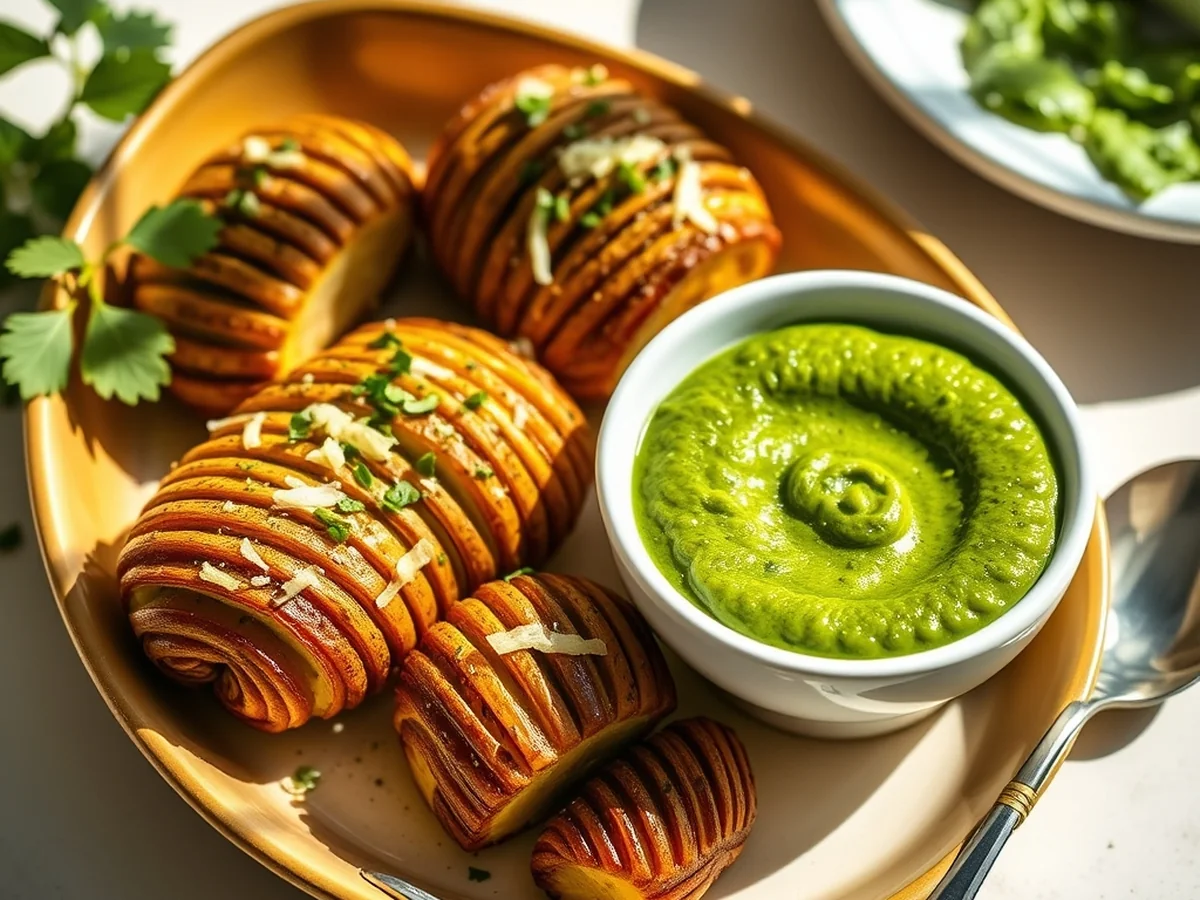
Pairing your crispy parmesan potato side dish with a cool, herbaceous pesto yogurt dip creates a perfect balance of textures and temperatures. The creamy, tangy nature of the yogurt cuts through the richness of the butter and cheese, while the vibrant basil and garlic in the pesto echo the savory notes of the roast.
To serve, simply whisk together equal parts Greek yogurt and high-quality pesto until smooth. This dip works exceptionally well alongside hasselback potatoes with parmesan because it provides a refreshing contrast to the deeply browned, salty crust. You can serve it in a small bowl for dipping or dollop it directly onto the warm potatoes just before they reach the table.
Brightening the final plate with a fresh finish is essential to elevating the overall flavor profile. A generous dusting of freshly grated lemon zest is the ideal way to lift the heavy, savory notes of the melted butter and minced garlic. The citrus oils provide a sharp, aromatic pop that makes the dish feel more complex and refined.
Consider these simple techniques to maximize the appeal of your presentation:
- Microplane the lemon zest directly over the potatoes immediately after they come out of the oven to release the aromatic oils.
- Garnish with extra sprigs of fresh rosemary to add a pop of color that hints at the herbal infusion used during the roasting process.
- Ensure the potatoes are served while the edges are still at their crunchiest, as the texture is the highlight of this preparation.
- Use a wide platter to display the potatoes, allowing room for a dedicated space for the pesto yogurt dip in the center.
When you use high-quality ingredients like fresh rosemary and premium cheese, the lemon zest acts as the final bridge that ties the earthy and salty components together. This clean, bright finish ensures that every bite remains balanced rather than overly heavy. It transforms a simple root vegetable into a sophisticated side that stands out at any gathering.
Storing Hasselback Potatoes
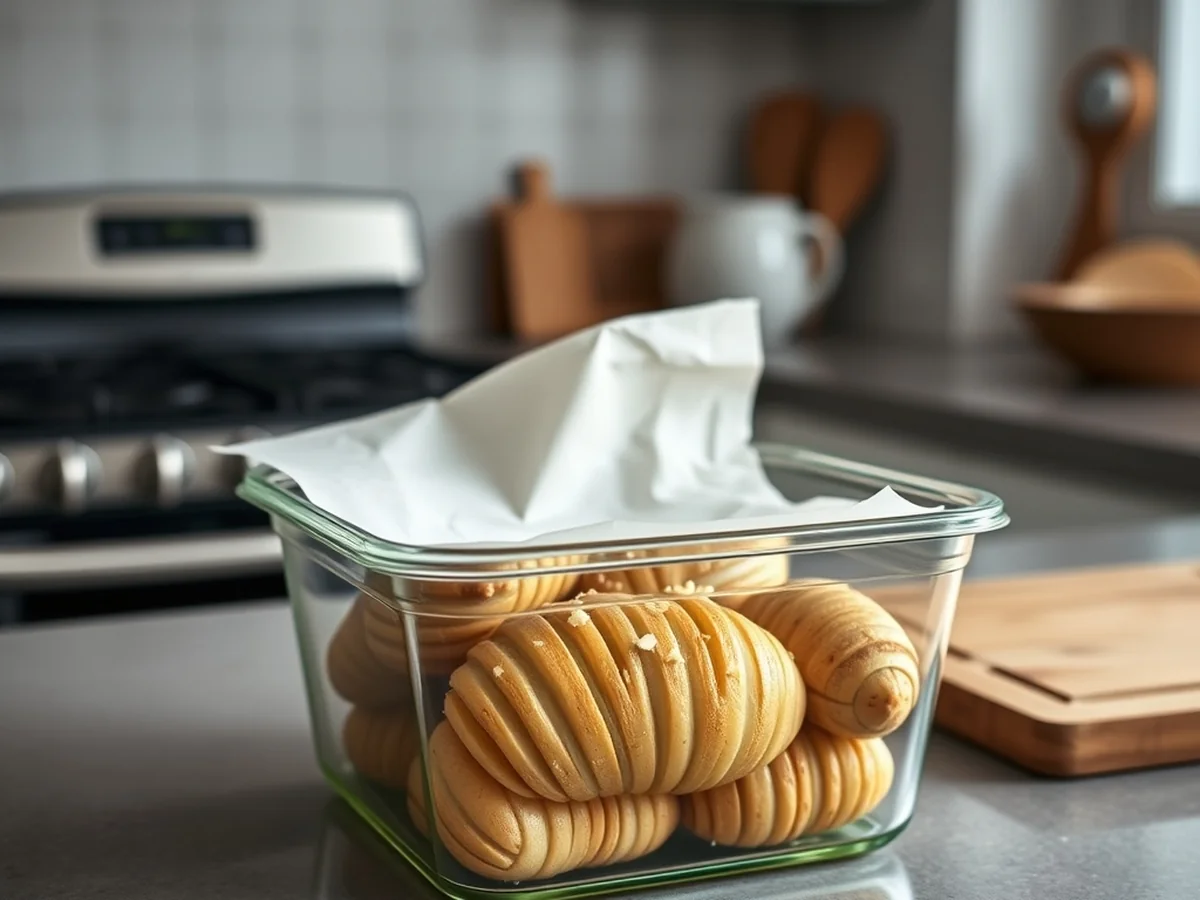
Cool the sliced potatoes to room temperature before placing them in an airtight container; this prevents condensation that can make the edges soggy.
Use a container with a tight‑locking lid or a zip‑top bag that has been pressed flat to remove excess air. A small piece of parchment paper over the top can help keep the crust from sticking to the lid.
If you plan to keep leftovers for more than a day, store them in the refrigerator for up to four days. Place the container on a middle shelf where the temperature stays consistently cool, avoiding the door where temperatures fluctuate.
For longer storage, you can freeze the cooked slices. Lay them on a baking sheet in a single layer, freeze until solid, then transfer to a freezer‑safe bag. This method preserves the crisp edges better than stacking them while still warm.
When you’re ready to reheat, preheat the oven to the same temperature used for the initial roast, 425 °F, as recommended for optimal crisping.
Arrange the potatoes on a rimmed baking sheet and lightly brush the tops with a touch of olive oil or melted butter. This added fat helps revive the golden crust.
Reheat for 10‑12 minutes, turning once halfway through, until the edges are visibly crisp and the interior is heated through. Using a convection setting, if available, can speed up crisping without drying the interior.
For a quicker option, a toaster oven works well for a single serving. Set it to 425 °F, spread the slices on the rack, and watch closely; they can brown in as little as eight minutes.
Avoid microwaving, as it steams the potatoes and eliminates the desired crunch. If you must use a microwave for speed, follow it with a brief blast under the broiler, just a minute or two, to restore texture.
Serve the reheated slices immediately, optionally sprinkling a fresh pinch of grated Parmigiano‑Reggiano for extra flavor and a final touch of crispness.
How do you slice Hasselback potatoes without cutting through them?
Achieving the characteristic fan shape of these roasted potatoes relies on keeping the base of the tuber intact. Without a physical stop, a knife can easily slice right through, ruining the accordion effect. Mastering this technique transforms simple oven roasted potato recipes into an impressive presentation for home cooks of any skill level.
The Chopstick Guard Technique
Place a cleaned tuber on a cutting board, choosing suitable varieties like Yukon Gold or red potatoes for this preparation. Position two wooden spoons or chopsticks parallel to the potato on either side. These objects act as physical barriers for the knife blade. As you make thin vertical cuts, the knife hits the spoons and stops before reaching the bottom. It is typical practice to space slices approximately two millimeters apart to create an even, accordion-like fan.
Common Mistakes to Avoid
Rushing the slicing process is a frequent error that leads to uneven fans or accidental separation of the wedges. Pressing the knife down too hard can also crack the potato along the bottom. Take your time, keep your fingers clear of the blade, and let the wooden guides do their job of protecting the base.
What ingredients are needed for a Parmesan herb crust?
The crust combines grated Parmigiano‑Reggiano, fresh rosemary leaves, minced garlic, olive oil, and a pinch of salt. Toss the herbs and garlic with the cheese, then drizzle with olive oil to create a paste that sticks to the potato wedges as they roast.
Selecting the right base
Yukon Gold or red potatoes are suitable varieties for Hasselback preparation, offering a naturally buttery interior that complements the sharp cheese.
Applying the mixture
Thin vertical cuts for Hasselback potatoes should be spaced approximately 2 millimeters apart to allow the cheese and herb mixture to nestle deep into the slits. When preparing hasselback potatoes with parmesan, using a pastry brush helps distribute the oil evenly across the surface.
How long does it take to roast Hasselback potatoes?
The recommended oven temperature for roasting Hasselback potatoes is 425 °F. At this heat, most cooks find that a batch of medium‑sized Yukon Gold or red potatoes needs about 30 to 35 minutes to develop a golden, crispy edge while the interior stays tender. The exact time can shift slightly depending on potato size, the amount of fat used, and whether a Parmesan herb crust is added.
Why the temperature and time matter
425 °F is hot enough to crisp the thin slices created by the typical 2 mm spacing of vertical cuts. The heat penetrates quickly, allowing the butter‑olive oil mixture and grated Parmigiano‑Reggiano to brown without overcooking the flesh.
Practical steps for consistent results
- Arrange the potatoes on a baking sheet lined with a thin layer of grated Parmesan; this creates extra crunch on the bottom.
- Brush each slice with garlic herb butter or a blend of olive oil and unsalted butter to promote even browning.
- Check for doneness by inserting a fork into the thickest part; it should meet little resistance.
Common mistakes to avoid
Cutting the slices too deep can cause the potatoes to fall apart before the exterior crisps. Using too much oil may result in soggy edges, while too little fat can leave the slices pale. Adjust the roasting time by a few minutes if the potatoes are larger than a golf ball.
Frequently Asked Questions
Can I use Yukon Gold potatoes for Hasselback?
Yukon Gold or red potatoes are suitable varieties for Hasselback preparation. These types hold their shape well, making them a popular choice for this oven roasted potato recipe.
Do I need to parboil the potatoes before slicing?
Parboiling is optional and not required for a successful result. It can reduce the total baking time, but many home cooks prefer to roast them raw to maintain structural integrity.
Should I use butter or oil for the best crispiness?
Both unsalted butter and olive oil contribute to crisp edges and rich flavor. Using a combination of both often yields the best texture for a flavorful Parmesan‑topped side.
How should I store leftovers?
Cool the potatoes completely before placing them in an airtight container for storage in the refrigerator for up to three days. When you are ready to eat, reheat them on a baking sheet at 425 degrees Fahrenheit to help restore their original crispness.
What side dishes pair well with Parmesan Hasselback potatoes?
These potatoes complement grilled proteins, roasted vegetables, or a simple green salad dressed with lemon and olive oil. They also serve as an excellent base for a balanced dinner when paired with nutrient‑dense sides.
Simple Preparation
Preparing this dish is straightforward once you master the rhythmic slicing technique. To achieve the signature accordion appearance, place the potato between two wooden spoons or chopsticks. These act as guides to prevent your knife from slicing all the way through, which is the most common mistake for beginners.
While spacing varies based on personal preference, many cooks find that thin vertical cuts spaced approximately 2 millimeters apart provide the best surface area for crisping.
Selecting and Prepping Your Potatoes
Choosing the right produce is vital for success. Yukon Gold or red potatoes are typically suitable varieties for this preparation because they hold their shape well during the high heat required for roasting. Once sliced, rinse the potatoes under cold water to remove excess starch, which helps ensure they fan out properly during the baking process. Pat them completely dry before applying your fat, as moisture on the skin can prevent the edges from turning crispy.
Achieving the Perfect Roast
Uniform cooking requires a consistent oven environment. According to the University of Tennessee, the recommended oven temperature for roasting Hasselback potatoes is 425 degrees Fahrenheit. While roasting times depend on the size of the vegetable, 30 to 35 minutes is typical for a medium potato.
To elevate these potatoes with a savory, cheesy crust, try spreading a thin layer of freshly grated Parmigiano-Reggiano directly onto the baking sheet before placing the potatoes down. This allows the cheese to caramelize and fuse with the base of the potato. Using a pastry brush to apply a mixture of olive oil or melted unsalted butter ensures every crevice is coated, which is essential for uniform browning.
Conclusion
You now have everything needed to master this elegant vegetable side dish in your own kitchen. Simply gather your fresh ingredients and follow the temperature guidelines to create the perfect hasselback potatoes with parmesan for your next meal.
Sources: bedford.tennessee.edu
You might also like: Blueberry Lemon Overnight Oats with chia